The Seven Agents Every Startup Needs (But Can't Afford to Hire)

The Seven Agents Every Startup Needs (But Can't Afford to Hire)
You know the feeling. You've built something amazing, but you're drowning in marketing tasks. Blog posts to write, social media to manage, leads to nurture, SEO to optimize, and campaigns to run. Meanwhile, a marketing manager at a startup costs $83,488 on average, and at a SaaS company, that jumps to $137,417. Add 25% recruitment agency fees, 3-6 months of ramp time, benefits, and the tools they'll need, and a single marketing hire easily exceeds $150K in year one.
The brutal math is clear: a full marketing function covering social, SEO, email, paid ads, and analytics requires four to six people minimum. Most Series A companies can staff one or two. The result? Founders and early marketers become generalists stretched across every channel, executing everything at 60% capacity.
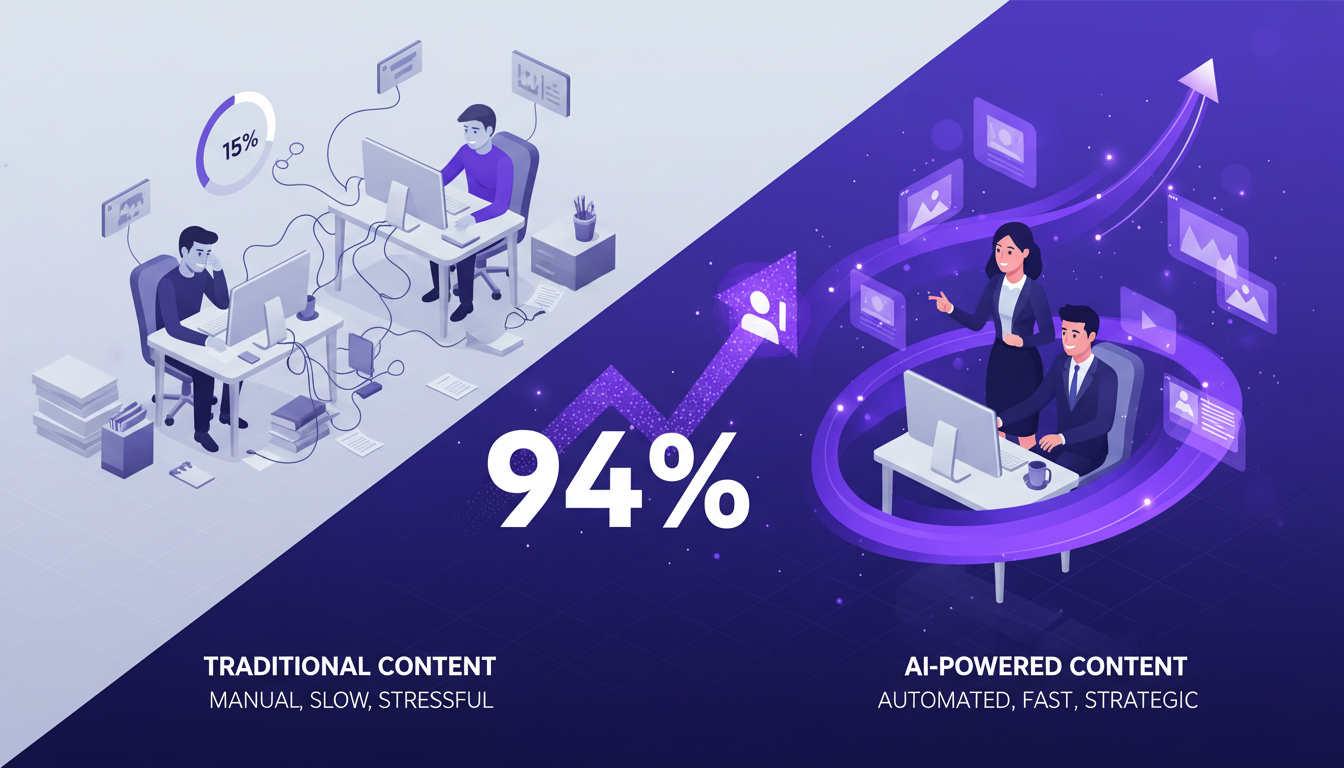
But what if there was another way? What if instead of hiring seven expensive specialists, you could work with seven AI agents that never sleep, never take PTO, and cost a fraction of human equivalents?
The New Marketing Reality: AI Agents vs. Traditional Hires
Most marketing teams in 2026 are somewhere between AI tools and AI assistants. They're using ChatGPT to draft content, Jasper to maintain brand voice, maybe Surfer SEO to optimize. But these are individual tools performing isolated tasks.
True breakthrough happens when AI agents coordinate with each other, sharing context and executing complete workflows autonomously. This means the system itself manages the workflow—researching topics, identifying content gaps, drafting articles, optimizing for SEO, publishing to your CMS, tracking performance, and recommending what to create next. All while maintaining your brand voice and strategic context.
Meet Your Seven-Agent Marketing Team
Here are the seven specialized agents that can replace a traditional marketing department:
1. The Content Creator Agent
Human equivalent cost: $75,000-$95,000/year
What it does: Writes blog posts, articles, social media content, and newsletters in your voice
Coordination role: Takes topics from the Strategist, gets SEO optimization from the Optimizer
AI writing tools like ChatGPT, Claude, and Jasper help startups draft blog posts, product descriptions, social media captions, and email sequences in a fraction of the time. A SaaS startup called Rows uses AI to draft their weekly newsletter. Their team of two turns one core idea into a full email, three LinkedIn posts, and a Twitter thread in under an hour. Before AI? That same output took them two full days.
2. The Social Media Manager Agent
Human equivalent cost: $50,000-$74,000/year
What it does: Schedules posts, responds to comments, builds community engagement
Coordination role: Amplifies content from the Creator, reports engagement data to the Analyst
Social media is a full-time job if you let it be. For startups, the goal isn't to win on social—it's to maintain a credible, consistent presence without consuming your team. AI marketing agents generate, schedule, and report on social content autonomously while maintaining brand voice consistency across all platforms.
3. The Email Marketing Agent
Human equivalent cost: $60,000-$80,000/year
What it does: Creates nurture sequences, sends targeted campaigns, manages subscriber lists
Coordination role: Uses leads from the Lead Generator, coordinates with the Content Creator for email assets
The 2026 benchmark: $42 returned for every $1 spent on email. A properly built email automation system handles 80% of your email marketing with zero ongoing effort per send.
4. The SEO Specialist Agent
Human equivalent cost: $70,000-$90,000/year
What it does: Optimizes content for search, conducts keyword research, builds backlinks
Coordination role: Guides the Content Creator on topics and optimization, reports rankings to the Analyst
Tools like Clearscope, Surfer SEO, and Frase use AI to find keywords your competitors are ranking for and suggest related terms to include naturally. Loom used AI-powered SEO tools early on to identify low-competition, high-intent keywords like "how to record your screen for free." They built content around these terms and drove thousands of organic signups before they had a sales team.
5. The Lead Generation Agent
Human equivalent cost: $65,000-$85,000/year
What it does: Identifies prospects, qualifies leads, manages outreach campaigns
Coordination role: Passes qualified leads to the Email Agent, coordinates with the Social Agent for LinkedIn outreach
6. The Analytics Agent
Human equivalent cost: $80,000-$100,000/year
What it does: Tracks performance metrics, creates reports, identifies optimization opportunities
Coordination role: Provides performance data to all other agents, recommends strategy adjustments to the Strategist
7. The Strategy Coordinator Agent
Human equivalent cost: $90,000-$120,000/year
What it does: Plans campaigns, allocates resources, coordinates between other agents
Coordination role: The central hub that ensures all agents work toward unified goals
The Economics Are Staggering
Traditional marketing team cost: $490,000-$644,000/year (before benefits, equity, management overhead)
AI agent team cost: $2,000-$5,000/year in subscription fees
Savings: 95-99% reduction in marketing labor costs
At a loaded cost of $60/hour for a marketing manager's time, manual execution costs $1,620/week in labor allocated to tasks that could be automated. That's $84,240 per year in recoverable opportunity cost.
How Agent Coordination Creates Marketing Magic
Multiple AI agents can work together, each specializing in a different task. For example, one agent might be responsible for data analysis, another for content personalization, and a third for channel selection, all collaborating to deliver a seamless customer experience.
Here's a real workflow in action:
- Strategy Agent identifies "content marketing for SaaS startups" as a high-opportunity topic
- SEO Agent researches keywords and competition analysis
- Content Agent writes a comprehensive blog post optimized for target keywords
- Social Agent creates LinkedIn, Twitter, and Facebook adaptations
- Email Agent adds the post to next week's newsletter with personalized intro
- Lead Generation Agent identifies readers who engage and adds them to nurture sequences
- Analytics Agent tracks performance across all channels and reports back to Strategy Agent
This entire workflow—which would normally require coordination between 4-5 human specialists over 2-3 weeks—executes automatically in hours.
Quality That Rivals Human Output
Out of all the AI writing tools that have been tested, modern platforms pass AI detectors with content usually coming out at least 70% human-written—which is quite impressive. The key is proper setup:
- Voice calibration: Agents learn your specific tone, style, and expertise
- Brand consistency: All content maintains unified messaging across channels
- Quality control: Human oversight at key checkpoints ensures standards
- Continuous learning: Agents improve based on performance feedback
The Competitive Advantage
Enterprise companies spend an average of $10,000-$50,000 monthly on marketing automation platforms alone, while startups typically allocate $500-$2,000 total monthly marketing budgets. Large corporations employ specialized teams of 15-50 marketing professionals, while startups often rely on 1-3 generalists handling everything from content creation to performance optimization.
This is the opening that startups can exploit. While enterprises struggle with legacy systems and complex approval chains, startups can implement AI agent workflows in weeks, not months.
Expected results: 3-5x increase in content production speed, initial audience insights and competitive intelligence. Automated teams produce 4-6x more content, see 14.5% higher productivity, and reduce marketing costs 12-18% vs. manual execution.
Getting Started: Your First Agent
Start with one channel, automate it to 80% efficiency, then expand. Most successful implementations begin with content creation—it's the highest-impact, lowest-risk starting point.
Week 1-2: Set up your Content Creator agent with brand voice training
Week 3-4: Add the SEO Specialist for content optimization
Week 5-6: Layer in Social Media Manager for distribution
Month 2: Integrate Email Marketing and Lead Generation
Month 3: Add Analytics and Strategy Coordinator for full autonomy
The Future Is Agent-Native
Building an AI content engine that embeds agentic principles—automated research, queue generation, drafting, optimization, publishing, and analytics—gives startups the operational leverage that used to require a 5-person team. The winners won't be companies with the most AI agents. They'll be companies with the most coherent agent workflow—where strategy, creation, and measurement live in one system instead of scattered across 16+ tools.
Your competitors are still trying to hire their way to growth. While they're posting job descriptions and conducting interviews, you could be building a marketing engine that never stops, never burns out, and scales with your ambitions.
The question isn't whether AI agents will replace traditional marketing teams. They already are. The question is whether you'll be early to the advantage, or late to the game.
Ready to build your seven-agent marketing team? Learn how Supramono's AI agents can replace expensive marketing hires while producing better results. Get started today and see what autonomous marketing can do for your startup.

Supramono
AI agents that build your pipeline — inbound and outbound
AI agents that build your pipeline — inbound and outbound
Learn more about Supramono and get started today.
Visit Supramono