10 Moats That Will Keep Your AI Startup Alive When GPT-6 Drops
10 Moats That Will Keep Your AI Startup Alive When the Next Platform Update Drops
Major AI companies continue to release increasingly capable models, with OpenAI's GPT-4, Anthropic's Claude, and Google's Gemini generating functional code across dozens of programming languages. If you're building an AI startup right now, you've probably felt that familiar chill: what happens when these platform companies add your exact feature to their model?
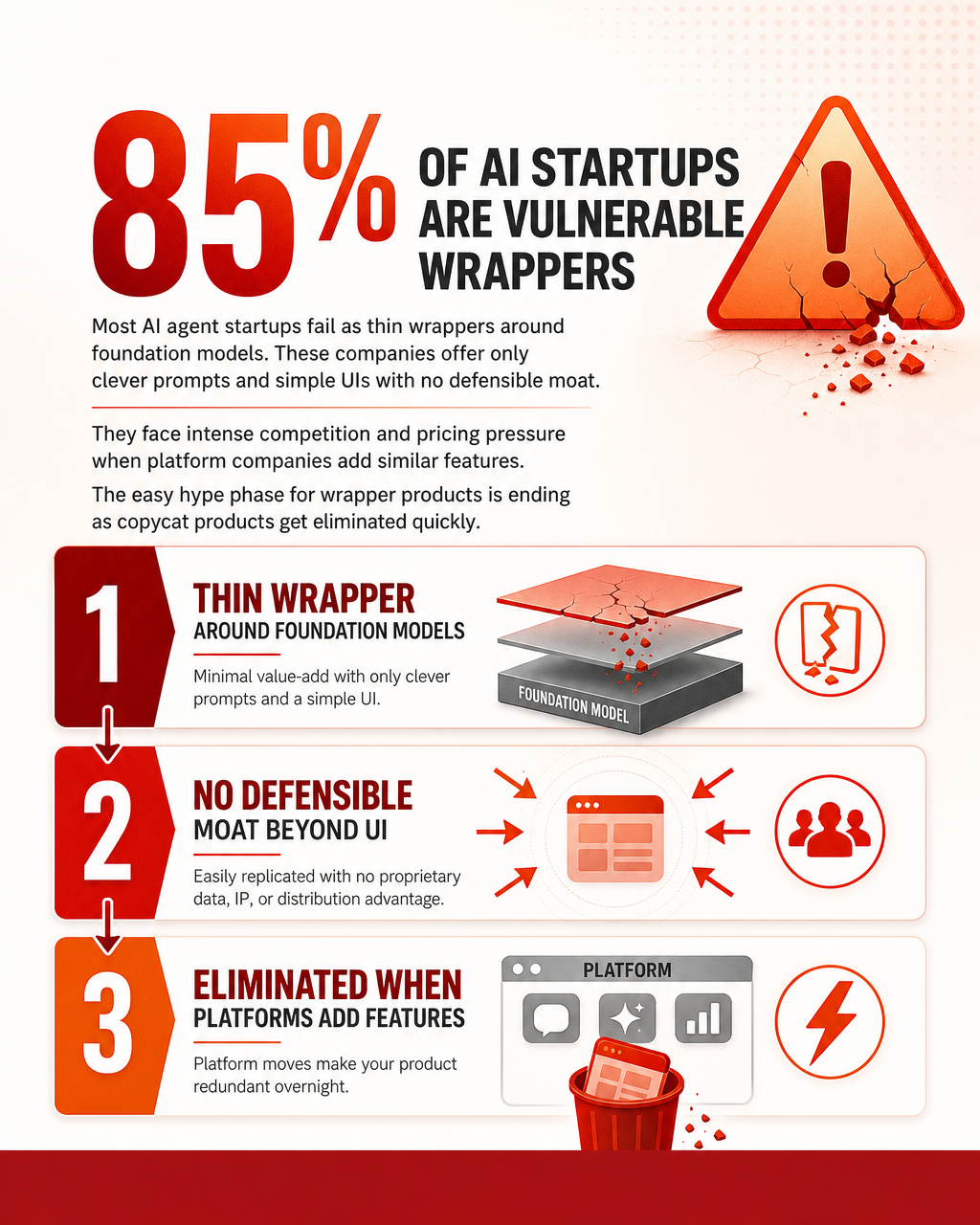
The reality is that most startups won't build a true moat around AI. Many AI agent startups fail because they are thin wrappers around foundation models with no defensible moat. If your entire value proposition is a clever prompt and a simple UI, you will face intense competition and pricing pressure.
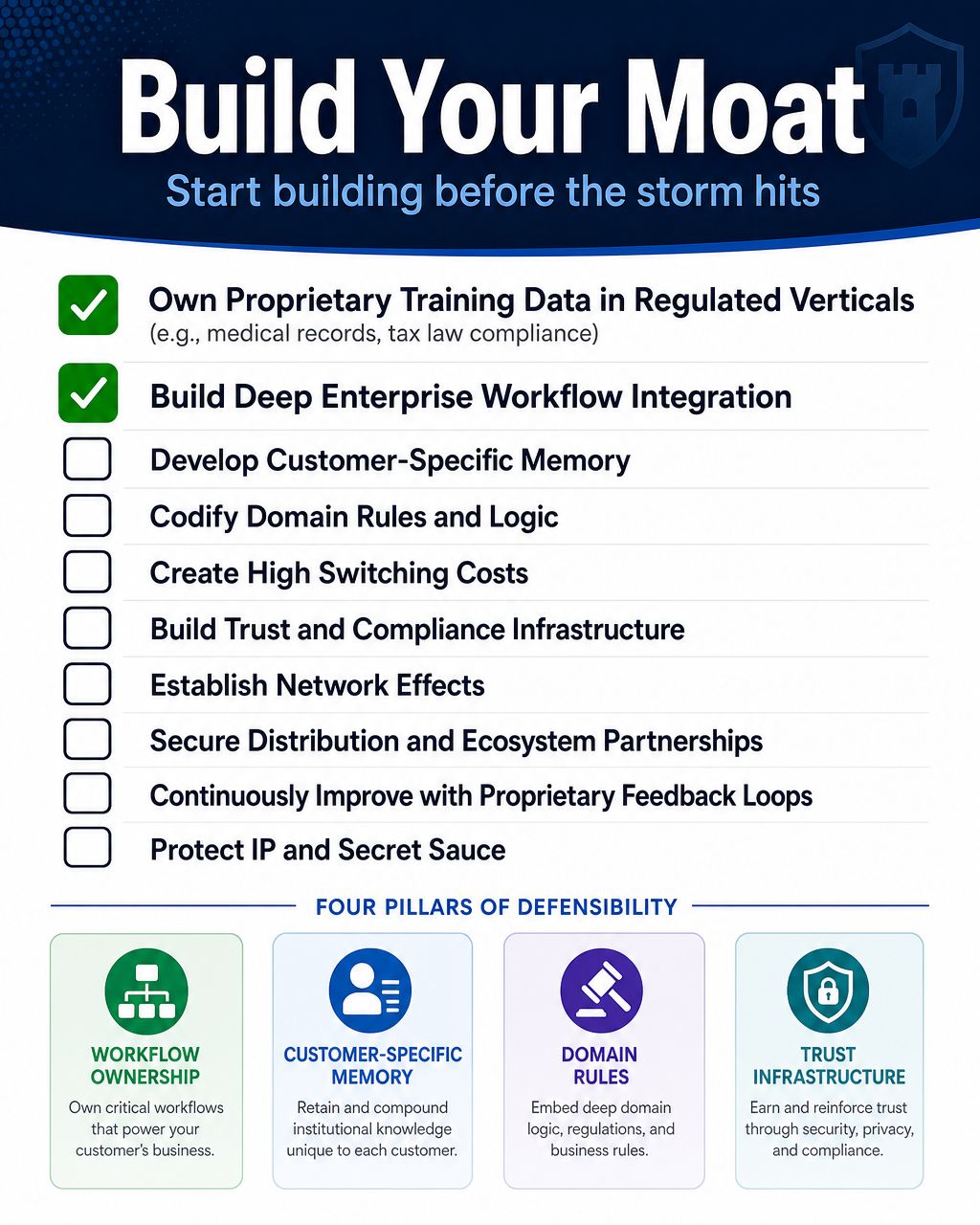
But here's what the data shows: Defensibility comes from workflow ownership, customer-specific memory, domain rules, and trust infrastructure, not just model access. The startups that survive aren't the ones with the smartest algorithms. They're the ones that make themselves difficult to replace.
The Platform Threat Is Real
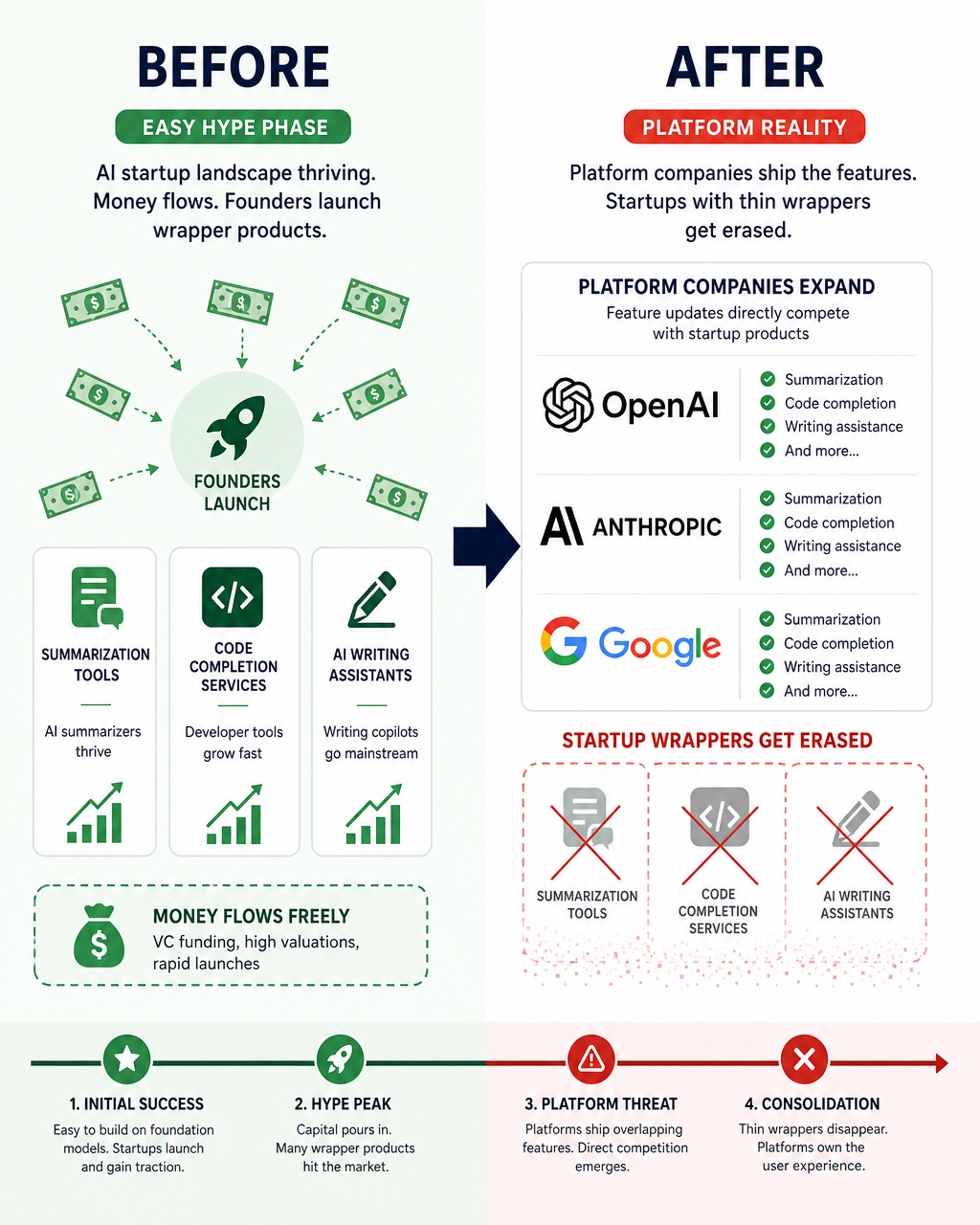
Money is still flowing, founders are still launching, and big labs are still setting the pace, but the easy hype phase looks over. When too many founders build wrappers with no moat, copycat products get erased fast.
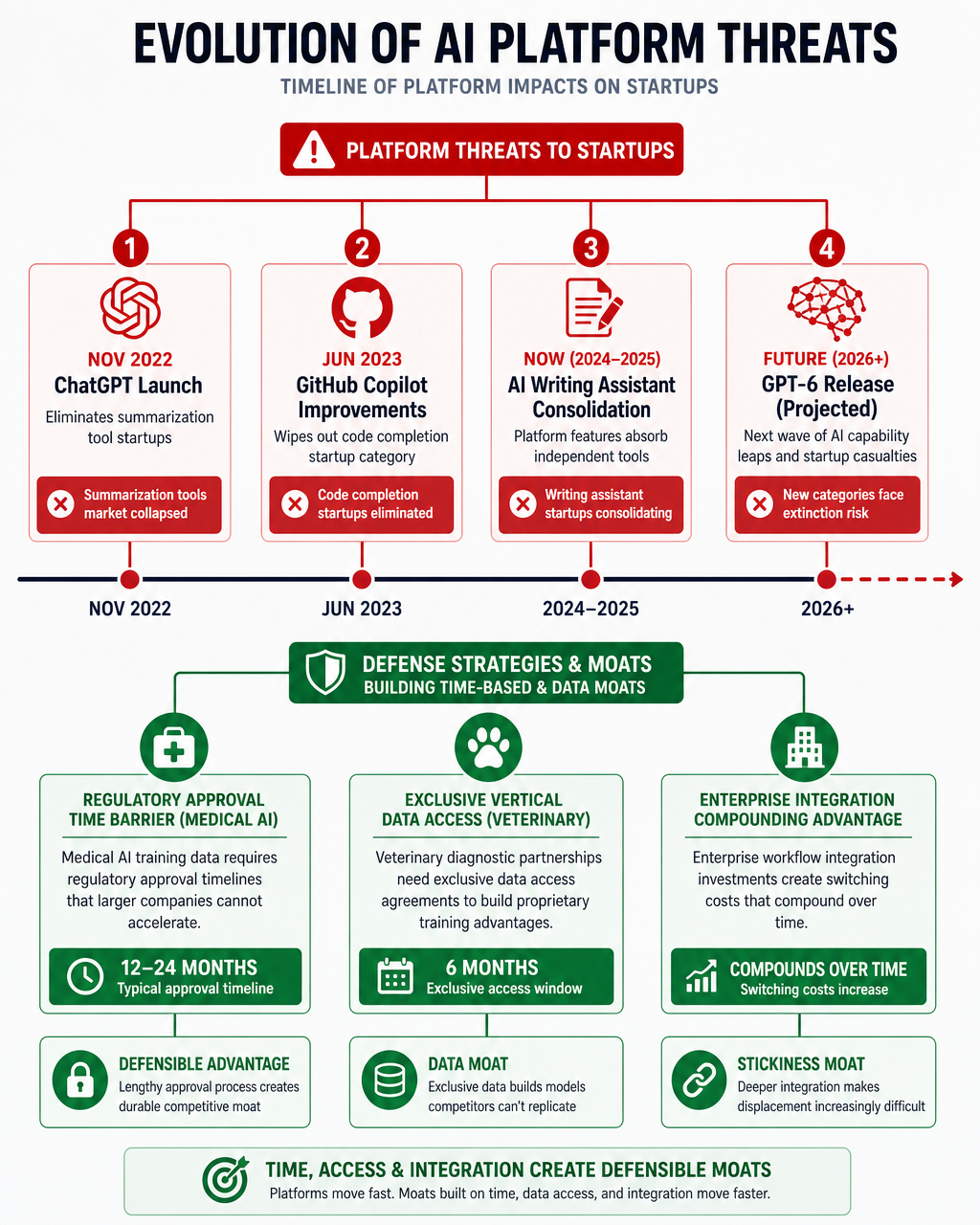
Every few months, another startup founder posts on Twitter: "Well, OpenAI just killed our product." It happened to summarization tools when ChatGPT got better at summaries. It happened to code completion when GitHub Copilot improved. It's happening right now to basic AI writing assistants.
Here are ten strategies that aim to defend against platform feature creep, though building sustainable moats remains challenging and is not guaranteed to succeed.
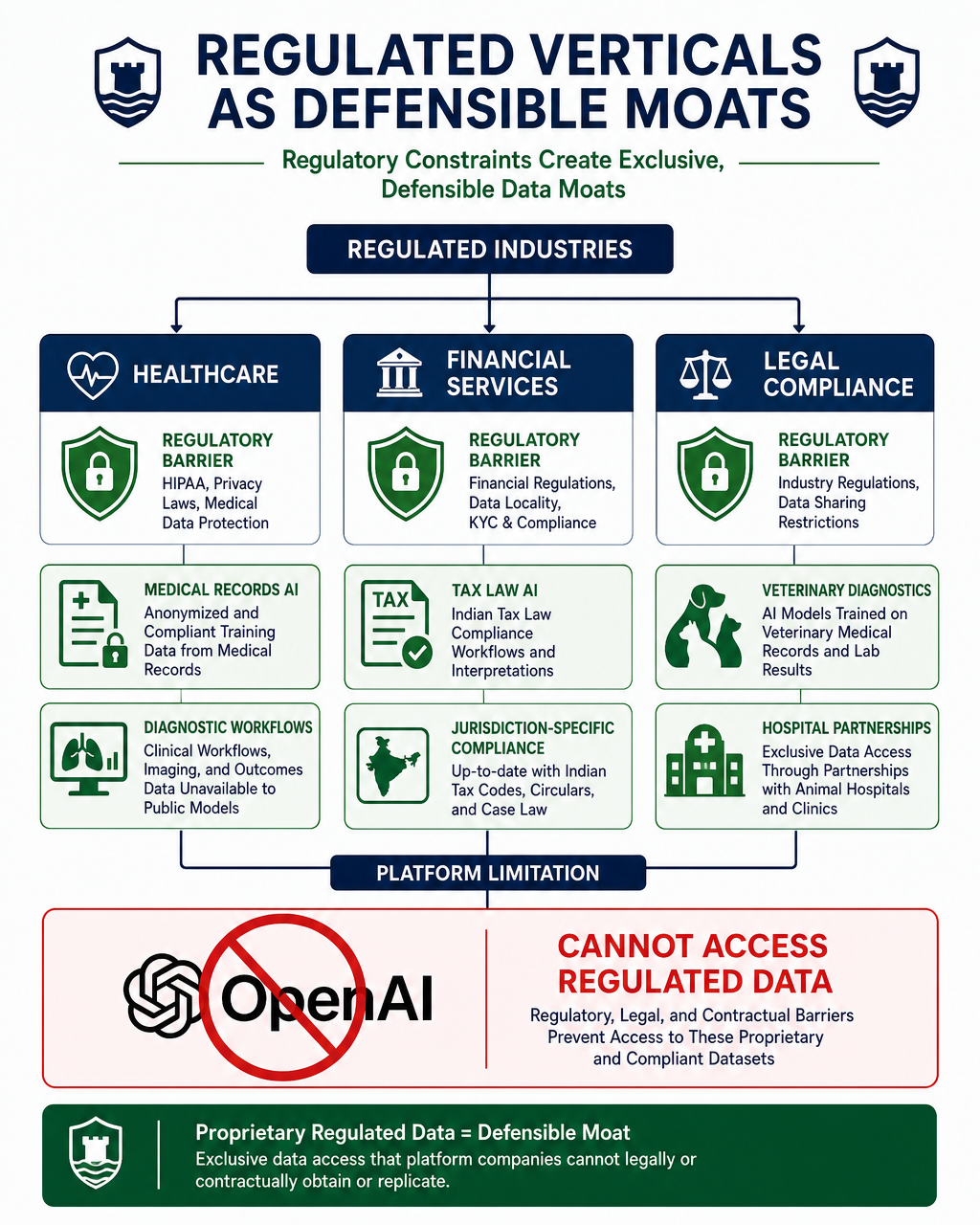
1. Own Proprietary Training Data in Regulated Verticals
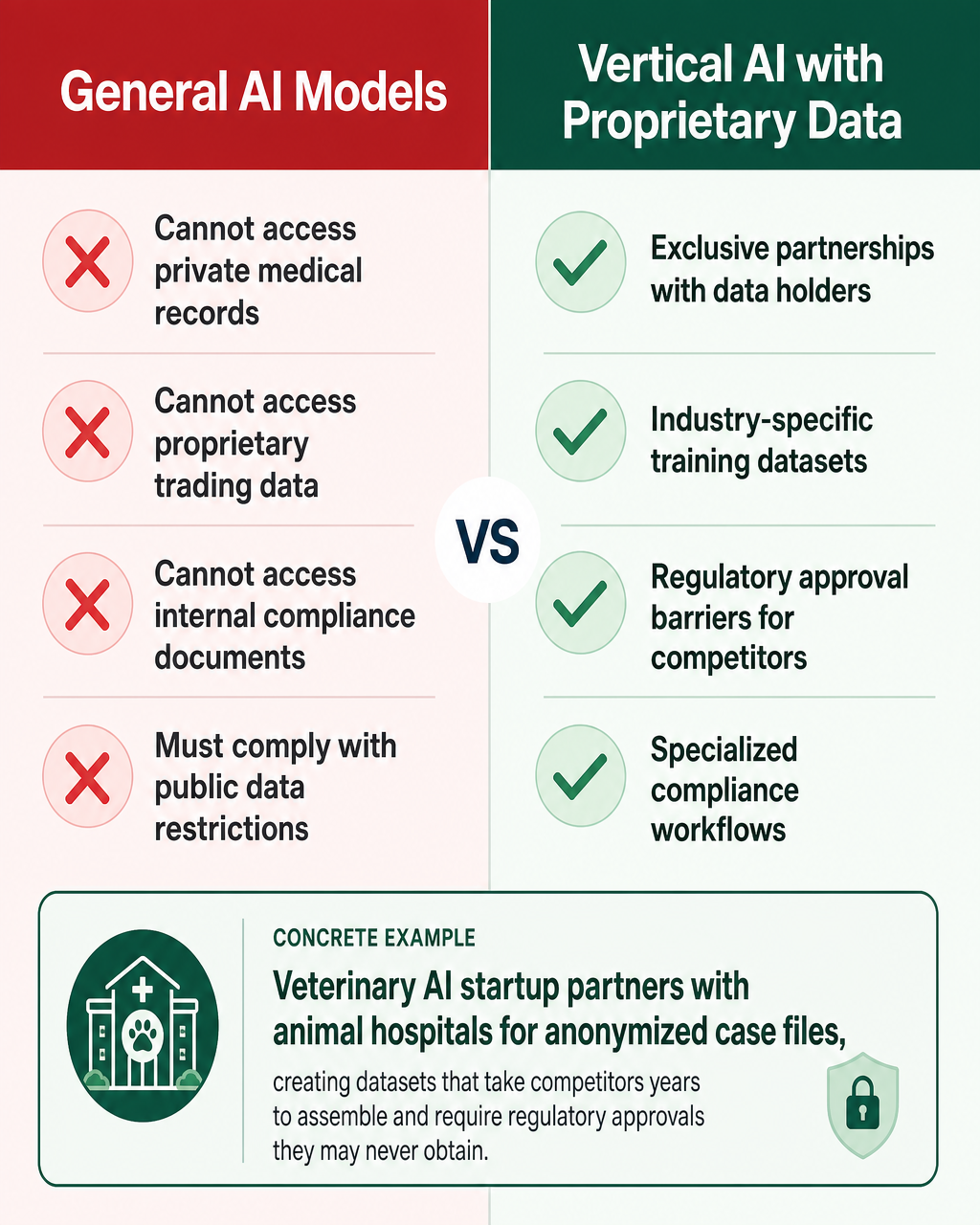
Vertical AI solutions derive their immense value from two critical factors that general tools cannot replicate: proprietary data and industry-specific compliance workflows. Imagine an AI trained on millions of medical records (anonymized and compliant, of course) for a specific diagnostic task, or an AI that understands the nuances of Indian tax law for small businesses.
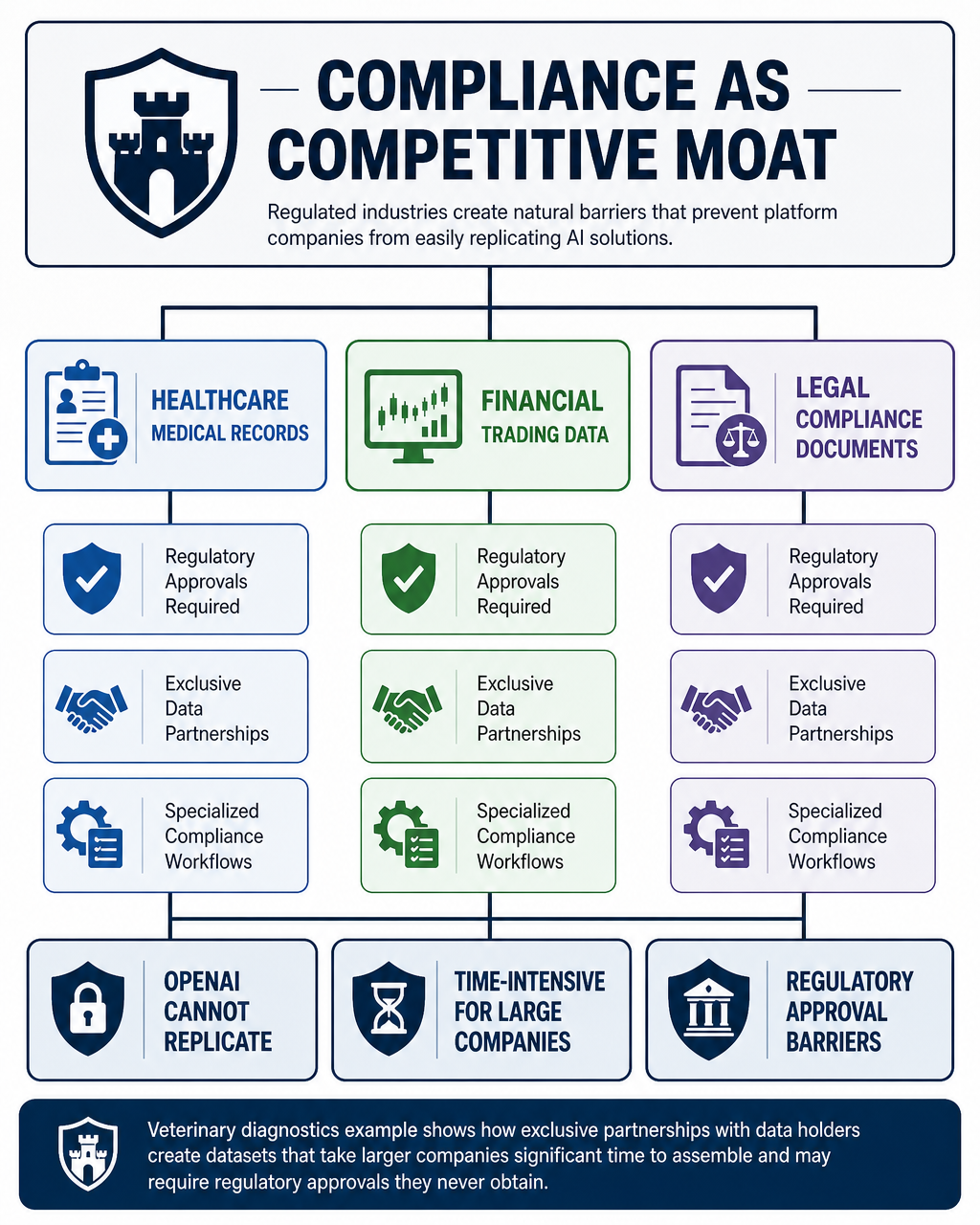
General models can't access private medical records, proprietary trading data, or internal compliance documents. If you can secure exclusive partnerships with data holders in regulated industries, you create something OpenAI literally cannot replicate.
Example: A hypothetical startup building AI for veterinary diagnostics could partner with animal hospitals to access anonymized case files, creating a training dataset that would take larger companies time to assemble and require regulatory approvals they may never get.
2. Build Deep Enterprise Workflow Integration
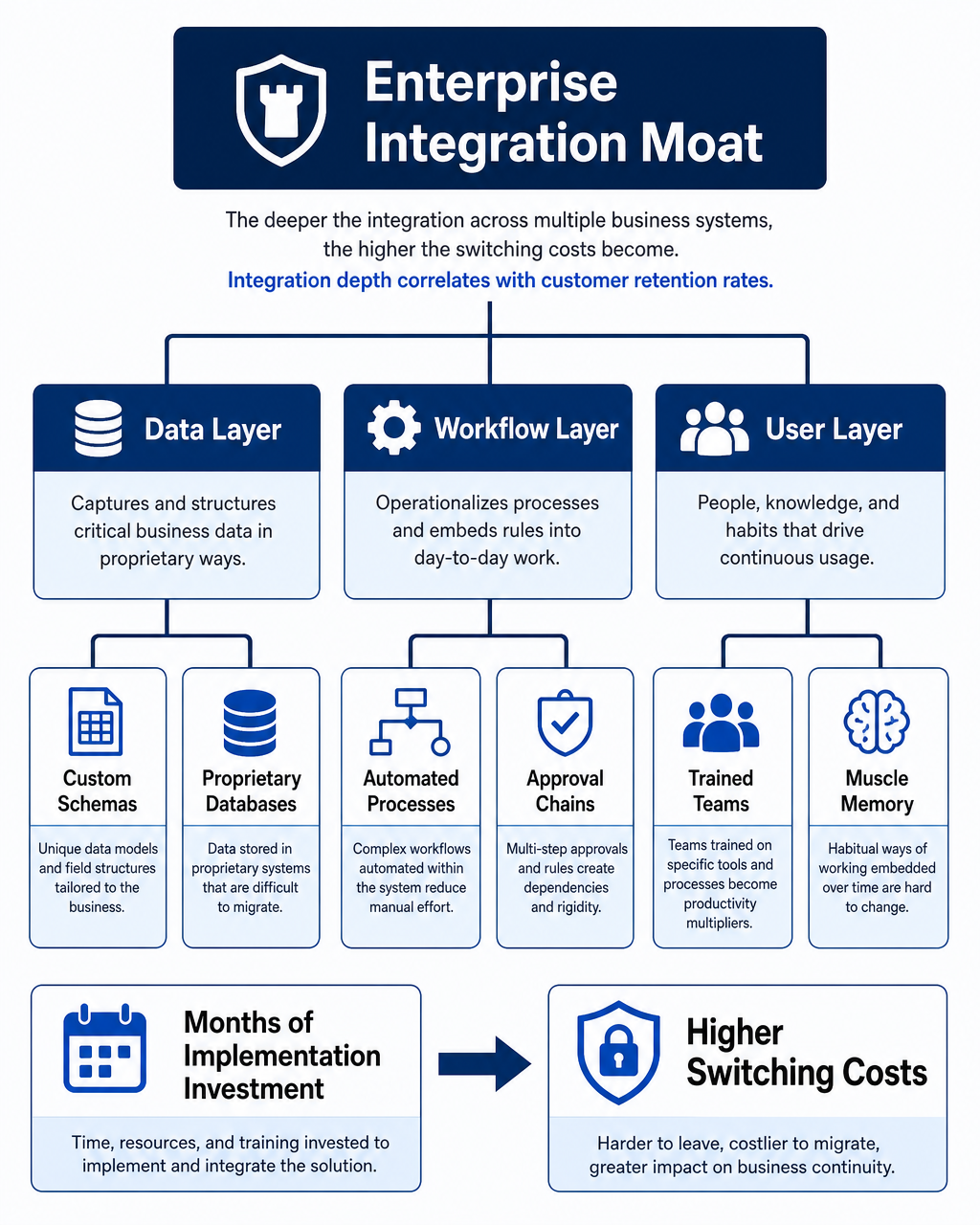
And the more a company has invested – custom fields, workflows, pricing rules, reporting logic – the more the system becomes a moat of switching costs and a competitive advantage. The moat compounds from real usage: every successful workflow becomes a reusable intent, every exception becomes a guardrail, every migration artifact becomes living lineage, and every integration deepens the graph of how the enterprise actually runs.
Tools that seamlessly integrate into existing workflows—like email, CRM, or ERP systems—become indispensable. When your AI is deeply embedded in a company's operational fabric, switching means ripping out and rebuilding entire business processes, though customers may still switch if the value proposition is compelling enough.
Example: Instead of building a generic "AI sales assistant," build an AI that integrates specifically with Salesforce's custom field structure, HubSpot's deal stages, and the company's internal approval workflows. The deeper the integration, the higher the switching cost.
3. Create Human-in-the-Loop Specialization
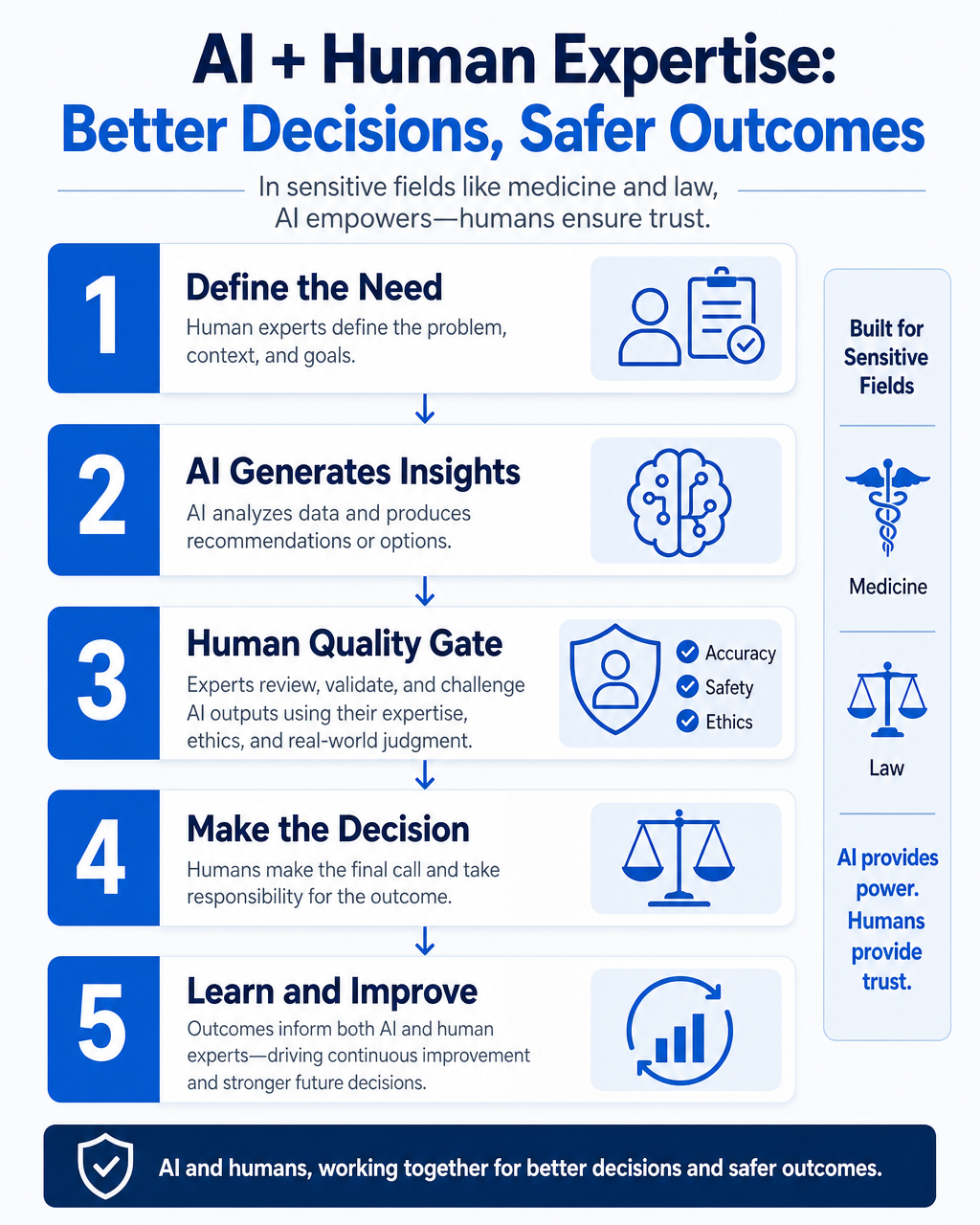
A counterintuitive moat is the human layer. In many domains such as legal advice, infrastructure design, and finance, full autonomy for AI still feels risky. Having a human in the loop to review, edit, or assure quality adds confidence and builds trust. Yes, it's harder to scale and margins may be lower but it's also harder to copy.
Platform models excel at generic tasks but struggle with nuanced decision-making that requires domain expertise. Build AI that augments specialists rather than replacing them.
Example: An AI that helps radiologists spot anomalies but requires board-certified doctors to make final diagnoses. The human expertise becomes part of the defensible value proposition.
4. Develop Industry-Specific Compliance Infrastructure
Focus on industry-specific compliance and regulatory requirements to ensure defensibility: This is often seen as a barrier, but it's actually a massive opportunity. By embedding compliance logic directly into your AI, you create a solution that is not only effective but also legally sound and trusted within the industry.
Platform companies often avoid regulated industries because compliance requirements slow down their generalist approach. This creates opportunities for specialists, though regulatory changes can also create unexpected challenges.
Example: AI for pharmaceutical companies that automatically ensures all generated content meets FDA guidelines for drug marketing. The compliance layer becomes the moat.
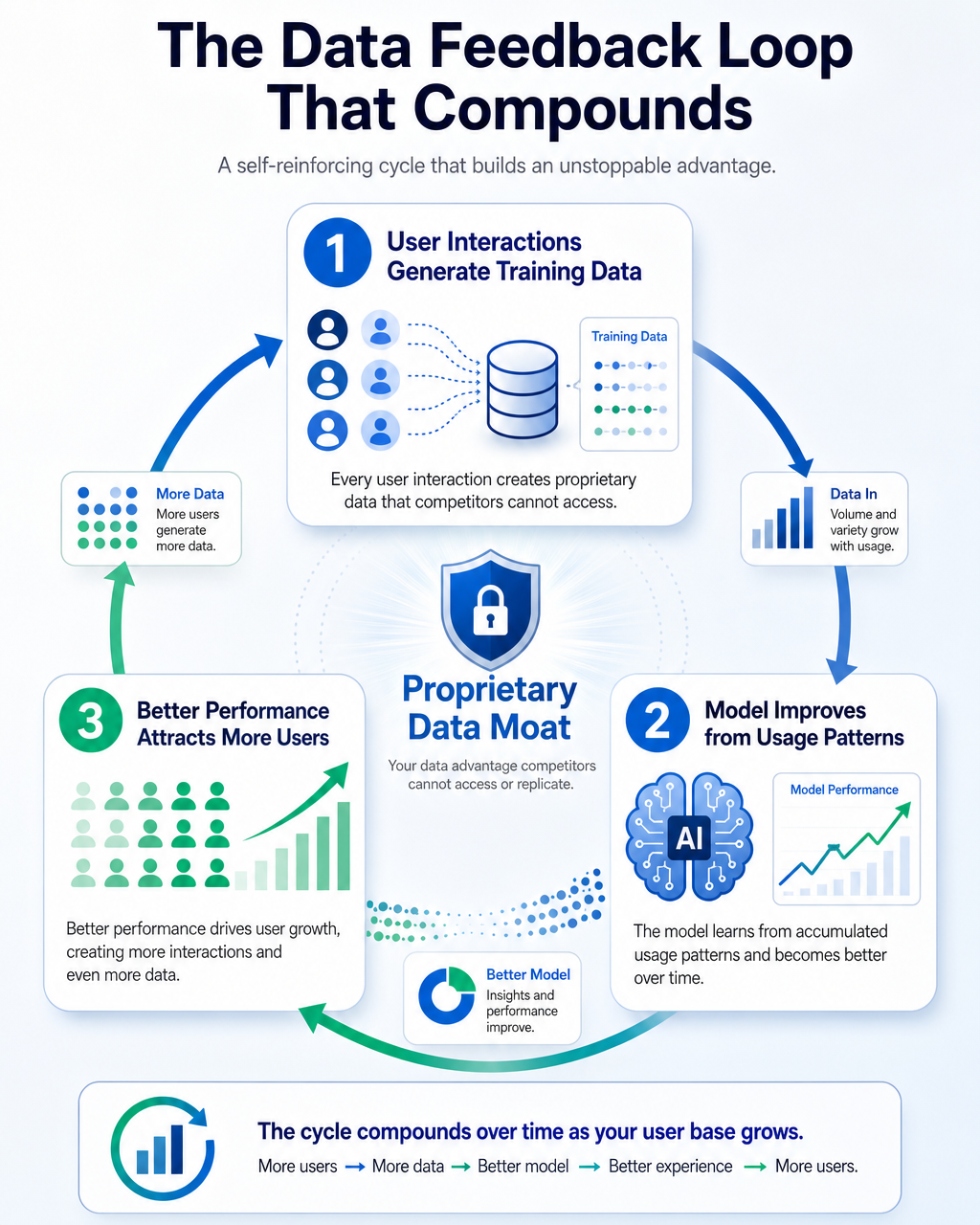
5. Build Proprietary Data Feedback Loops
The true moat is an active "data flywheel"—a closed-loop system where continuous user interactions naturally generate proprietary feedback. Every customer interaction should improve your model in ways that benefit all users while creating data that competitors can't access.
Example: An AI for legal document review that gets better at spotting contract risks as more lawyers use it, creating a dataset of legal decision-making that improves accuracy over time.
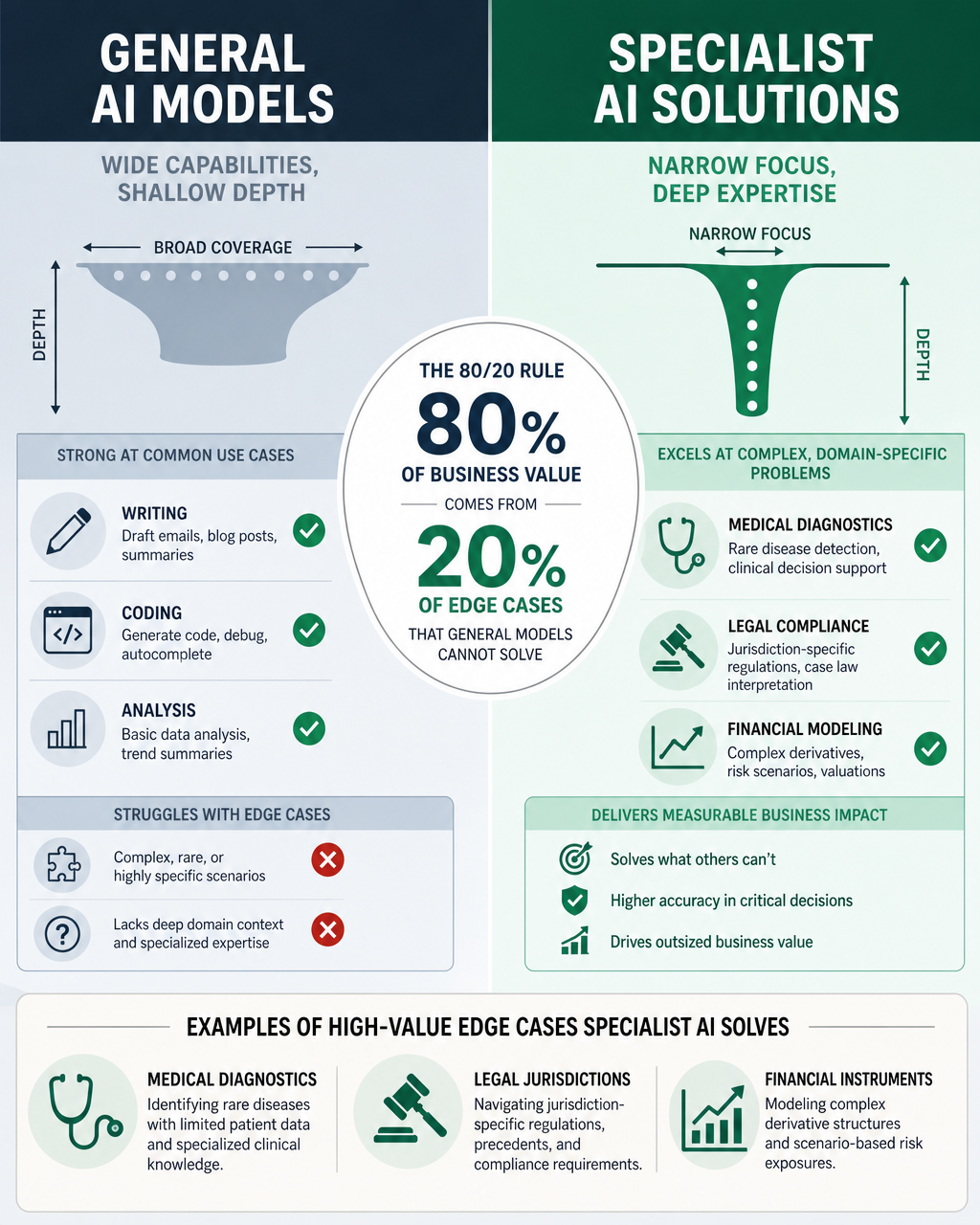
6. Focus on Edge Cases and Long-Tail Problems
General models from the likes of OpenAI or Google are incredibly powerful, but they operate as generalists. A general model can write a standard contract, but it cannot navigate the specific nuances of maritime law in the South China Sea or the local building codes of Zurich. Vertical AI startups fill this expertise gap.
Platform models are optimized for broad use cases. They're often less effective at edge cases that represent small percentages of the market but significant complexity.
Example: AI for managing construction permits in specific municipalities, where local building codes, zoning laws, and approval processes create complexity that general models can't handle.
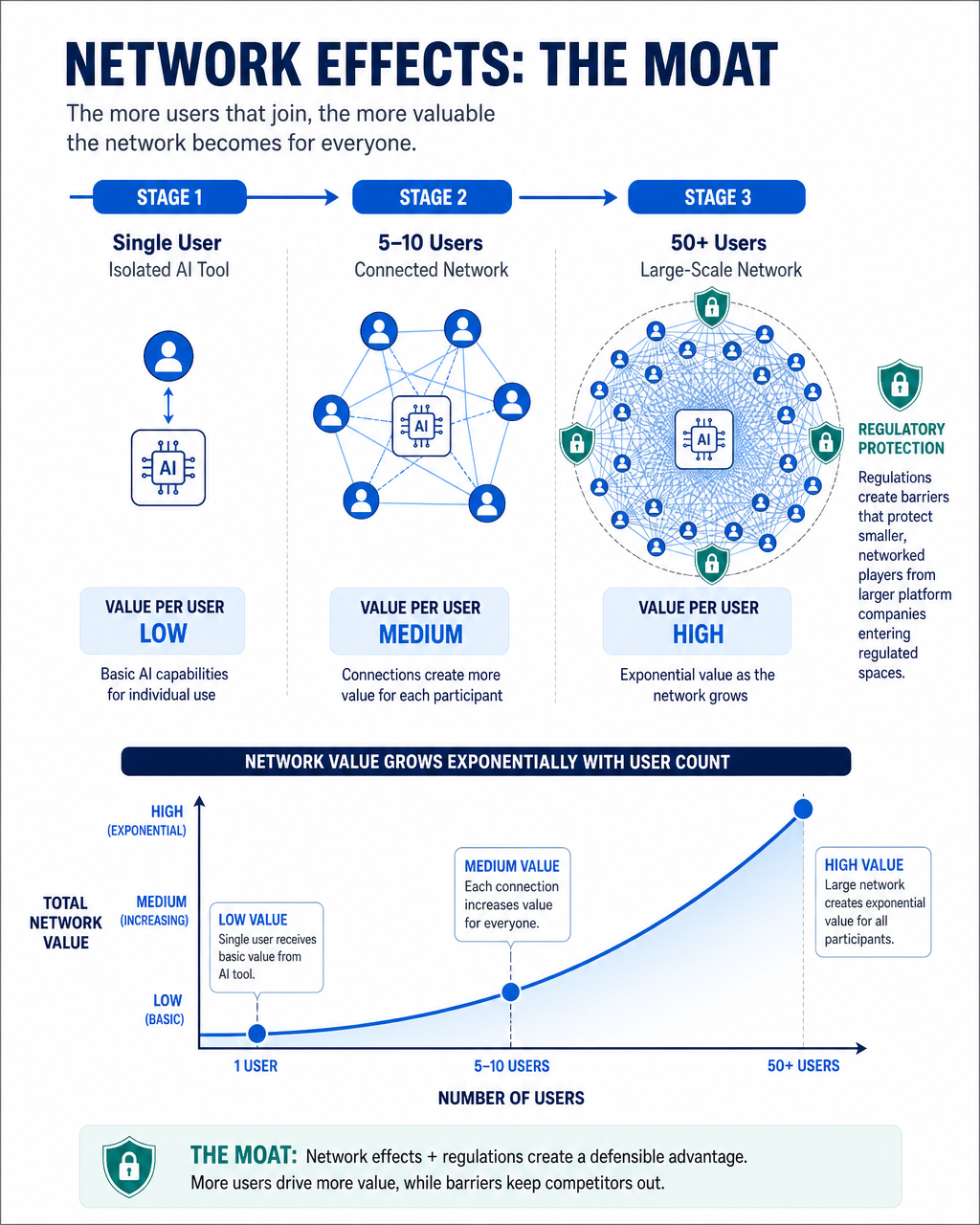
7. Create Network Effects Through User-Generated Content
Network effects are stronger when every user improves the product (via data flywheels). Build AI that gets better as more people use it, creating value that scales with your user base.
Example: An AI for supply chain optimization that becomes more accurate at predicting disruptions as more companies share (anonymized) logistics data.
8. Leverage Regulatory Constraints (Novel Approach #1)
Here's the first novel approach: State attorneys general (AGs) and regulators stepped up scrutiny and enforcement actions related to AI issues last year, and we expect that trend to continue in 2026. For example, in May 2025, the Pennsylvania Attorney General announced a settlement with a property management company over allegations that the company's use of an AI platform to assist in its operations contributed to delays in maintenance repairs and rentals of unsafe housing in violation of state laws. In July 2025, the Massachusetts Attorney General announced a $2.5 million settlement with a student loan company to resolve allegations that the company's lending practices, including its use of AI models, violated various consumer protection and fair lending laws.
Into this gaping void, state governments have stepped in, weaving a complex web of state-level AI regulations that result in serious and complex compliance challenges for businesses operating online across state borders, which is every business with a website. This is particularly challenging for small and medium-sized enterprises (SMEs) who may lack the scale to afford an in-house regulatory compliance lawyer.
Big platform companies will likely be forced to either avoid regulated applications entirely or build generic compliance features that satisfy the lowest common denominator. This potentially creates opportunities for specialists.
Look at the SAP ecosystem: Its deep integration within European industries, combined with regulatory and compliance expertise, creates high switching costs for customers. This entrenched position enhances SAP's pricing power and strengthens its competitive moat. SAP has thousands of consultants because enterprise compliance is too complex for any platform to solve generically.
The Opportunity: Build AI specifically designed for compliance in regulated industries. While OpenAI avoids liability, you embrace it as a competitive advantage.
9. Capitalize on Platform Investment Constraints (Novel Approach #2)
Platform companies are investing heavily in compute and talent for foundation models. This creates resource constraints that may prevent them from going deep in every vertical, though their substantial resources mean they could still choose to compete directly if markets prove lucrative enough.
Consider the Xero ecosystem in accounting software. Xero doesn't try to solve every accounting problem – instead, they created a platform that thousands of specialists build on. The specialists handle the edge cases that would be too expensive for Xero to address directly.
The Opportunity: Platform companies will likely focus on horizontal capabilities, potentially leaving vertical applications to specialists. Build deep expertise in areas where platform investment might not make economic sense.
10. Exploit Scaling Paradoxes (Novel Approach #3)
Solo founders can compete by combining AI agents, no-code systems, and narrow problem selection. The goal is not to outbuild large labs but to solve one painful business workflow faster and more affordably than bloated incumbents.
As platform companies scale, they may face the "innovator's dilemma": they can't pursue small markets that would cannibalize their larger products. This potentially creates opportunities for focused startups.
Consider the consultant ecosystem around enterprise software. Enterprise software migrations can be expensive, time-consuming, and require substantial consulting resources. Large software companies could theoretically build tools to make migrations easier, but that might reduce their consulting revenue.
The Opportunity: Platform companies will likely avoid solutions that threaten their core revenue streams or require resources that don't scale with their business model.
Making Your Choice
The path to durability starts with strategic clarity. Who is your customer? Why does AI make your solution uniquely valuable? What problem are you solving in a way no one else can?
The startups that survive the next platform upgrade won't necessarily be the ones with the best technology. They'll likely be the ones that make themselves difficult to replace through deep specialization, regulatory expertise, and customer relationships that compound over time—though building sustainable moats remains challenging and success is not guaranteed.
<cite

Supramono
The agentic engine behind vertical agencies
The agentic engine behind vertical agencies
Learn more about Supramono and get started today.
Visit Supramono