Why We Built Supramono: The Startup Journey from Idea to Revenue
We built Supramono because we kept watching brilliant founders hit the same wall.
They'd build great products. They'd validate real problems. They'd have customers lined up, begging for solutions. Then they'd get stuck in the messy middle between having a product and having a business.
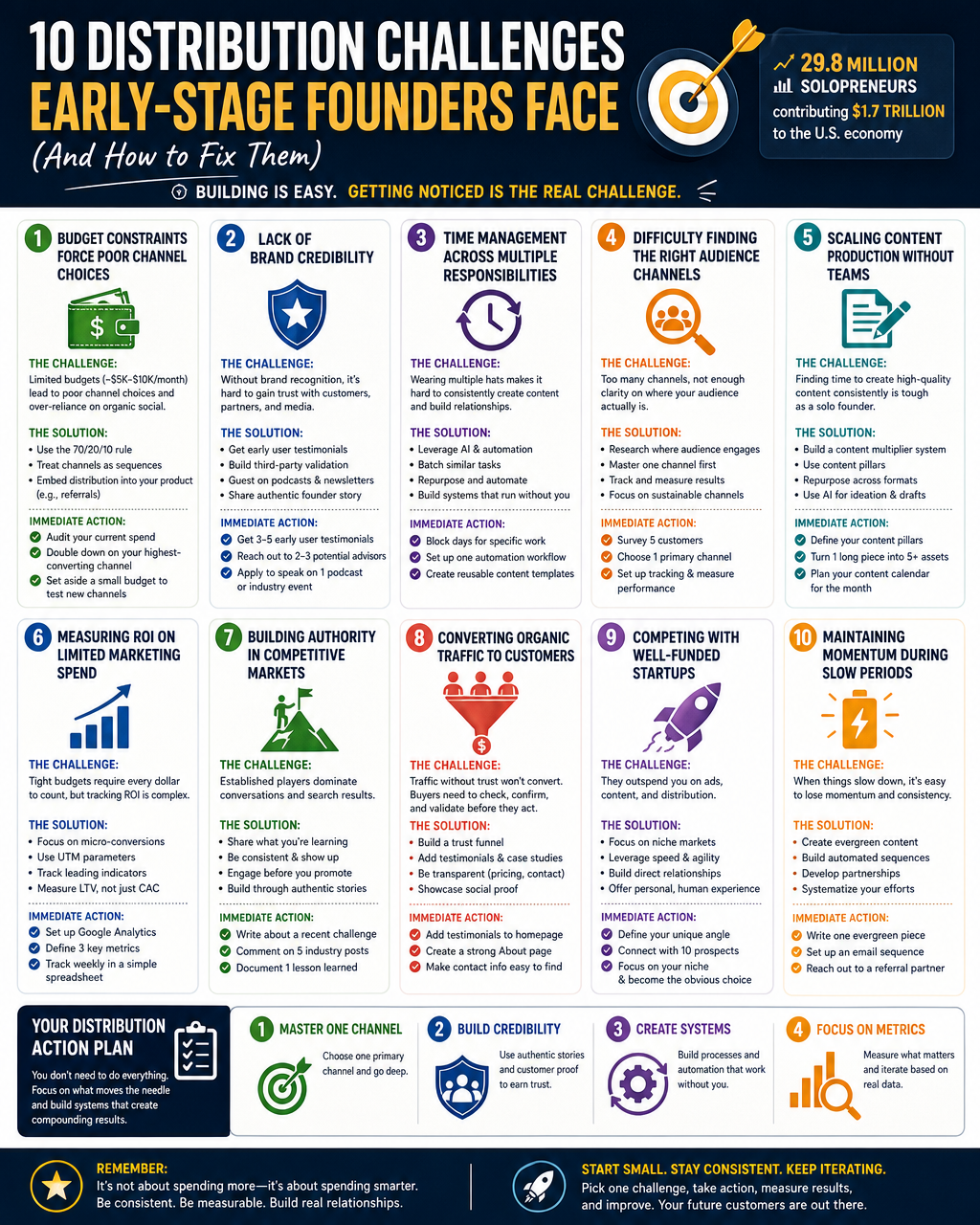
Common startup challenges include founder bottlenecks, limited resources, decision paralysis, referral dependency, and remote team management. But one significant challenge we observed wasn't technical or financial. It was the fragmented journey from opportunity to revenue.
The Three-Phase Problem We Kept Seeing
Most successful startups follow a similar basic pattern: Discover an opportunity, Build a solution, Sell it to customers. But founder-led go-to-market risks are increasingly at the forefront as startups embrace agility and innovation, yet face new threats in fast-moving markets. More founders are stepping up to drive GTM, but without the right safeguards, these bold moves can backfire.
Here's what we witnessed repeatedly:
Phase One: Discovery Hell
Founders spent months researching markets, analyzing competitors, and validating ideas using scattered tools and manual processes. Market validation remains a persistent challenge. Releasing a product either too early or too late can be disastrous for a young company. Inexperienced founders may lack clear vision and struggle to define or deliver an MVP that would bring in their first customers and secure the much needed cash flow.
Phase Two: Building in Isolation
Once they found an opportunity, founders disappeared into development mode, losing touch with customers and markets. And while some teams cut corners to deliver a half-baked product to the market, other developers take their sweet time to polish every single detail of the software spending all their resources until it's too late. The window of opportunity appears to close faster than ever.
Phase Three: The Sales Scramble
With product in hand, founders suddenly realized they had no systematic way to reach customers. We believe one of the biggest risks for startups isn't building the wrong product. It's building a good product and failing to get it in front of the right people fast enough. For small and medium businesses, marketing has become more complex, more expensive, and more competitive than ever.
The problem wasn't that founders lacked talent or drive. The problem was that each phase required completely different skills, tools, and approaches. And there was no single platform that connected the dots.
Why Existing Solutions Felt Incomplete
A practical marketing framework gives startups a way to compete intelligently when markets feel crowded and attention is scarce. The formula is clear: sharpen positioning, narrow the audience, prove differentiation, publish useful content, choose channels deliberately, and measure what drives revenue. They need clarity, consistency, and a system that learns faster than competitors.
But that's just the marketing piece. What about discovery? What about product development? Each phase was stuck in its own silo.
We tried existing solutions:
- Market research tools that gave data but no direction
- Development platforms that built features but ignored market signals
- Marketing tools that created content but never closed the loop back to discovery
Founders were forced to become experts in three completely different domains, jumping between tools that didn't talk to each other. One major challenge that startup founders face is finding enough hours in the day to get everything done. As a startup founder, you are the visionary, the strategist, the marketer, the problem solver, and the team leader. With so many roles, it can be tough to prioritize and allocate time effectively.
The Closed Loop Concept
That's when we had our hypothesis: what if Discover, Build, and Sell weren't separate phases but parts of one intelligent system?
What if discovery data fed directly into product decisions? What if product development informed sales strategies? What if sales results refined future discovery?
This closed loop became Supramono's core concept. Here's how it's designed to work:
Discover → Build
Market signals, customer feedback, and competitive intelligence flow directly into product requirements. The goal is to reduce building in a vacuum by grounding feature decisions in market data.
Build → Sell
Product capabilities, feature releases, and technical advantages can become sales assets. Engineering progress becomes marketing content.
Sell → Discover
Customer conversations, win/loss analysis, and market feedback refine your understanding of opportunities. Each sale can teach you something new about the market.
By focusing on evidence over assumptions, companies can effectively eliminate development waste and ensure a true product-market fit. At its core, digital product discovery is a disciplined process of identifying a real market need, validating a potential solution, and aligning that solution with both business goals and the target audience.
The AI Agents Approach
We realized that for this vision to work, it couldn't depend on founders manually connecting the dots. A notable operational shift is the emergence of small, high-impact startup teams powered by generative AI tools. Venture capitalists increasingly expect founders to achieve significant growth with lean teams and efficient cost structures.
So we're developing specialized AI capabilities for different parts of the journey. While still in development, the concept involves AI that can handle various tasks across the startup lifecycle - from market scanning and product strategy to content creation and outbound campaigns.
The vision is for each AI capability to specialize in one domain while sharing data across the system. The founder sets the strategy while AI handles systematic execution.
Beyond Tools: A Different Approach to Building
Current market conditions suggest significant disruption ahead. The kind of change large corporations fear. That fear creates opportunity and may open the door to favorable startup environments.
Our approach with Supramono represents a different methodology for going from zero to revenue:
- Continuous Discovery: Markets change fast. Discovery should be ongoing.
- Evidence-Driven Building: Feature decisions backed by market data rather than founder intuition alone.
- Systematic Selling: Consistent content, outbound, and pipeline generation designed to compound over time.
This approach has limitations. It requires founders comfortable with data-driven decision making and may not suit all industries or business models. The AI capabilities are still evolving, and the integration challenges are significant. Some founders may prefer more intuitive or relationship-driven approaches to building their businesses.
Current Status
Speed beats polish. Progress beats hesitation. The only real failure is not starting.
We're building Supramono for founders who want to explore what's possible when Discover, Build, and Sell work as one unified system. The platform is in active development as we work to make this vision a reality.
Interested in learning more about our approach? Visit supramono.com to follow our progress and see how we're working to transform the startup journey from opportunity to revenue.

Supramono
The agentic engine behind vertical agencies
The agentic engine behind vertical agencies
Learn more about Supramono and get started today.
Visit Supramono