10 Ways AI Gives Legacy Software Vendors a Competitive Edge


Running a software business on an older tech stack can feel like competing in a Formula 1 race with a reliable, well-maintained saloon car. The fear is understandable. Newer entrants ship fast, talk about AI-native architecture, and seem to carry none of your baggage.
But here's what most of those conversations miss: your legacy stack isn't just debt. It's also history, domain depth, and accumulated customer data that a brand-new entrant simply doesn't have. The question isn't whether to scrap everything and start again. It's how to use AI to make what you've already built compete harder.
These 10 approaches are practical. They don't require full rewrites. And they're grounded in what's actually working for software vendors in mid-2026.
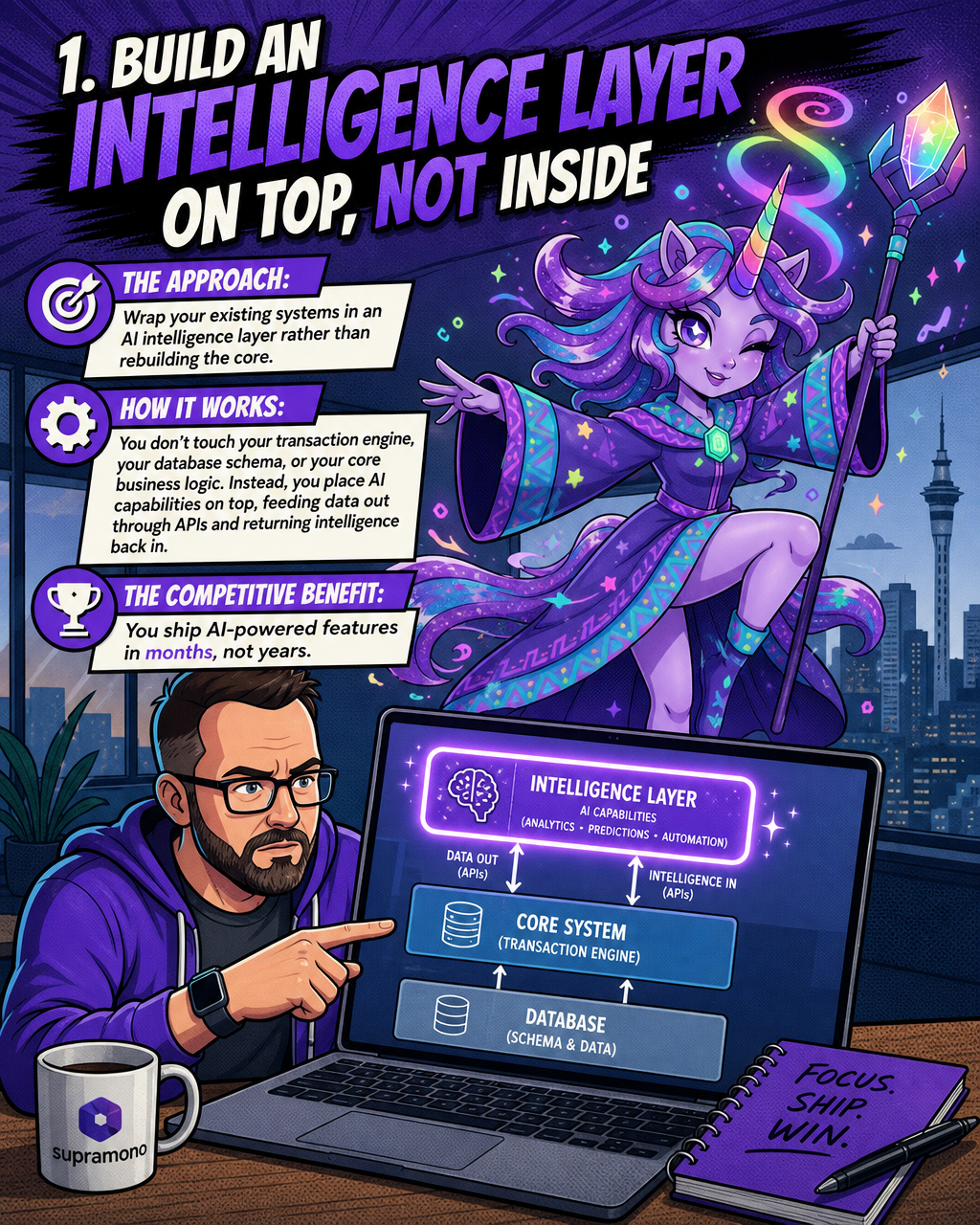
1. Build an Intelligence Layer on Top, Not Inside
The approach: Wrap your existing systems in an AI intelligence layer rather than rebuilding the core.
How it works: You don't touch your transaction engine, your database schema, or your core business logic. Instead, you place AI capabilities on top, feeding data out through APIs and returning intelligence back in. Think of it as giving your system a smarter brain without replacing its spine.
Building an "intelligence layer" around core transaction systems instead of directly rewriting them preserves stability while adding AI capabilities. This is the recommended approach for companies with 10-to-20-year-old enterprise stacks, based on the principle of minimising disruption to stable systems while extending their capabilities.
The competitive benefit: You ship AI-powered features in months, not years. Competitors that chose to rewrite from scratch may still be mid-planning while you're already in market — though execution timelines vary considerably by organisation.
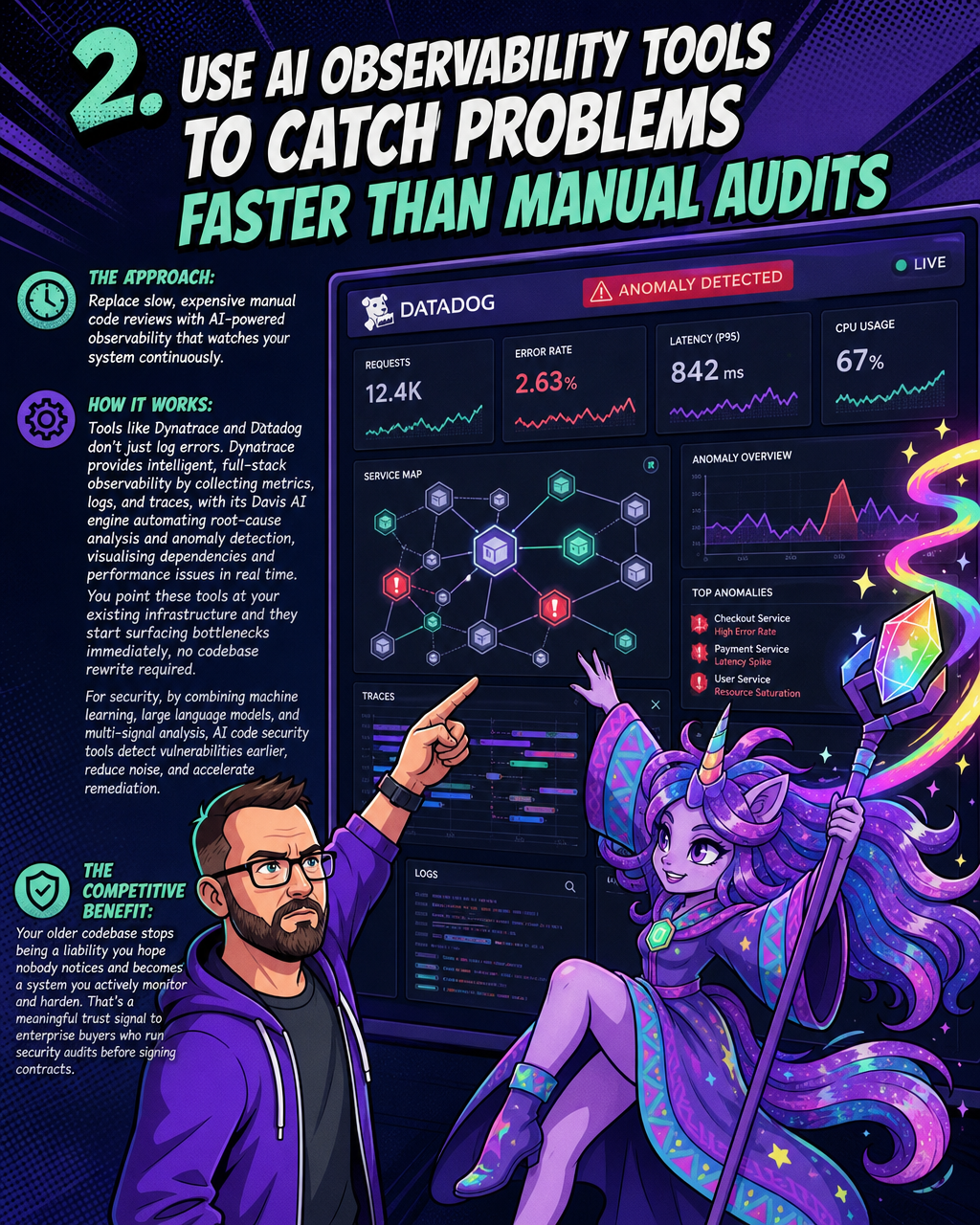
2. Use AI Observability Tools to Catch Problems Faster Than Manual Audits
The approach: Replace slow, expensive manual code reviews with AI-powered observability that watches your system continuously.
How it works: Tools like Dynatrace and Datadog don't just log errors. Dynatrace provides intelligent, full-stack observability by collecting metrics, logs, and traces, with its Davis AI engine automating root-cause analysis and anomaly detection, visualising dependencies and performance issues in real time. You point these tools at your existing infrastructure and they start surfacing bottlenecks immediately, no codebase rewrite required.
For security, by combining machine learning, large language models, and multi-signal analysis, AI code security tools detect vulnerabilities earlier, reduce noise, and accelerate remediation.
The competitive benefit: Your older codebase stops being a liability you hope nobody notices and becomes a system you actively monitor and harden. That's a meaningful trust signal to enterprise buyers who run security audits before signing contracts.
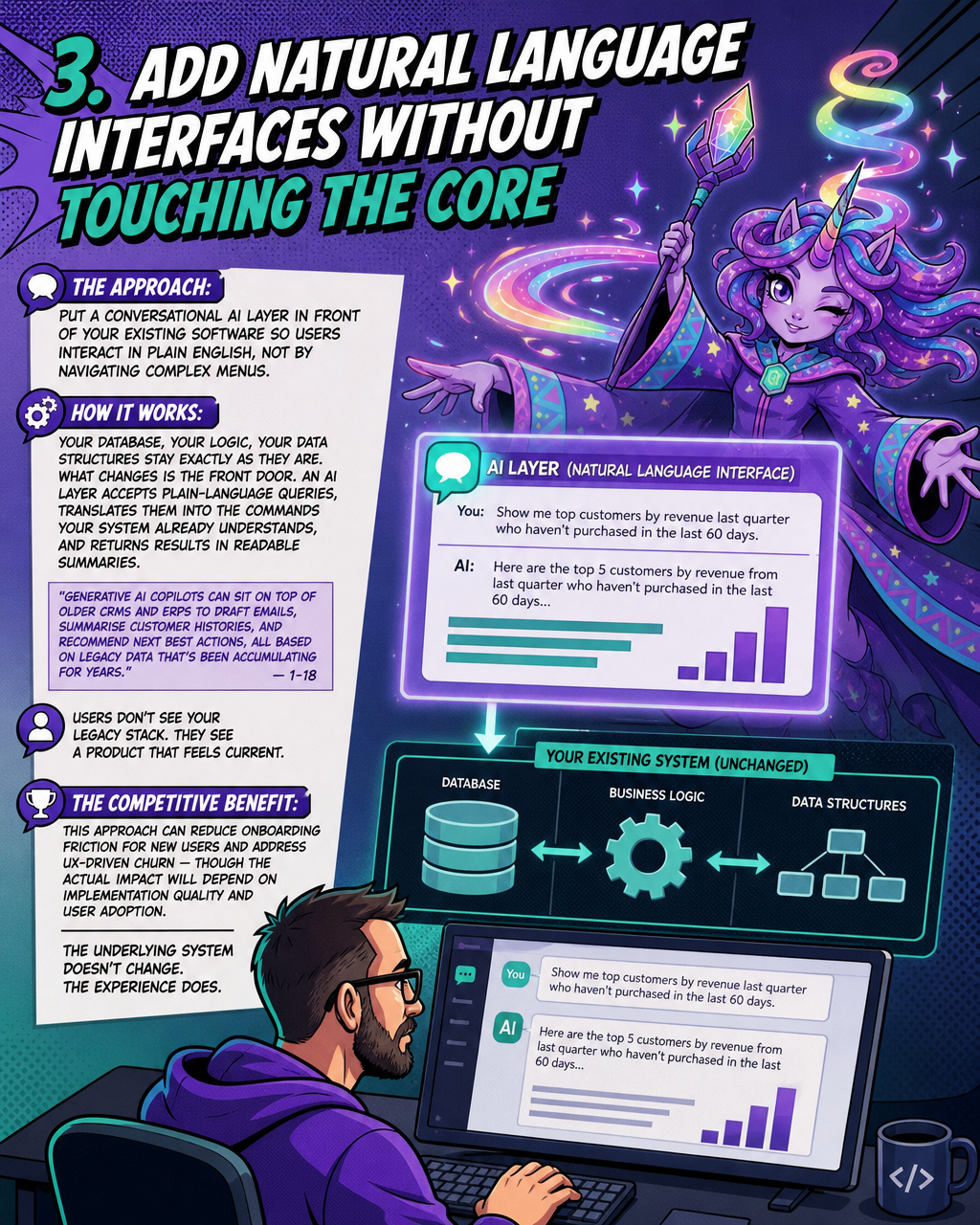
3. Add Natural Language Interfaces Without Touching the Core
The approach: Put a conversational AI layer in front of your existing software so users interact in plain English, not by navigating complex menus.
How it works: Your database, your logic, your data structures stay exactly as they are. What changes is the front door. An AI layer accepts plain-language queries, translates them into the commands your system already understands, and returns results in readable summaries. Generative AI copilots can sit on top of older CRMs and ERPs to draft emails, summarise customer histories, and recommend next best actions, all based on legacy data that's been accumulating for years.
Users don't see your legacy stack. They see a product that feels current.
The competitive benefit: This approach can reduce onboarding friction for new users and address UX-driven churn — though the actual impact will depend on implementation quality and user adoption. The underlying system doesn't change. The experience does.
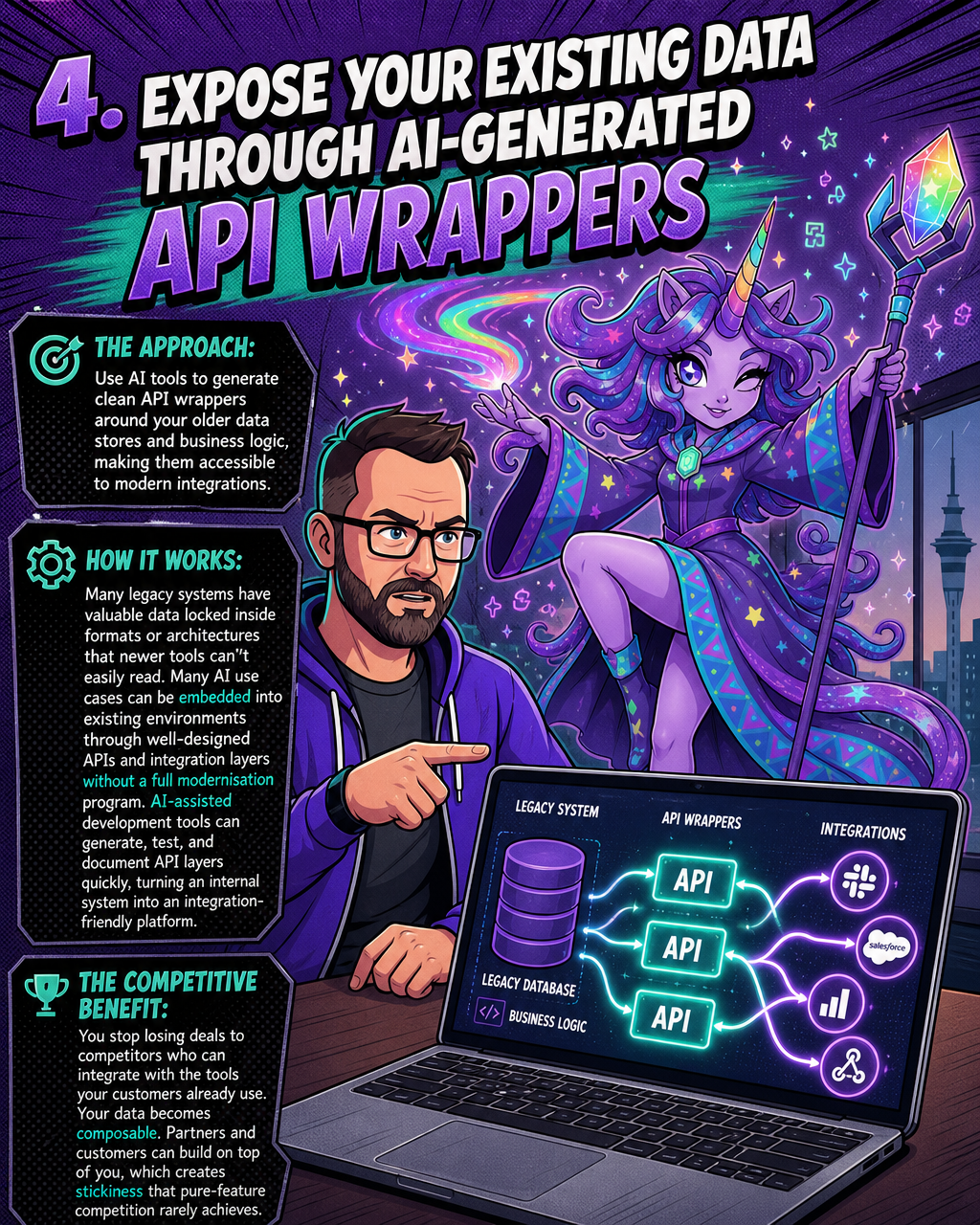
4. Expose Your Existing Data Through AI-Generated API Wrappers
The approach: Use AI tools to generate clean API wrappers around your older data stores and business logic, making them accessible to modern integrations.
How it works: Many legacy systems have valuable data locked inside formats or architectures that newer tools can't easily read. Many AI use cases can be embedded into existing environments through well-designed APIs and integration layers without a full modernisation program. AI-assisted development tools can generate, test, and document API layers quickly, turning an internal system into an integration-friendly platform.
The competitive benefit: You stop losing deals to competitors who can integrate with the tools your customers already use. Your data becomes composable. Partners and customers can build on top of you, which creates stickiness that pure-feature competition rarely achieves.
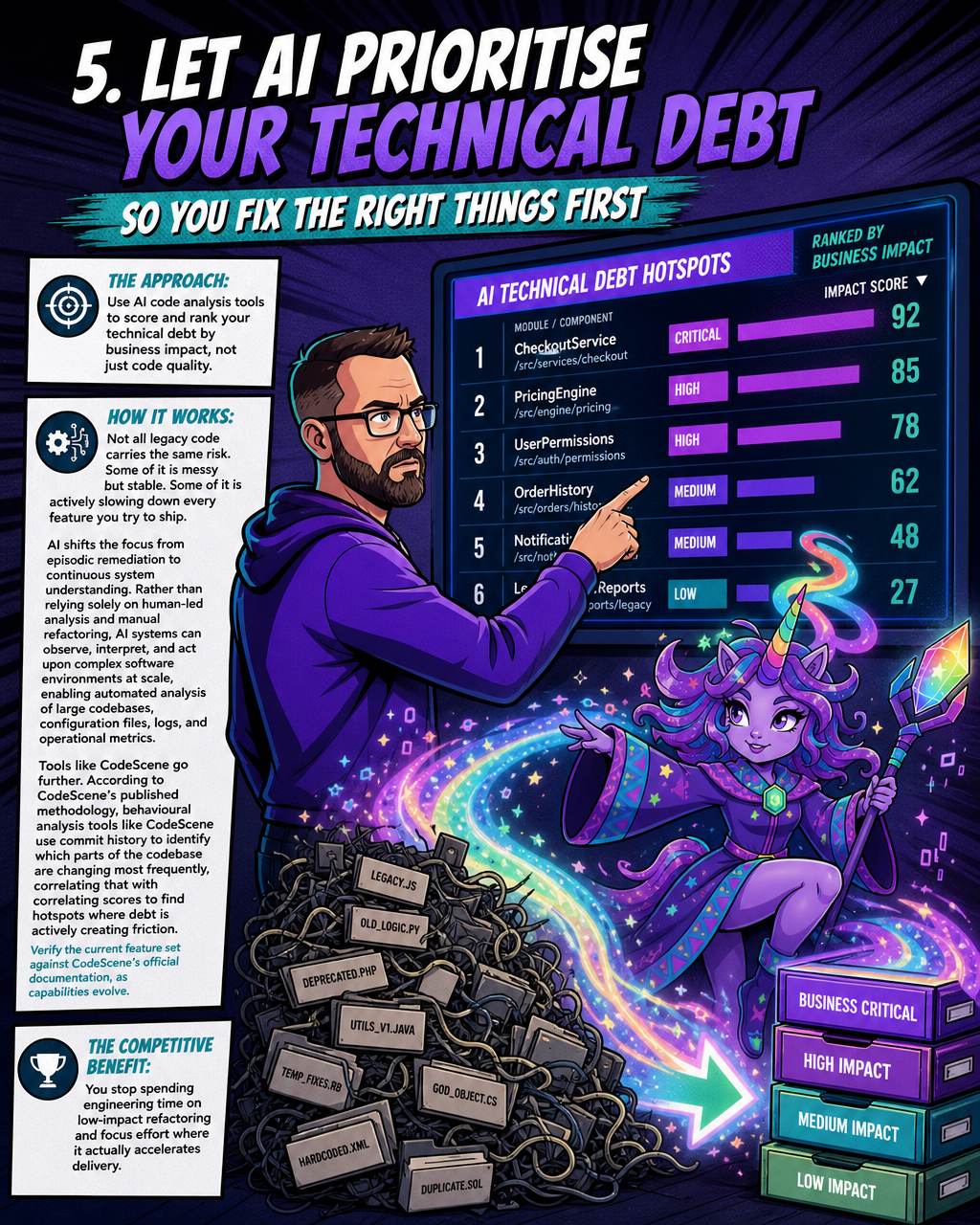
5. Let AI Prioritise Your Technical Debt So You Fix the Right Things First
The approach: Use AI code analysis tools to score and rank your technical debt by business impact, not just code quality.
How it works: Not all legacy code carries the same risk. Some of it is messy but stable. Some of it is actively slowing down every feature you try to ship. AI shifts the focus from episodic remediation to continuous system understanding. Rather than relying solely on human-led analysis and manual refactoring, AI systems can observe, interpret, and act upon complex software environments at scale, enabling automated analysis of large codebases, configuration files, logs, and operational metrics.
Tools like CodeScene go further. According to CodeScene's published methodology, behavioural analysis tools like CodeScene use commit history to identify which parts of the codebase are changing most frequently, correlating that with complexity scores to find hotspots where debt is actively creating friction. Verify the current feature set against CodeScene's official documentation, as capabilities evolve.
The competitive benefit: You stop spending engineering time on low-impact refactoring and focus effort where it actually accelerates delivery.
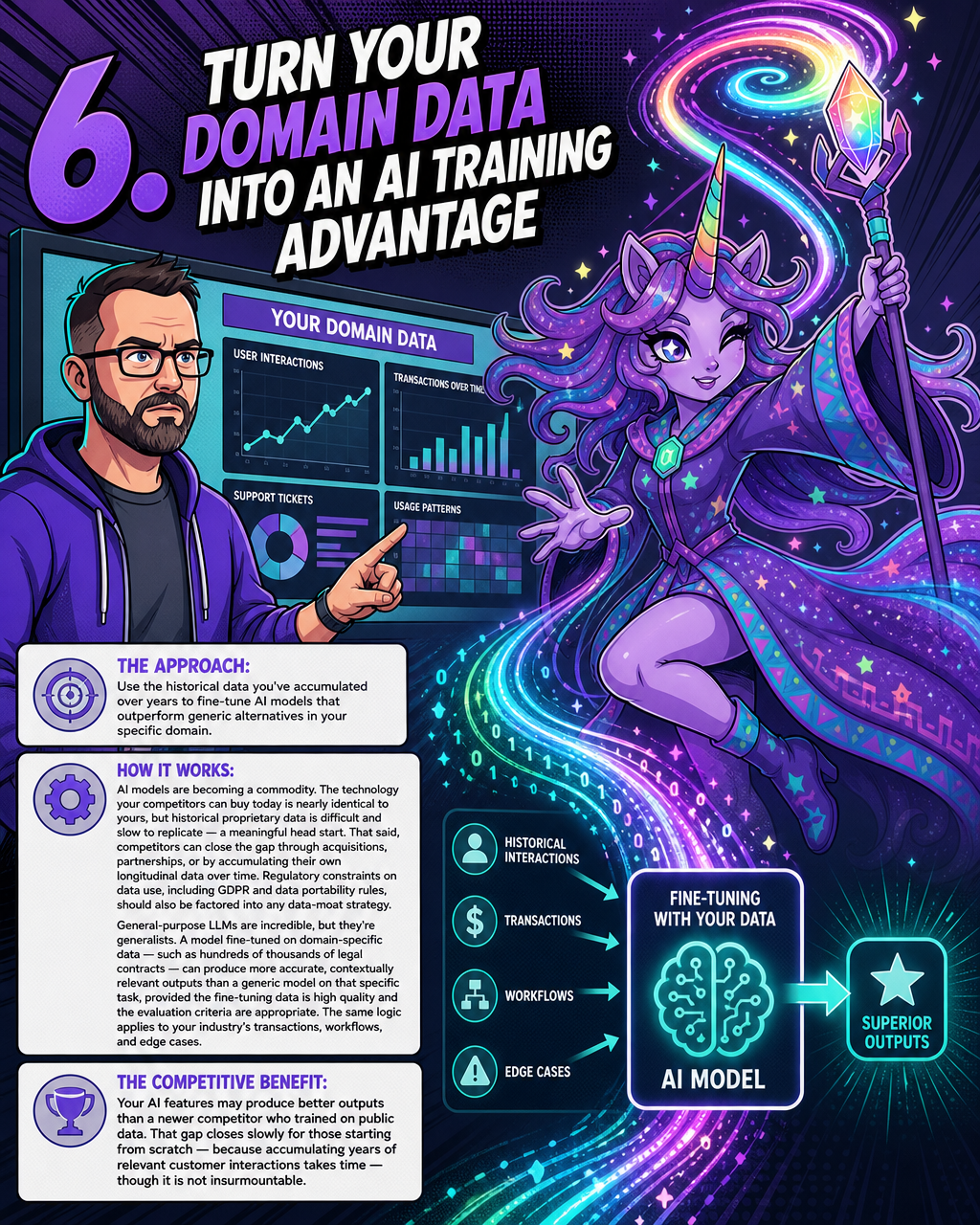
6. Turn Your Domain Data Into an AI Training Advantage
The approach: Use the historical data you've accumulated over years to fine-tune AI models that outperform generic alternatives in your specific domain.
How it works: Newer entrants to your market may have modern architecture but limited customer data. AI models are becoming a commodity. The technology your competitors can buy today is nearly identical to yours, but historical proprietary data is difficult and slow to replicate — a meaningful head start. That said, competitors can close the gap through acquisitions, partnerships, or by accumulating their own longitudinal data over time. Regulatory constraints on data use, including GDPR and data portability rules, should also be factored into any data-moat strategy.
General-purpose LLMs are incredible, but they're generalists. A model fine-tuned on domain-specific data — such as hundreds of thousands of legal contracts — can produce more accurate, contextually relevant outputs than a generic model on that specific task, provided the fine-tuning data is high quality and the evaluation criteria are appropriate. The same logic applies to your industry's transactions, workflows, and edge cases.
The competitive benefit: Your AI features may produce better outputs than a newer competitor who trained on public data. That gap closes slowly for those starting from scratch — because accumulating years of relevant customer interactions takes time — though it is not insurmountable.
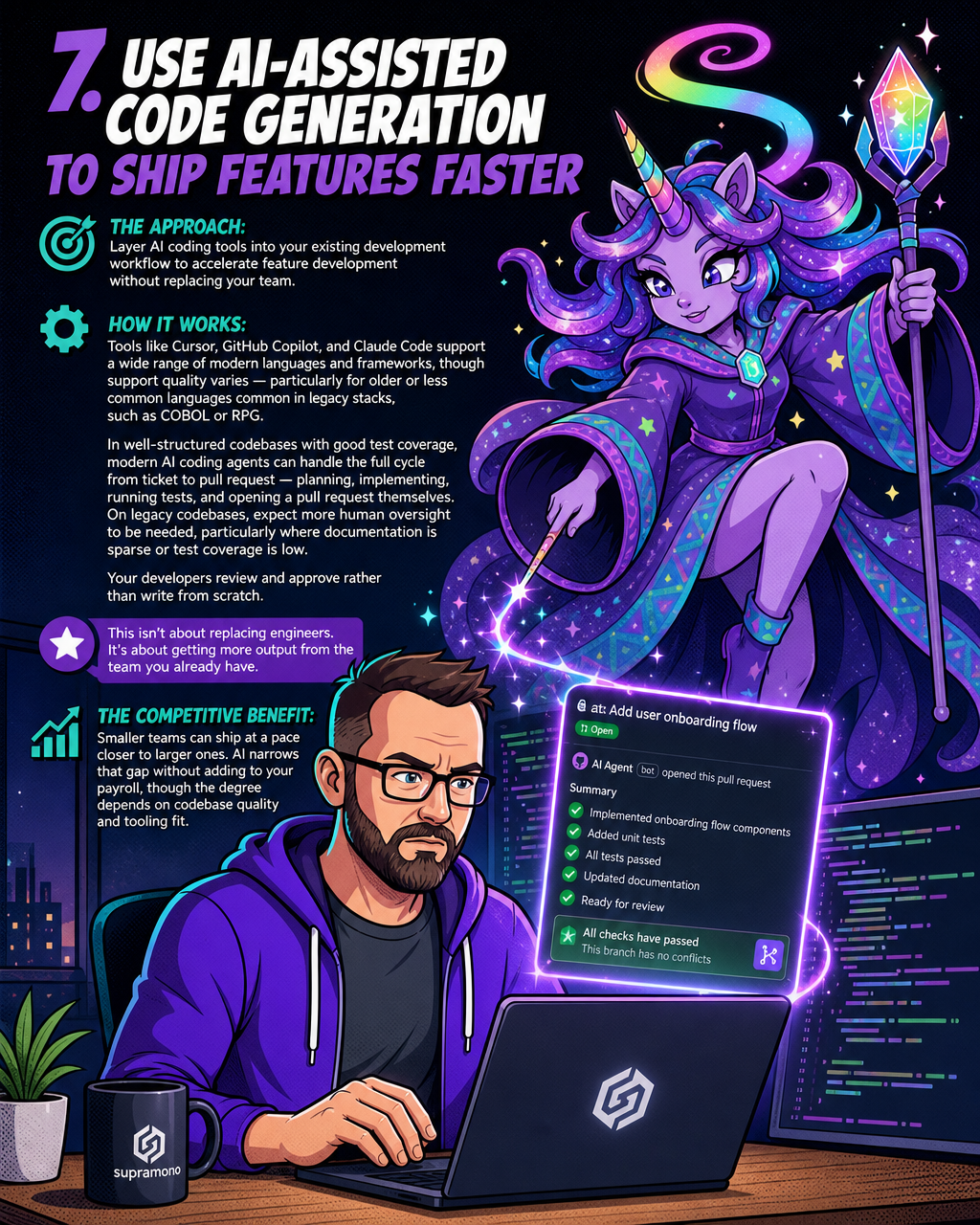
7. Use AI-Assisted Code Generation to Ship Features Faster
The approach: Layer AI coding tools into your existing development workflow to accelerate feature development without replacing your team.
How it works: Tools like Cursor, GitHub Copilot, and Claude Code support a wide range of modern languages and frameworks, though support quality varies — particularly for older or less common languages common in legacy stacks, such as COBOL or RPG. In well-structured codebases with good test coverage, modern AI coding agents can handle the full cycle from ticket to pull request — planning, implementing, running tests, and opening a pull request themselves. On legacy codebases, expect more human oversight to be needed, particularly where documentation is sparse or test coverage is low. Your developers review and approve rather than write from scratch.
This isn't about replacing engineers. It's about getting more output from the team you already have.
The competitive benefit: Smaller teams can ship at a pace closer to larger ones. AI narrows that gap without adding to your payroll, though the degree depends on codebase quality and tooling fit.
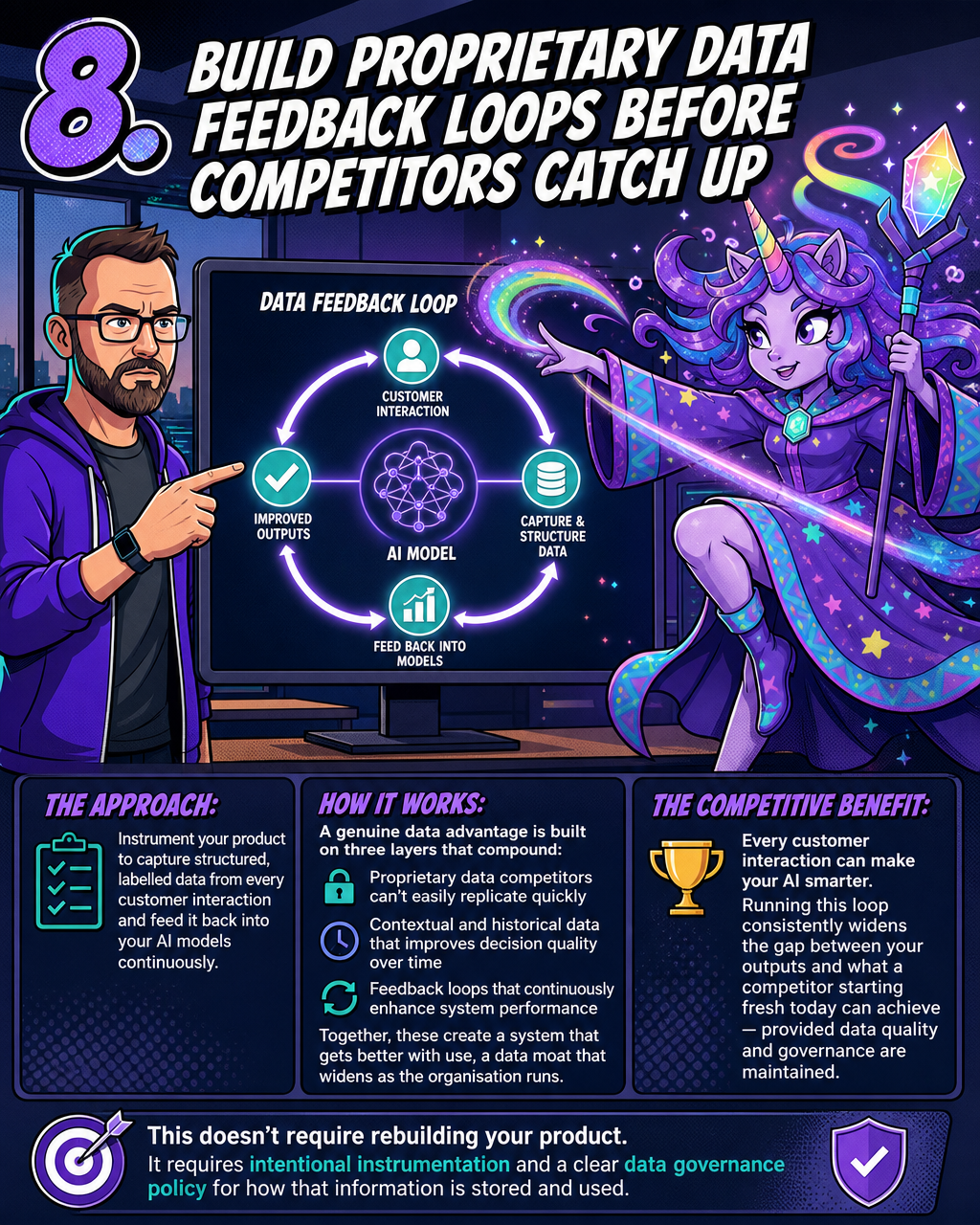
8. Build Proprietary Data Feedback Loops Before Competitors Catch Up
The approach: Instrument your product to capture structured, labelled data from every customer interaction and feed it back into your AI models continuously.
How it works: A genuine data advantage is built on three layers that compound: proprietary data competitors can't easily replicate quickly, contextual and historical data that improves decision quality over time, and feedback loops that continuously enhance system performance, turning every decision the AI makes into training signal for the next one. Together, these create a system that gets better with use, a data moat that widens as the organisation runs.
This doesn't require rebuilding your product. It requires intentional instrumentation and a clear data governance policy for how that information is stored and used.
The competitive benefit: Every customer interaction can make your AI smarter. Running this loop consistently widens the gap between your outputs and what a competitor starting fresh today can achieve — provided data quality and governance are maintained.
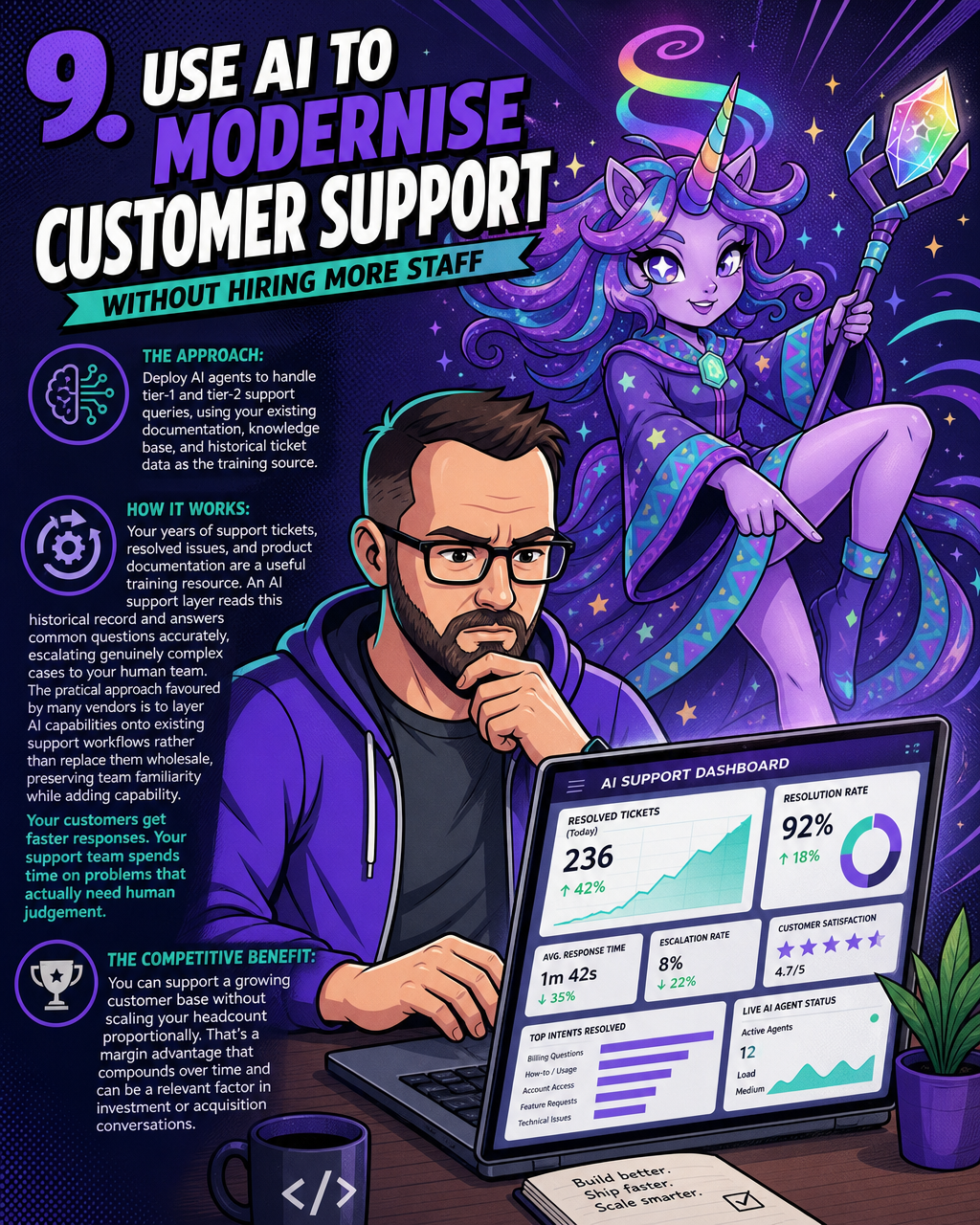
9. Use AI to Modernise Customer Support Without Hiring More Staff
The approach: Deploy AI agents to handle tier-1 and tier-2 support queries, using your existing documentation, knowledge base, and historical ticket data as the training source.
How it works: Your years of support tickets, resolved issues, and product documentation are a useful training resource. An AI support layer reads this historical record and answers common questions accurately, escalating genuinely complex cases to your human team. The practical approach favoured by many vendors is to layer AI capabilities onto existing support workflows rather than replace them wholesale, preserving team familiarity while adding capability.
Your customers get faster responses. Your support team spends time on problems that actually need human judgement.
The competitive benefit: You can support a growing customer base without scaling your headcount proportionally. That's a margin advantage that compounds over time and can be a relevant factor in investment or acquisition conversations.
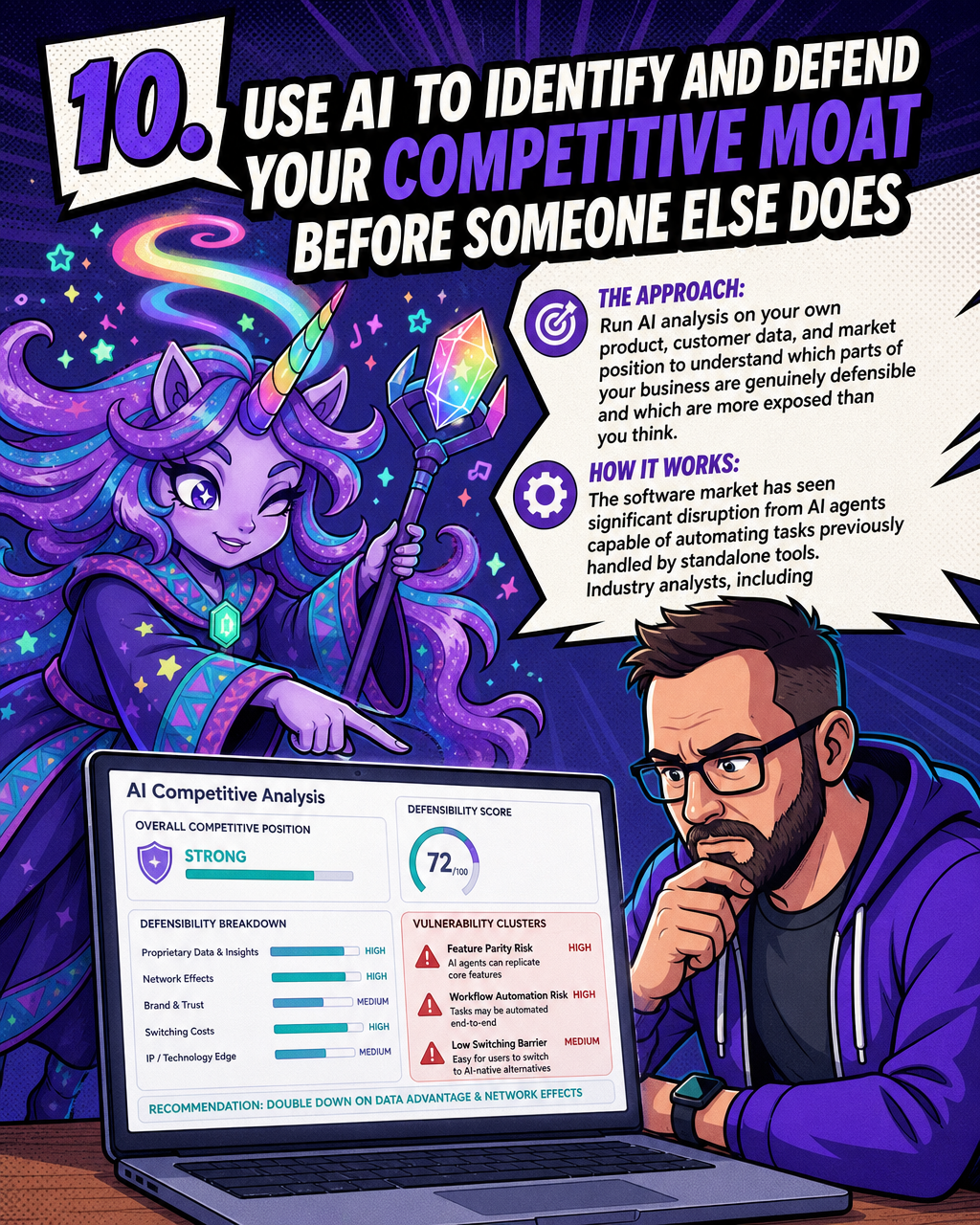
10. Use AI to Identify and Defend Your Competitive Moat Before Someone Else Does
The approach: Run AI analysis on your own product, customer data, and market position to understand which parts of your business are genuinely defensible and which are more exposed than you think.
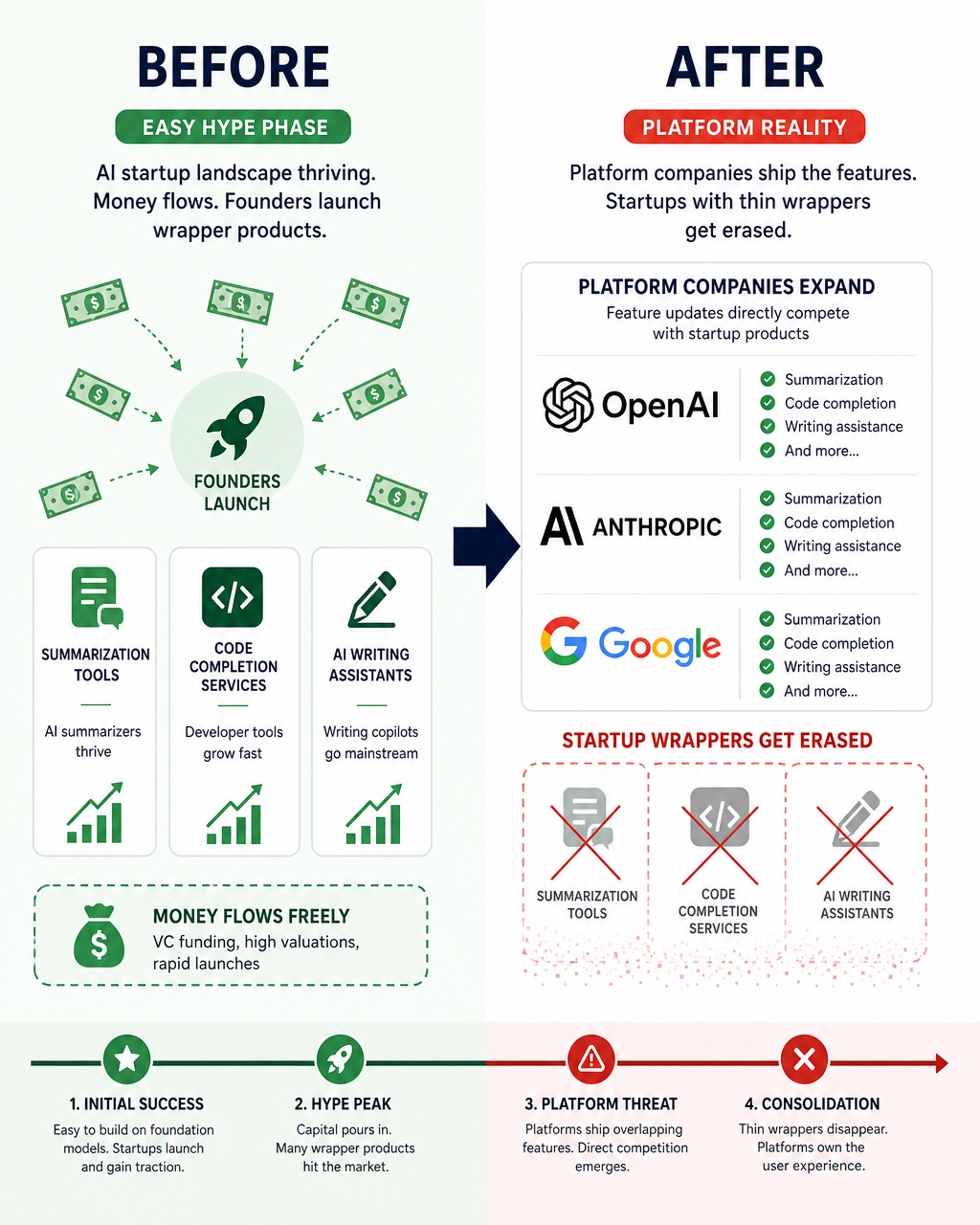
How it works: The software market has seen significant disruption from AI agents capable of automating tasks previously handled by standalone tools. Industry analysts, including

Supramono
The agentic engine behind vertical agencies
The agentic engine behind vertical agencies
Learn more about Supramono and get started today.
Visit Supramono