Community-Led Growth for Engineers: Build Trust Before You Build Pipeline



Most growth playbooks treat engineers as targets. Run ads. Write cold outreach. Book demos. Push the product. Engineers see through this immediately, and the moment they do, you've lost them, probably for good.
Community-led growth (CLG) works differently. It treats engineers as participants first, building genuine credibility through shared problem-solving long before any commercial relationship begins. For pre-product founders and career-refugees pivoting into tech, it's one of the few growth strategies with low upfront costs that can compound significantly over time — though it requires a meaningful investment of founder time and typically takes 12–24 months before showing commercial results.
Here's how it actually works.
What Community-Led Growth Really Means for Technical Audiences
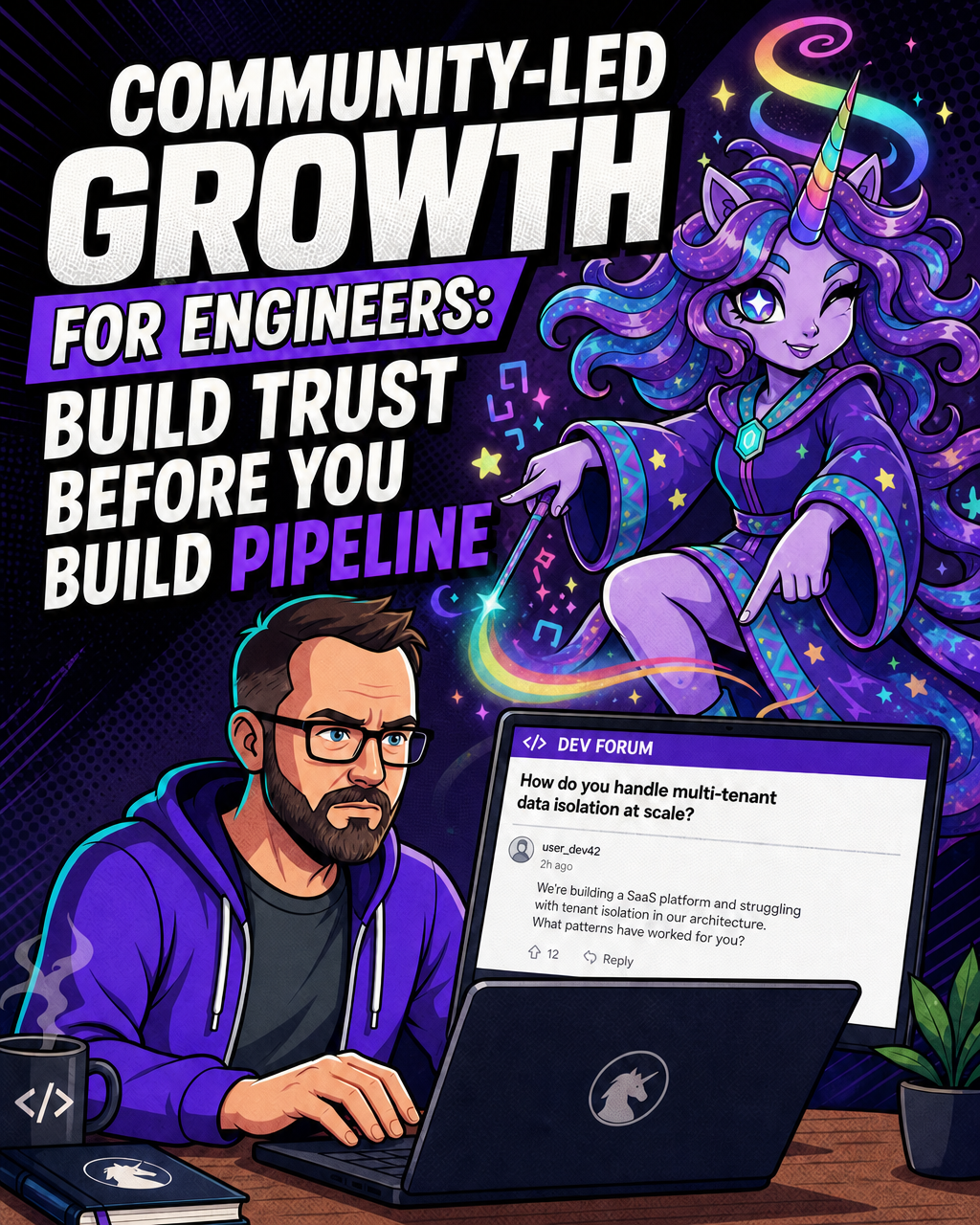
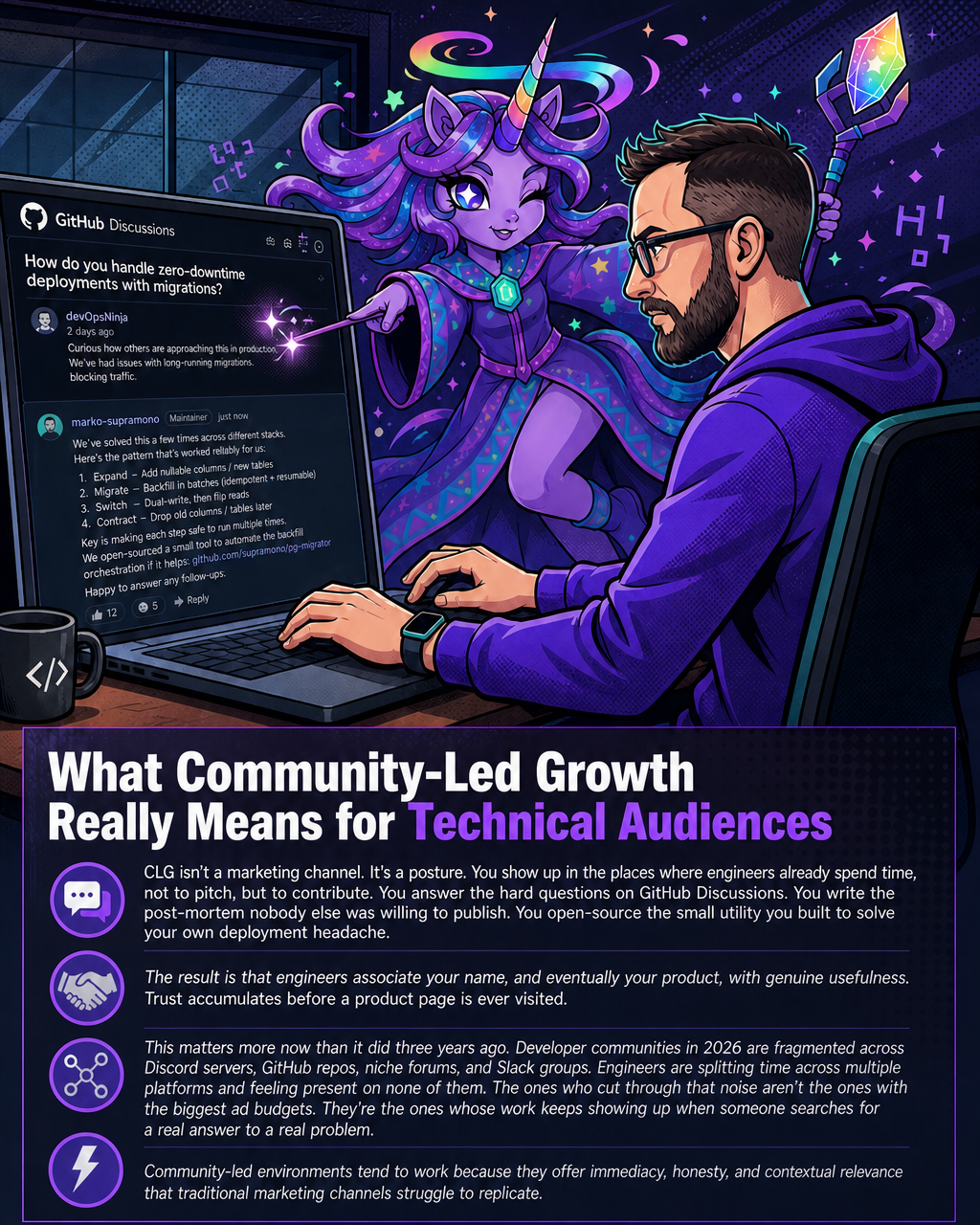
CLG isn't a marketing channel. It's a posture. You show up in the places where engineers already spend time, not to pitch, but to contribute. You answer the hard questions on GitHub Discussions. You write the post-mortem nobody else was willing to publish. You open-source the small utility you built to solve your own deployment headache.
The result is that engineers associate your name, and eventually your product, with genuine usefulness. Trust accumulates before a product page is ever visited.
This matters more now than it did three years ago. Developer communities in 2026 are fragmented across Discord servers, GitHub repos, niche forums, and Slack groups. Engineers are splitting time across multiple platforms and feeling present on none of them. The ones who cut through that noise aren't the ones with the biggest ad budgets. They're the ones whose work keeps showing up when someone searches for a real answer to a real problem.
Community-led environments tend to work because they offer immediacy, honesty, and contextual relevance that traditional marketing channels struggle to replicate.
Why Engineers Don't Respond to Standard GTM Playbooks
Engineers are professional skeptics. It's literally their job to question assumptions, stress-test systems, and distrust anything that hasn't been proven under real conditions.
This means traditional outbound, sponsored content, and influencer plays don't land the same way with a technical audience. They're trained to detect inauthenticity. A glossy case study with cherry-picked numbers reads as noise. A raw GitHub issue thread where you actually fixed someone's bug in public reads as signal.
That instinct extends to how engineers discover and adopt tools. Research such as the Stack Overflow Developer Survey consistently shows developers primarily discover, validate, and adopt tools through peer-driven platforms like GitHub, Discord, Reddit, and Stack Overflow. Paid channels do contribute to awareness, but peer recommendation tends to dominate the final decision.
This is why community-led growth isn't optional for technical founders. It's the medium through which trust transfers.
The Metrics That Actually Matter (and the Ones That Don't)
Here's where most founders go wrong: they measure the wrong things.
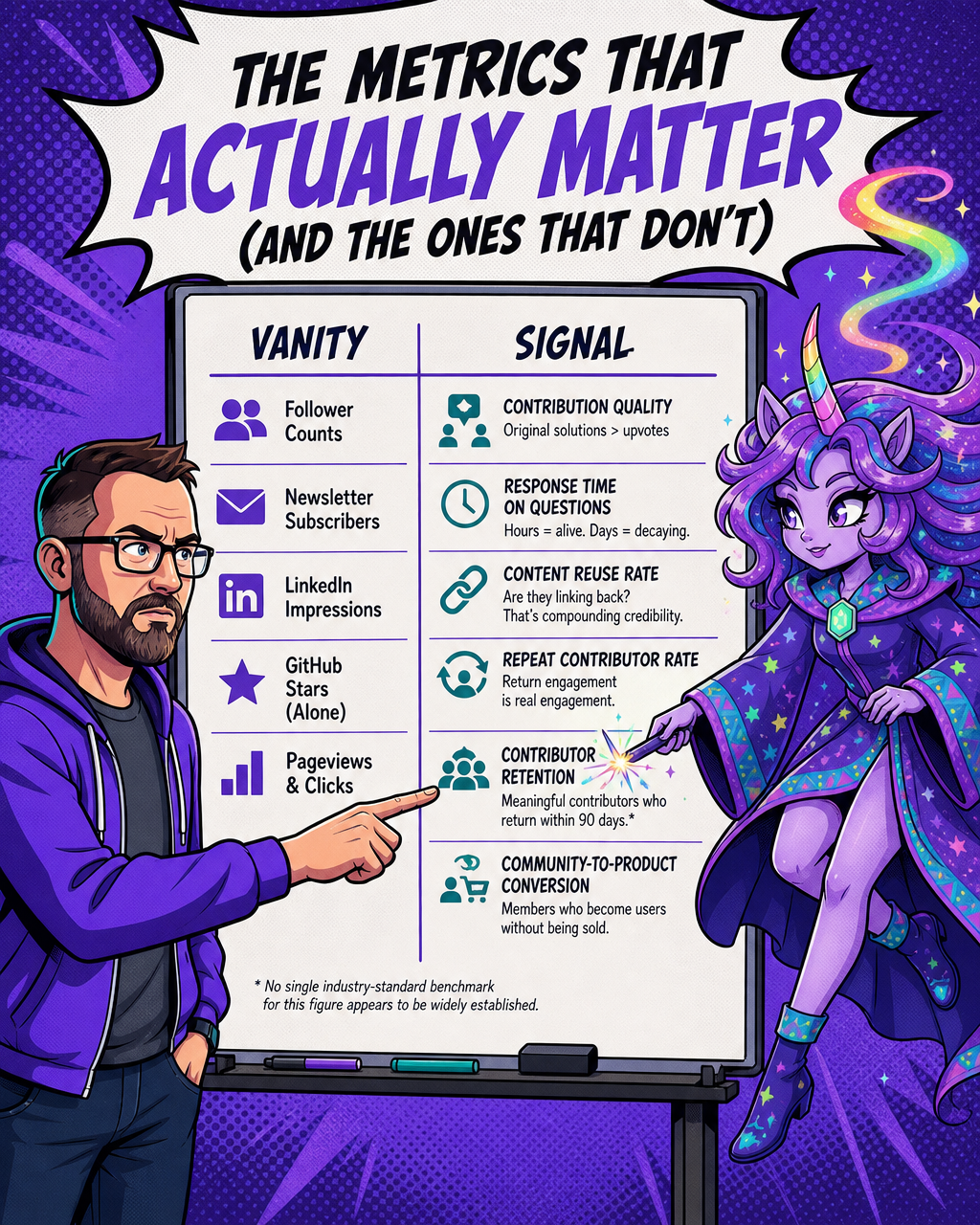
Follower counts, newsletter subscribers, and LinkedIn impressions are vanity metrics for technical audiences. They look good in a deck and tell you almost nothing about whether your community has real traction.
The metrics that actually signal healthy community momentum are different. Think contribution quality over volume. A forum where five experts answer deeply and others build on those answers is worth more than one with 5,000 lurkers and shallow one-liners. Repo activity, specifically the ratio of community-answered questions versus team-answered questions, tells you whether you've built genuine peer-to-peer infrastructure or just a support ticket system with a different name.
Active contributor retention is particularly telling. Anecdotally, practitioners describe healthy technical communities as ones where a meaningful share of contributors return to contribute again within 90 days — though no single industry-standard benchmark for this figure appears to be widely established. If you're not tracking that cohort, you're not actually tracking community health.
GitHub stars get a lot of attention as a proxy metric, and they're not useless. Projects like Ollama experienced significant GitHub star growth in 2024, which genuinely de-risked early investor decisions. But stars alone don't tell the full story. Active contributors and frequent updates signal ongoing development and reliability in ways that a star count from 18 months ago simply can't.
The signals that matter most are:
- Contribution quality: Are people sharing original solutions, or just upvoting?
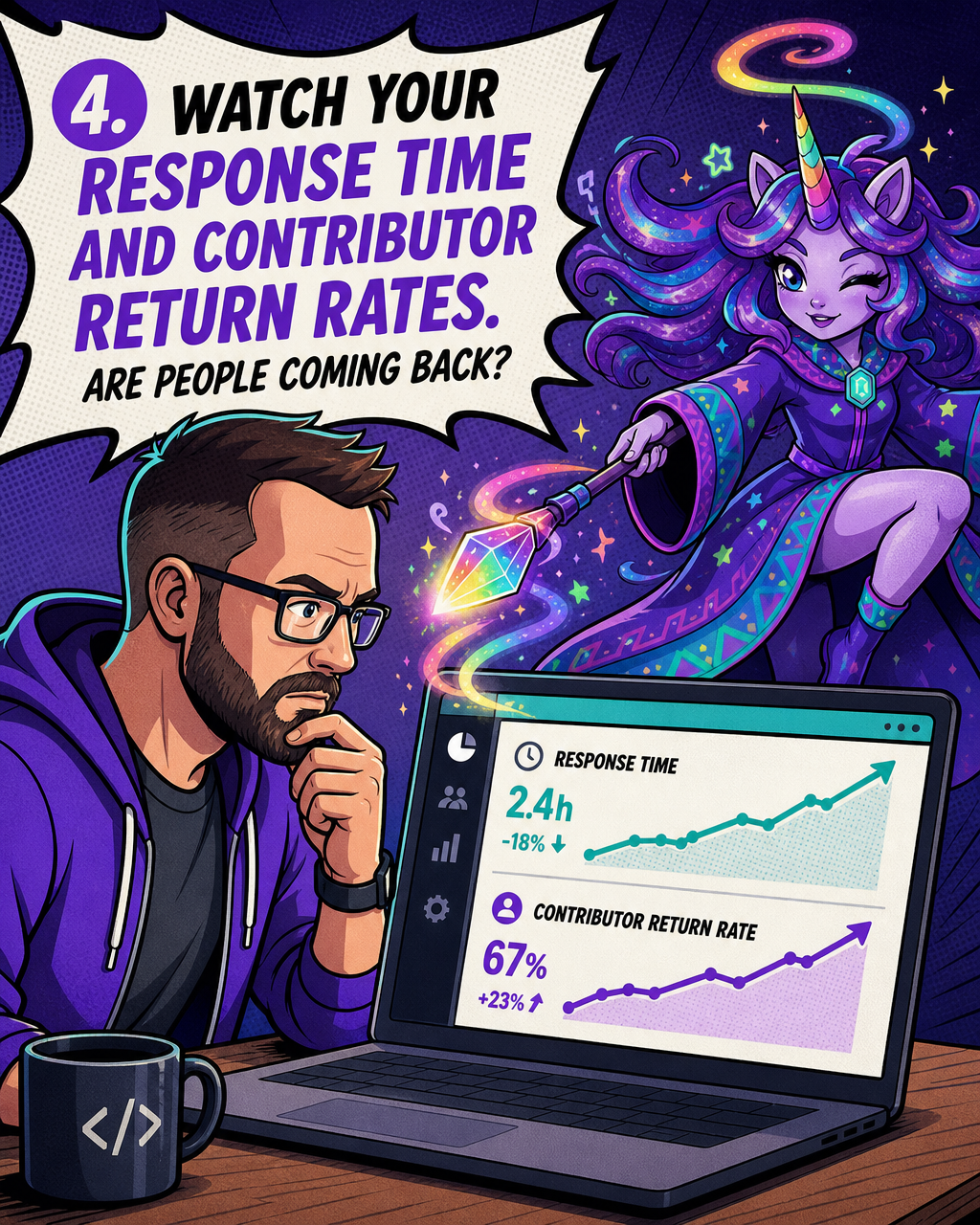
- Response time on questions: A community that answers new questions within hours is alive. One where questions sit unanswered for days is decaying.
- Content reuse rate: Are community members linking back to your posts, docs, or repos when helping someone else? That's compounding credibility.
- Repeat contributor rate: How many people show up more than once? First-time engagement is easy to manufacture. Return engagement is not.
- Community-to-product conversion: When you eventually do have a product, how many of your early community members become users or customers without ever being "sold" to?
The Flywheel Starts With Giving
The hardest part for most founders is accepting that the flywheel starts entirely on the giving side. You have to put in real value before you get anything back. There's no shortcut.
Practically, this looks like a few things:
Open-source a utility. You don't need to open-source your entire product. Open-source the small tool you built to solve the annoyance that nobody else has addressed cleanly. If it's useful, people will find it. If they find it and it works, they'll remember you. The commercial open-source software market has grown substantially according to analyst firms such as IDC and Gartner, which means the surface area for useful contributions is large.
Write honest post-mortems. Engineering culture has tremendous respect for transparency about failure. A post-mortem that walks through exactly what broke, why your assumptions were wrong, and what you changed is worth a hundred feature announcement posts. It shows competence and honesty simultaneously, which is rare.
Solve problems publicly. When you answer a question on a forum, write the answer as if you're writing documentation, not firing off a quick reply. Be thorough. Cite your sources. Make it the kind of answer you'd want to find at 11pm when something is broken. Every resolved issue in public reduces load on your future support pipeline and builds a searchable record of your expertise.
Document what you actually learned, not what sounds good. Engineers can tell the difference between experience-based writing and content-farm writing. The specificity of real experience shows through: the exact error message, the counterintuitive fix, the version number that mattered.
Community Health as a Leading Indicator of GTM Readiness
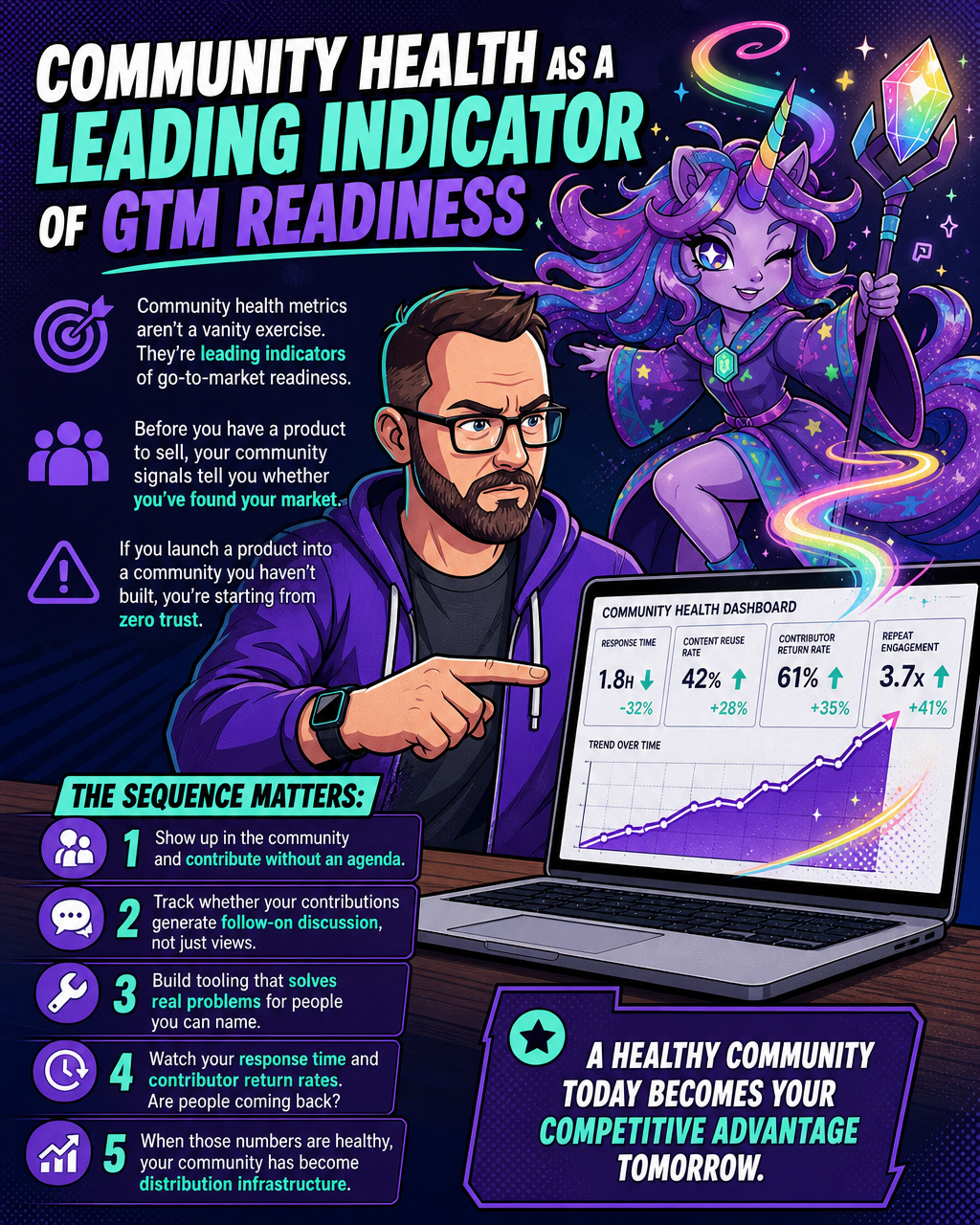
Here's the strategic framing that most people miss: community health metrics aren't a vanity exercise. They're leading indicators of go-to-market readiness.
Before you have a product to sell, your community signals tell you whether you've found your market. If engineers are showing up repeatedly to engage with your content and tooling, you've validated that the problem space resonates. If your response time is low and your content reuse rate is climbing, you've built distribution infrastructure that will carry a product launch when you're ready.
Conversely, if you launch a product into a community you haven't built, you're starting from zero trust in a medium that runs on trust. Paid channels can fill that gap temporarily, but the cost is high and the credibility is lower.
The sequence matters:
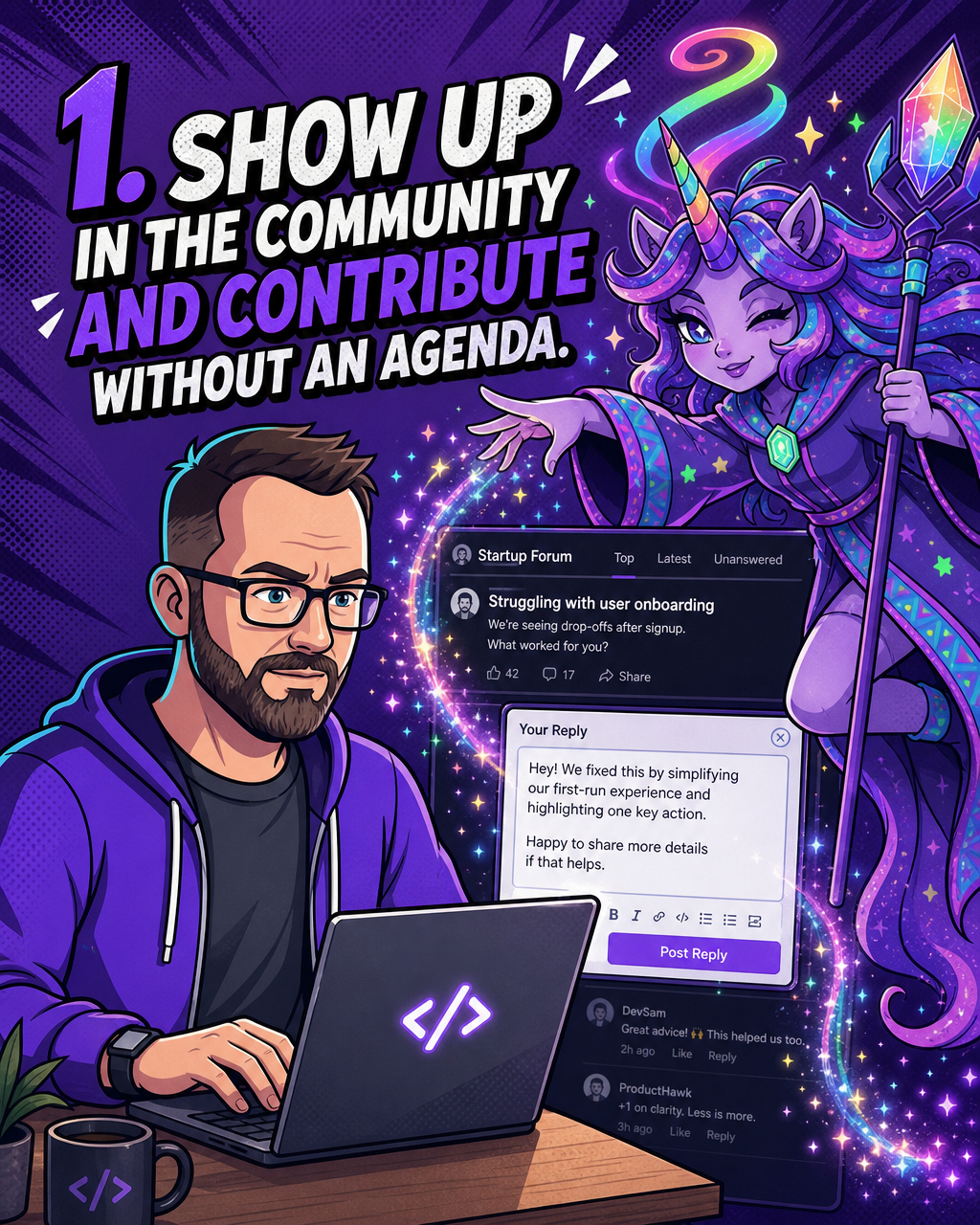
- Show up in the community and contribute without an agenda.
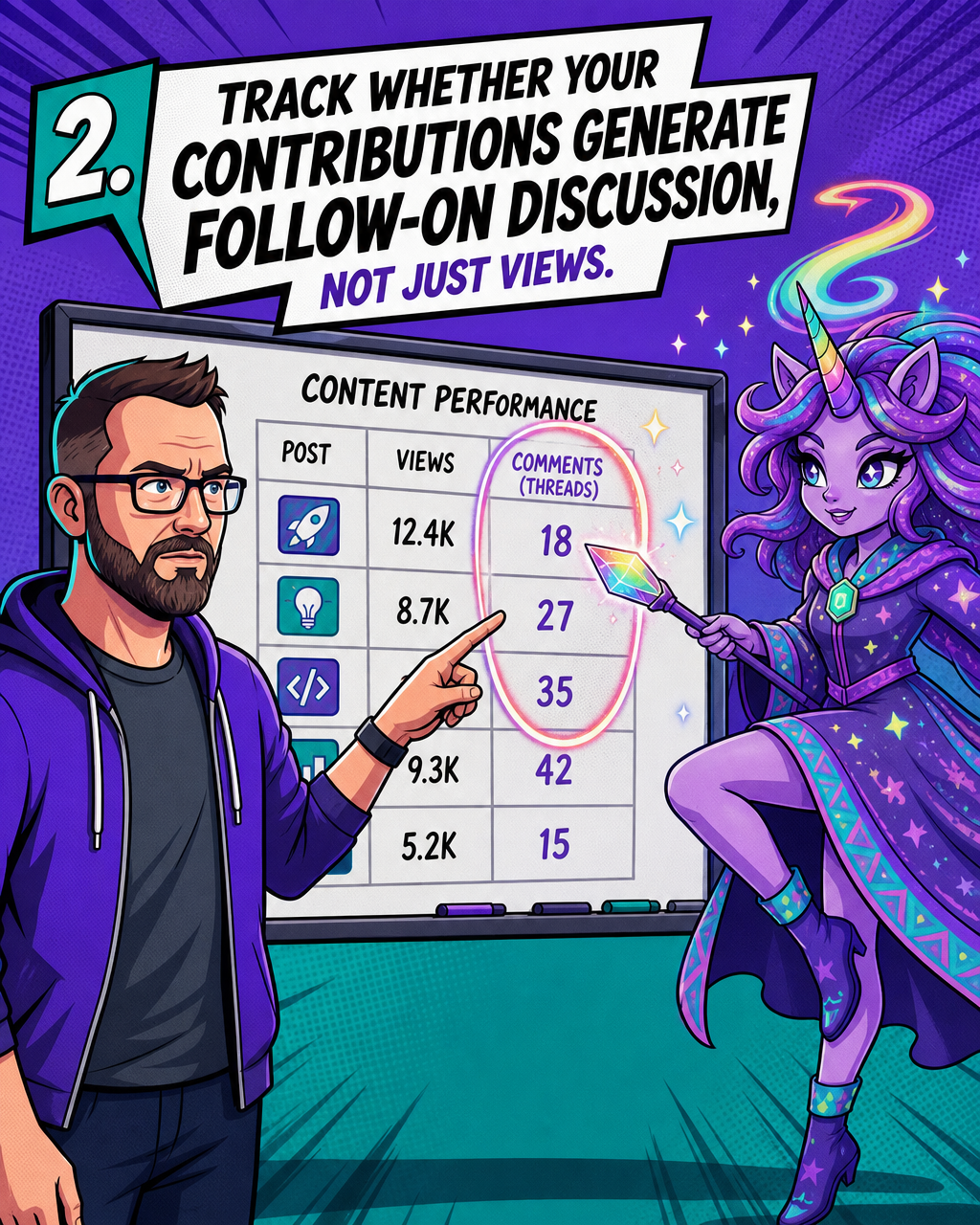
- Track whether your contributions generate follow-on discussion, not just views.
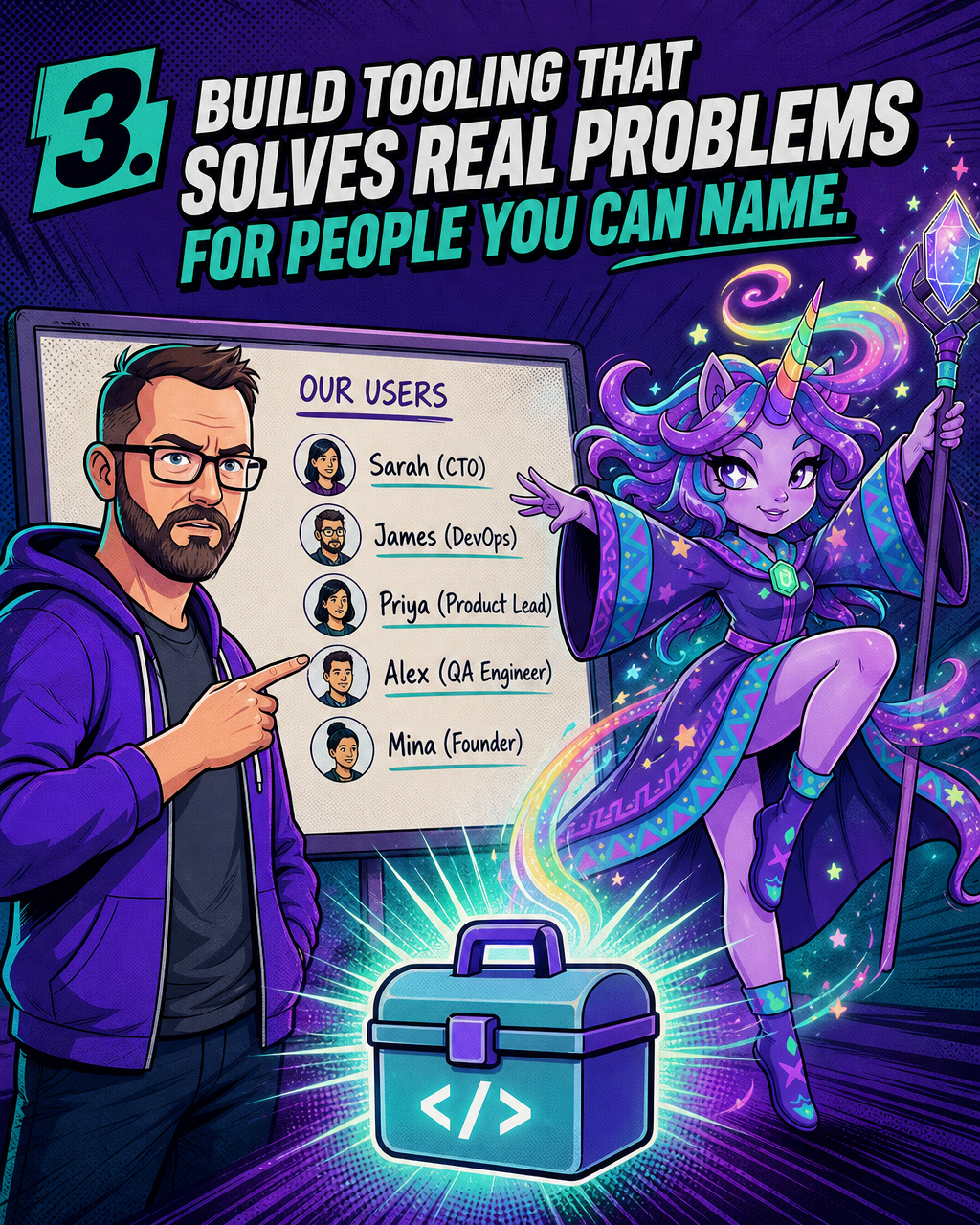
- Build tooling that solves real problems for people you can name.
- Watch your response time and contributor return rates. Are people coming back?
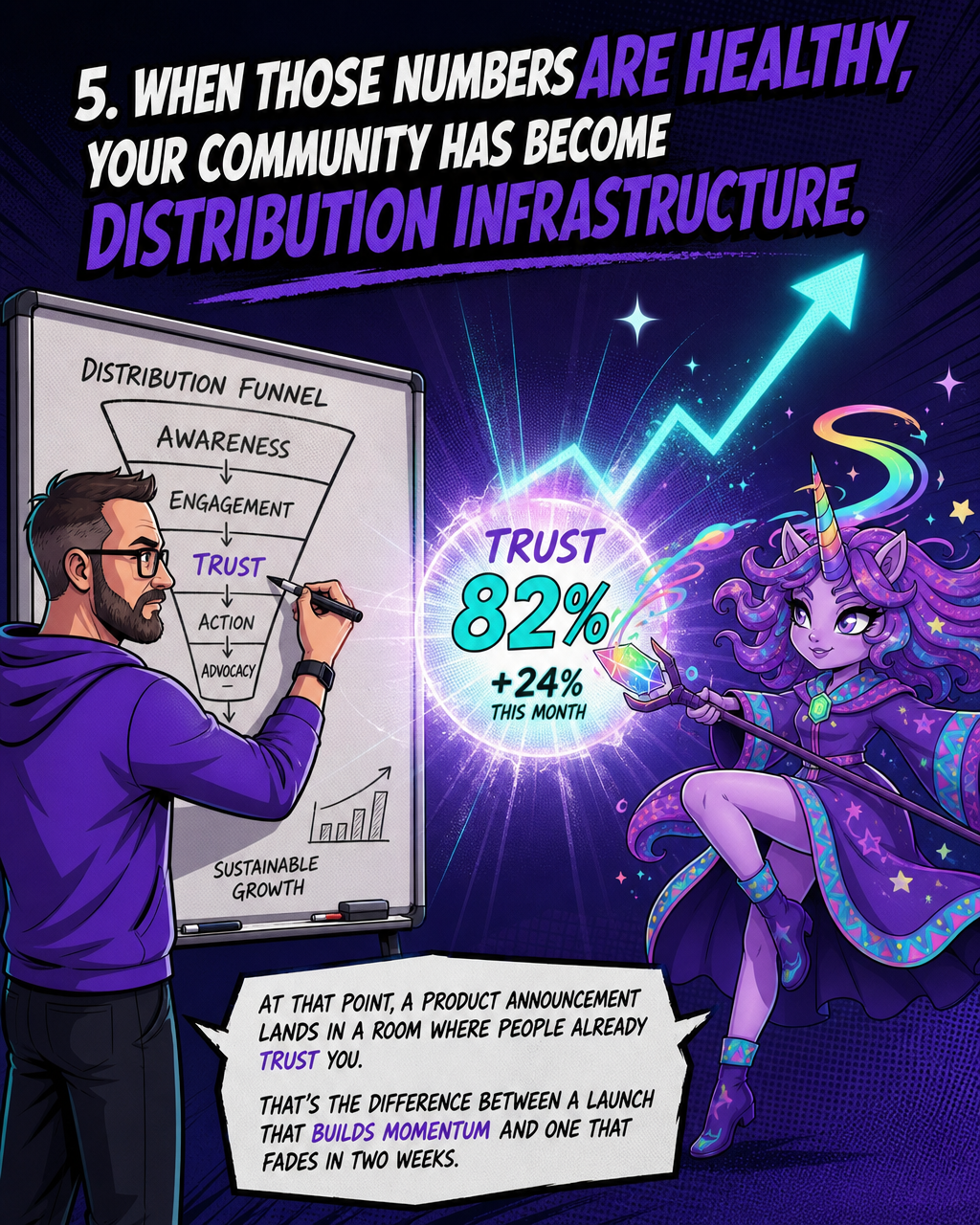
- When those numbers are healthy, your community has become distribution infrastructure.
At that point, a product announcement lands in a room where people already trust you. That's the difference between a launch that builds momentum and one that fades in two weeks.
What This Looks Like in Practice for Pre-Product Founders
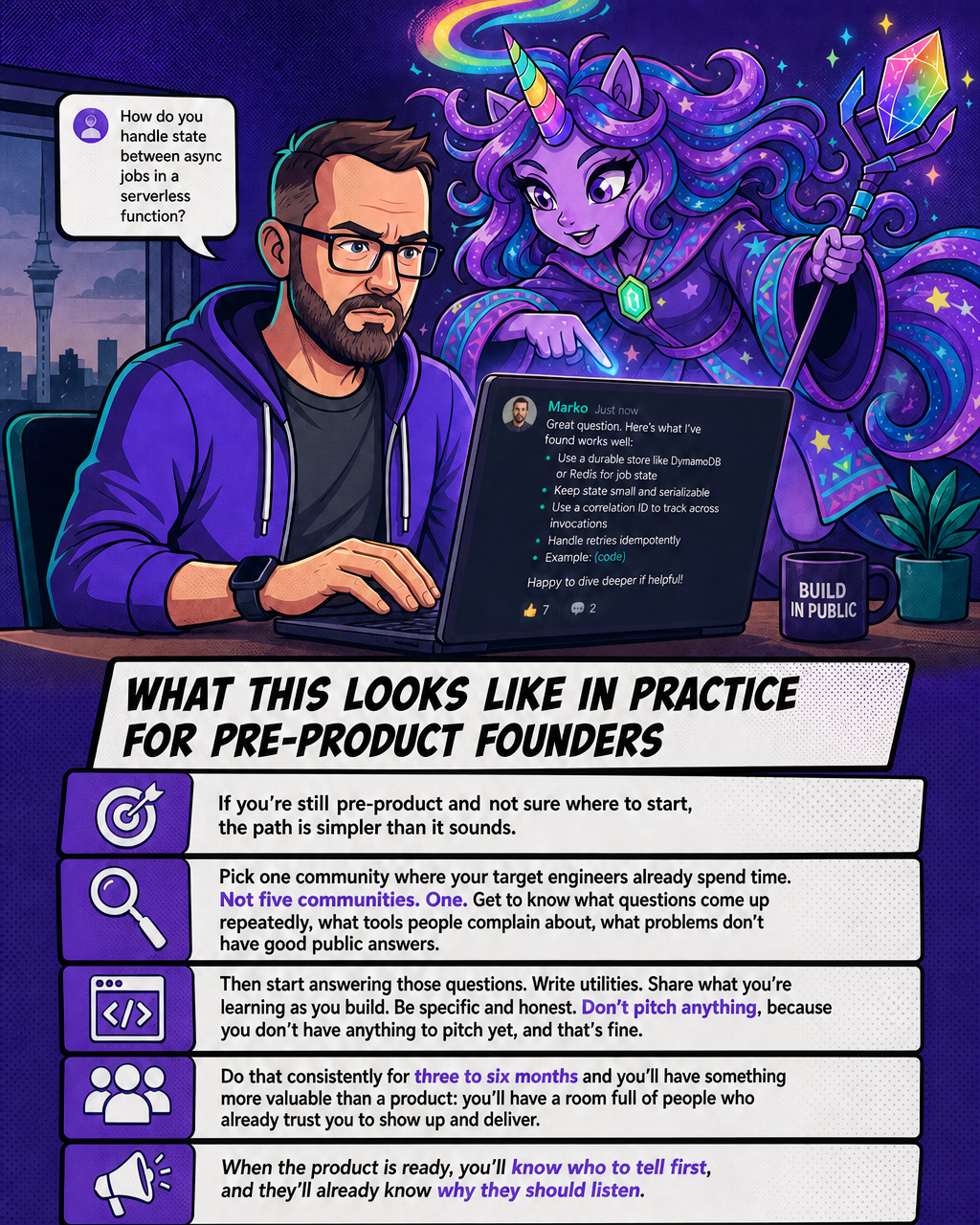
If you're still pre-product and not sure where to start, the path is simpler than it sounds.
Pick one community where your target engineers already spend time. Not five communities. One. Get to know what questions come up repeatedly, what tools people complain about, what problems don't have good public answers.
Then start answering those questions. Write utilities. Share what you're learning as you build. Be specific and honest. Don't pitch anything, because you don't have anything to pitch yet, and that's fine.
Do that consistently for three to six months and you'll have something more valuable than a product: you'll have a room full of people who already trust you to show up and deliver.
When the product is ready, you'll know who to tell first, and they'll already know why they should listen.
The Compounding Advantage
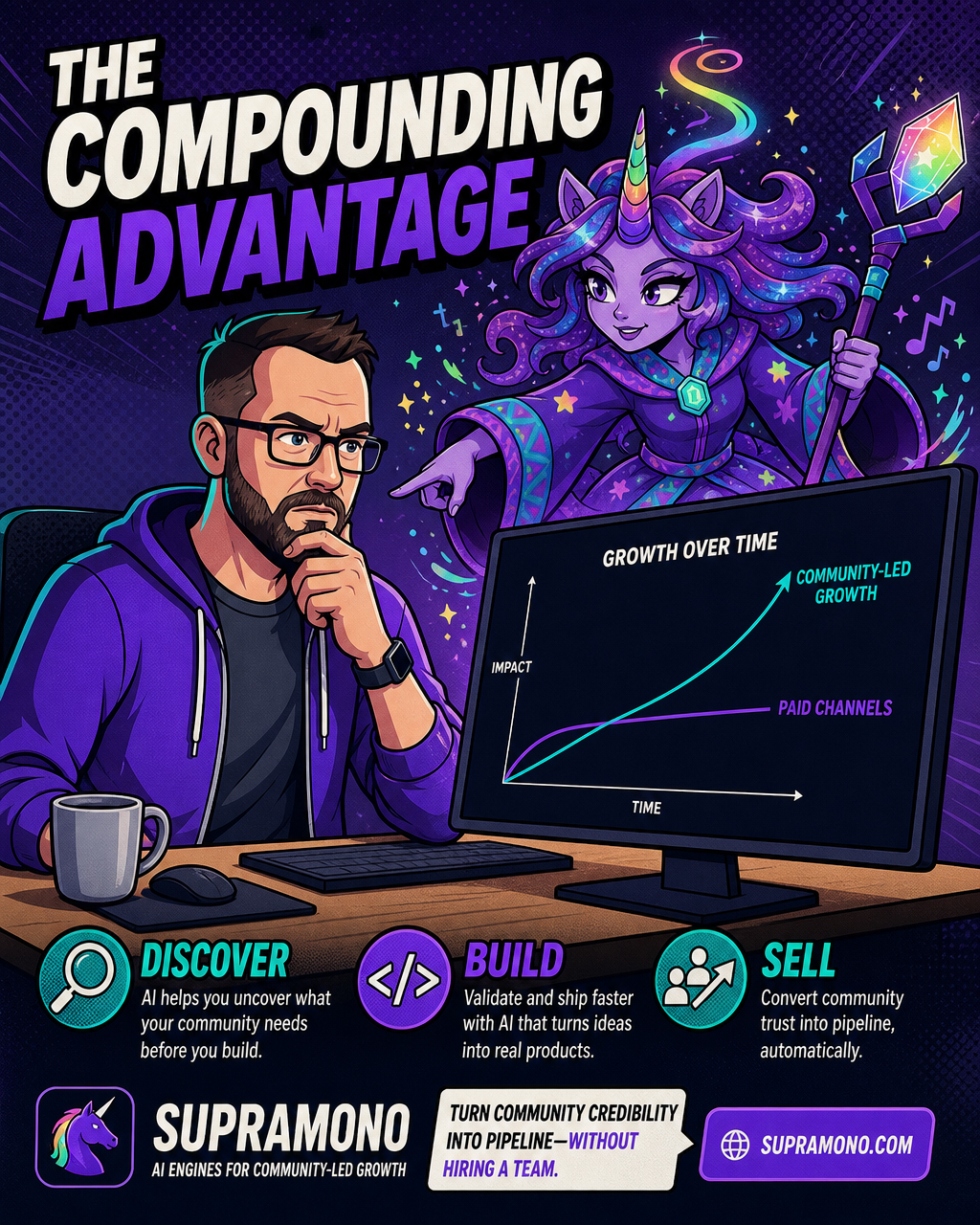
Paid channels and community-led growth serve different purposes. Paid channels offer speed, targeting precision, and measurable short-term ROI — advantages CLG cannot match in the early stages. Community-led growth, by contrast, tends to compound over time in ways that paid spend cannot. The two are often complementary rather than opposed.
Every useful answer you write gets discovered again months later by someone who finds it through search. Every open-source repo you ship keeps accumulating stars and issues and forks while you sleep. Every post-mortem you publish becomes a proof point for the next person evaluating whether you know what you're talking about.
This is why community-led growth is particularly valuable for founders building without a team. You can't outspend a funded competitor. In many cases, especially early, when larger competitors are less focused on a specific niche community, you may be able to out-contribute them — to be more useful, more honest, and more present than their community efforts allow. That advantage is most accessible in the early stages of a niche, before well-resourced competitors turn their attention to it.
That asymmetry is real, though how accessible it remains will depend on the specific niche and how quickly larger players move.
If you're building a product and want to understand how AI can help you turn community credibility into pipeline, Supramono was built for exactly that. The Discover, Build, and Sell engines work together so that the trust you build in a community flows directly into how you validate ideas, ship products, and fill your pipeline, without hiring a team to manage each piece separately. Take a look at what's possible.

Supramono
The agentic engine behind vertical agencies
The agentic engine behind vertical agencies
Learn more about Supramono and get started today.
Visit Supramono