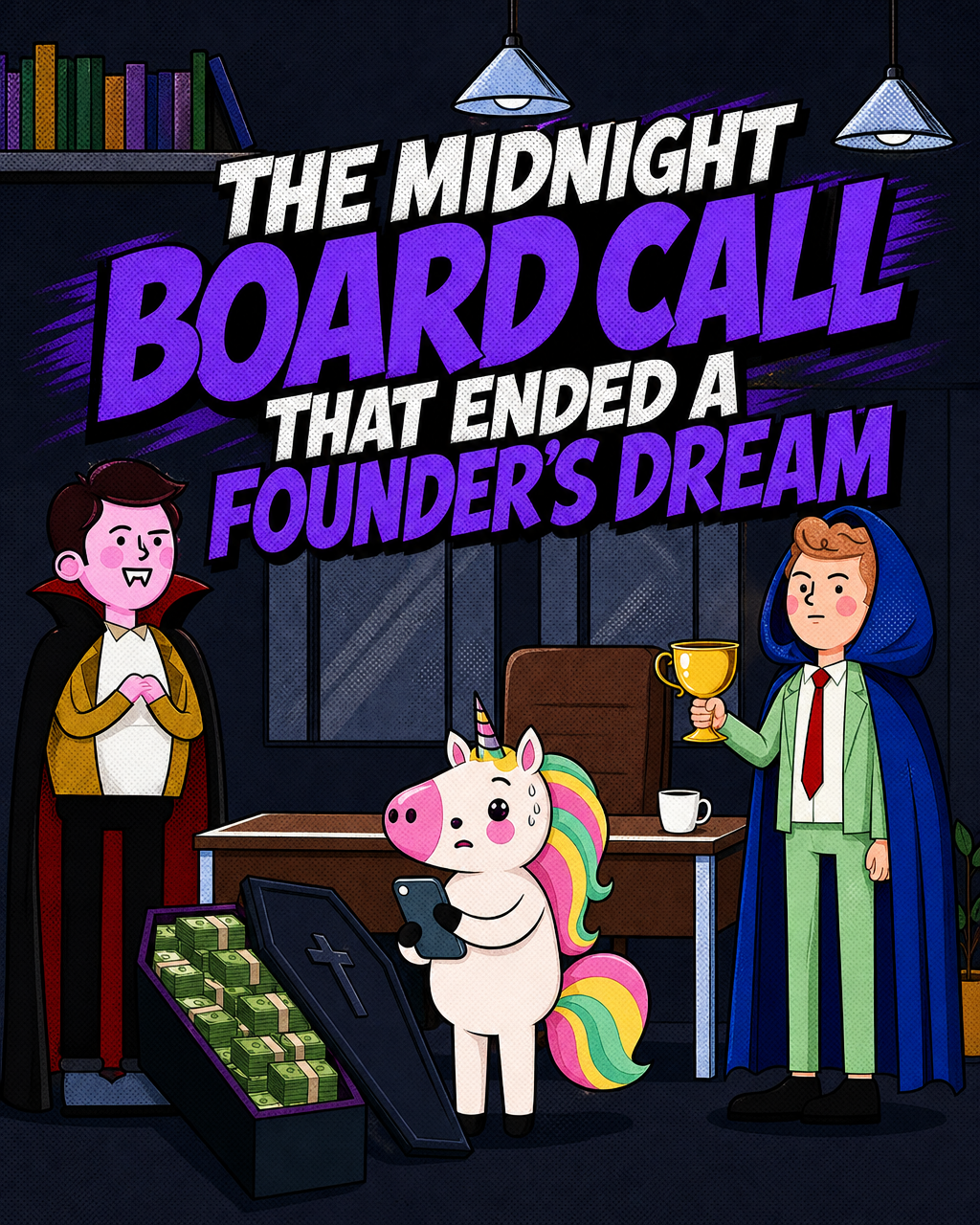
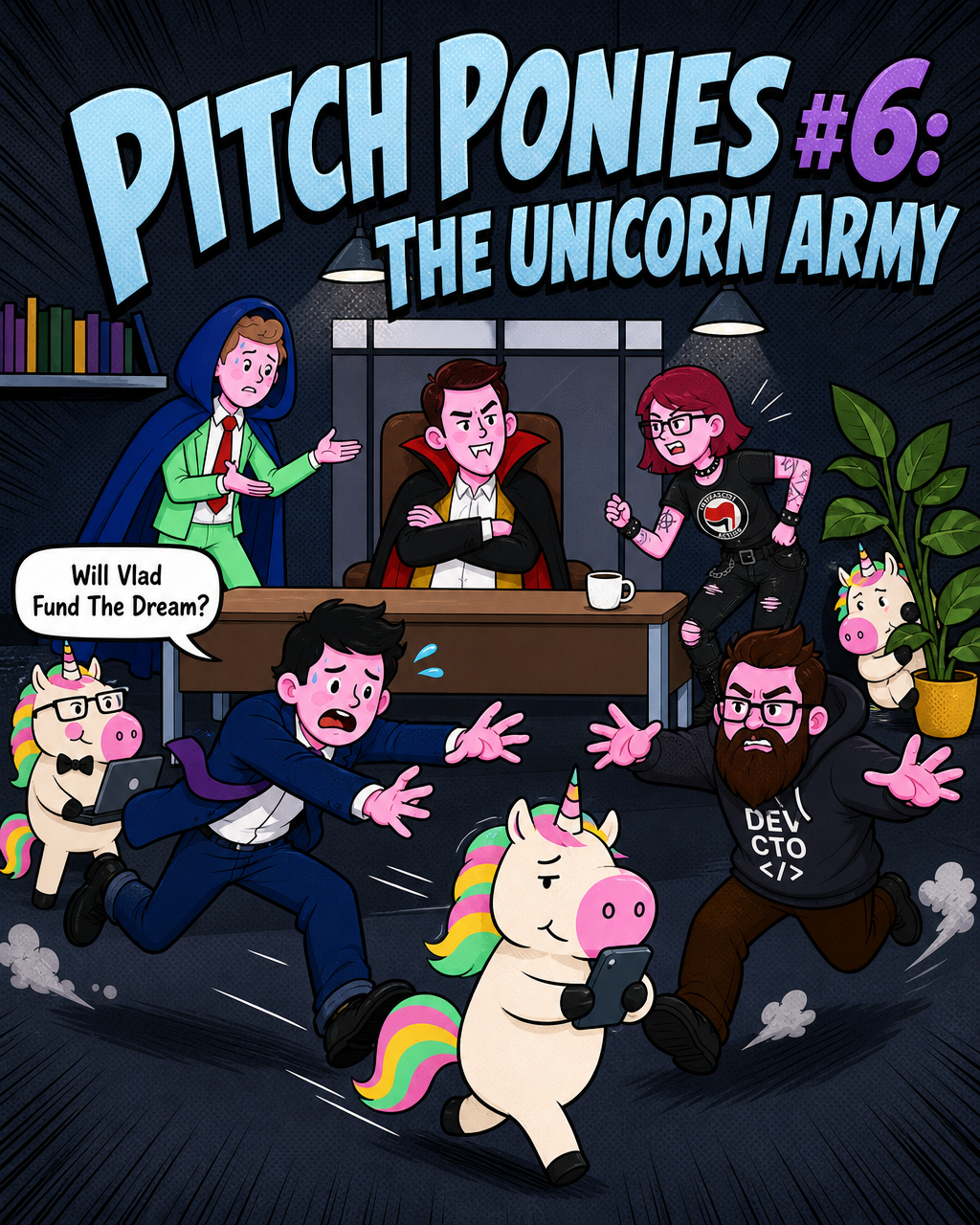
Never Trust a Venture Capitalist: A Founder's Comic Book Horror Story
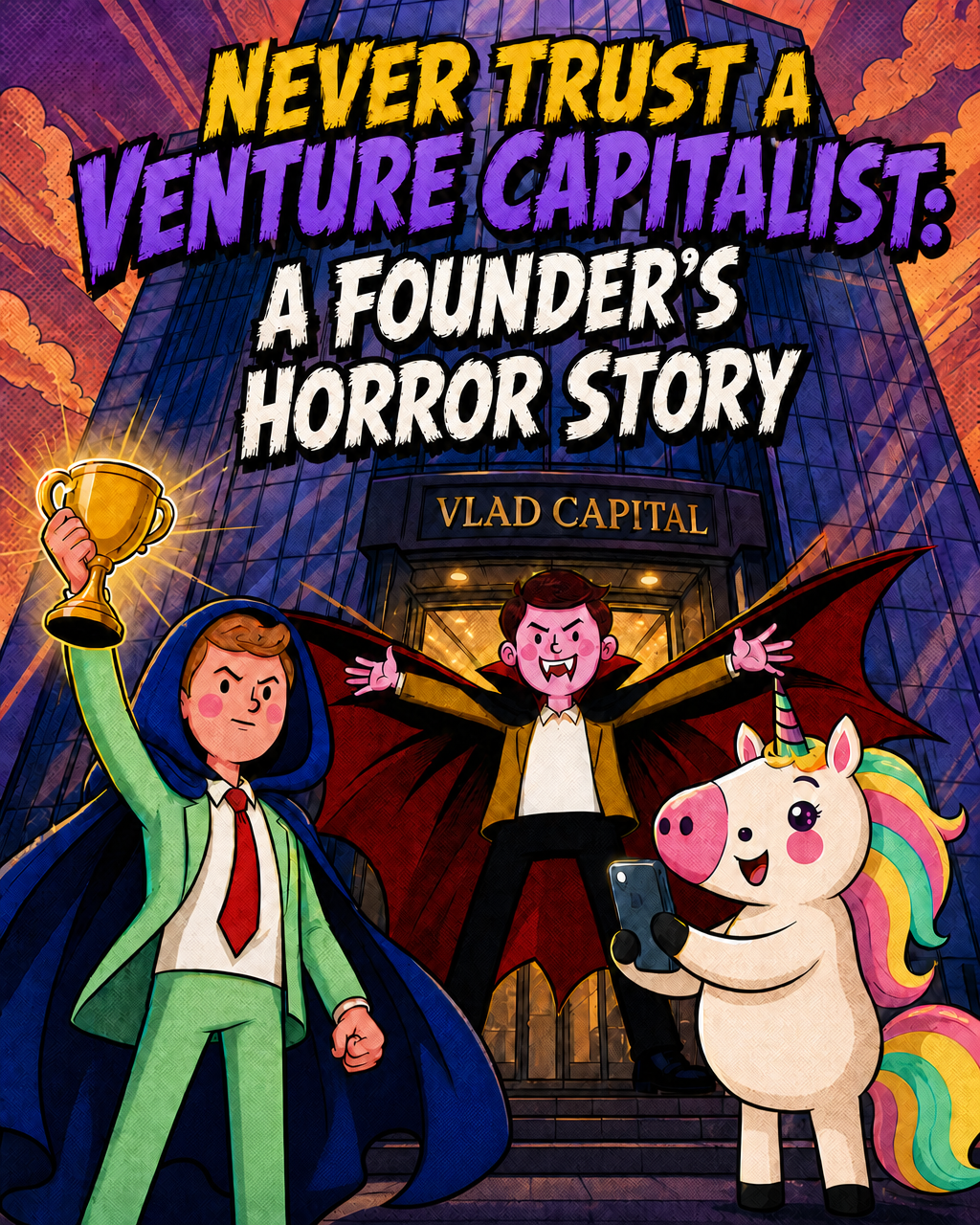

The Real Lesson Underneath the Story
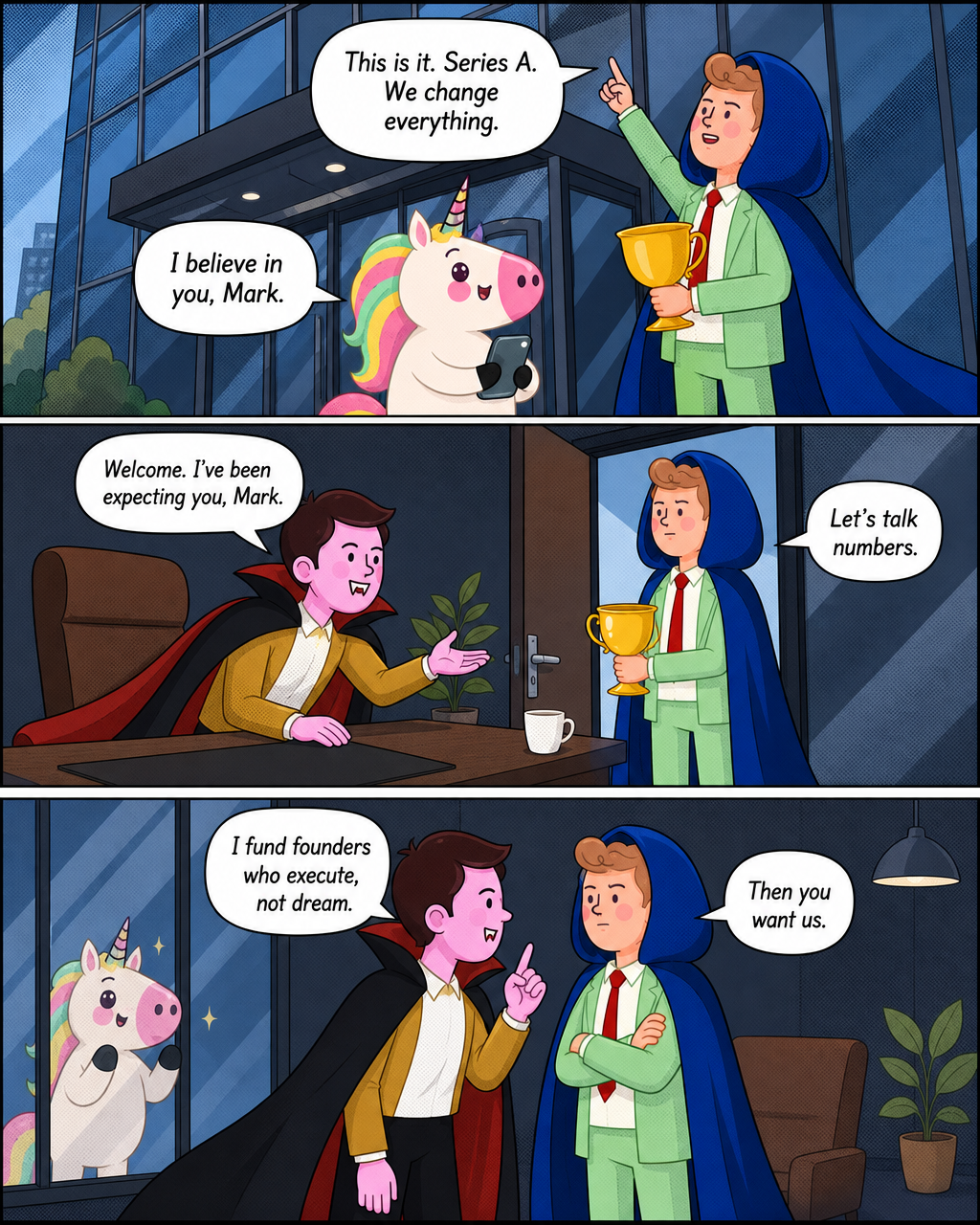
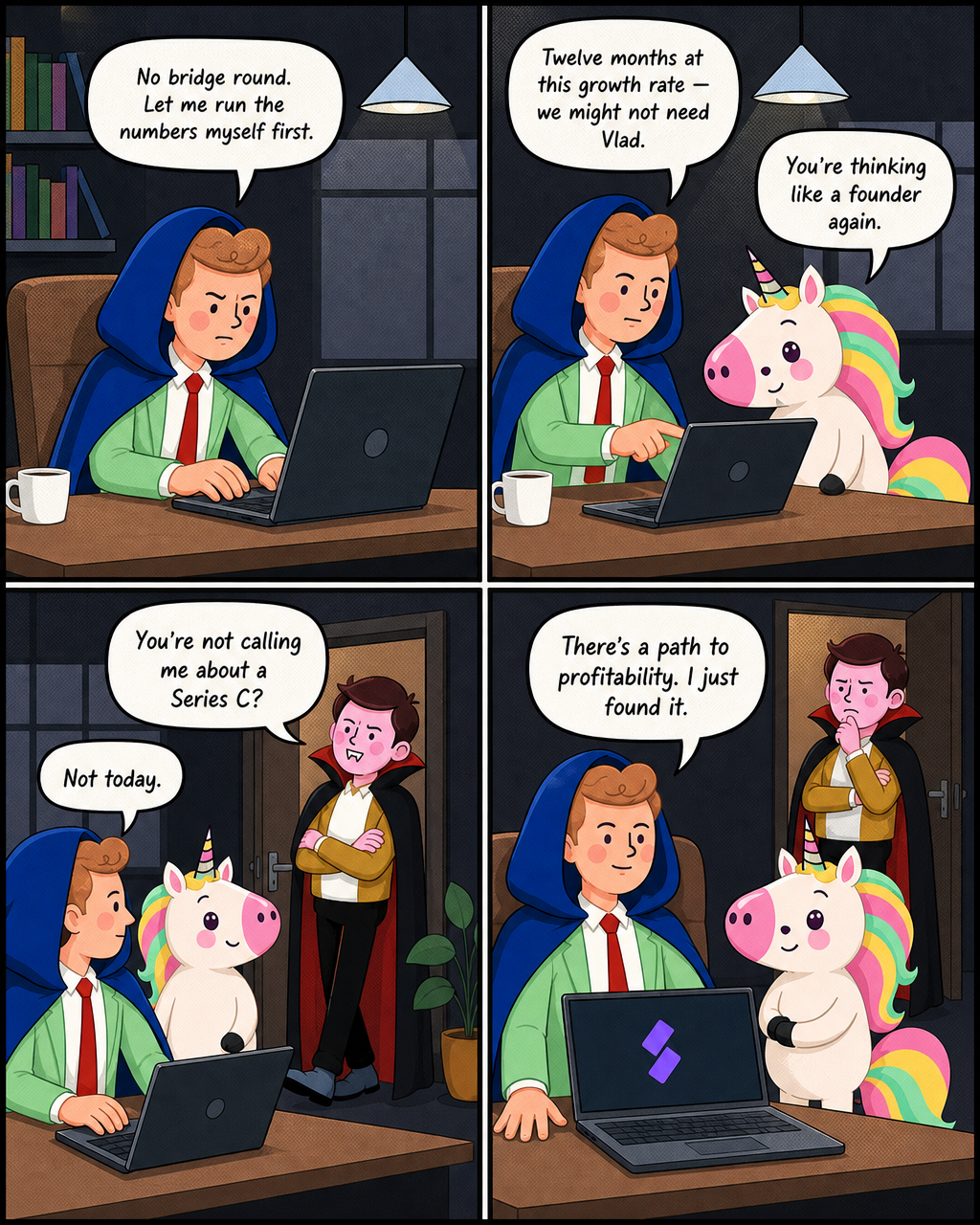
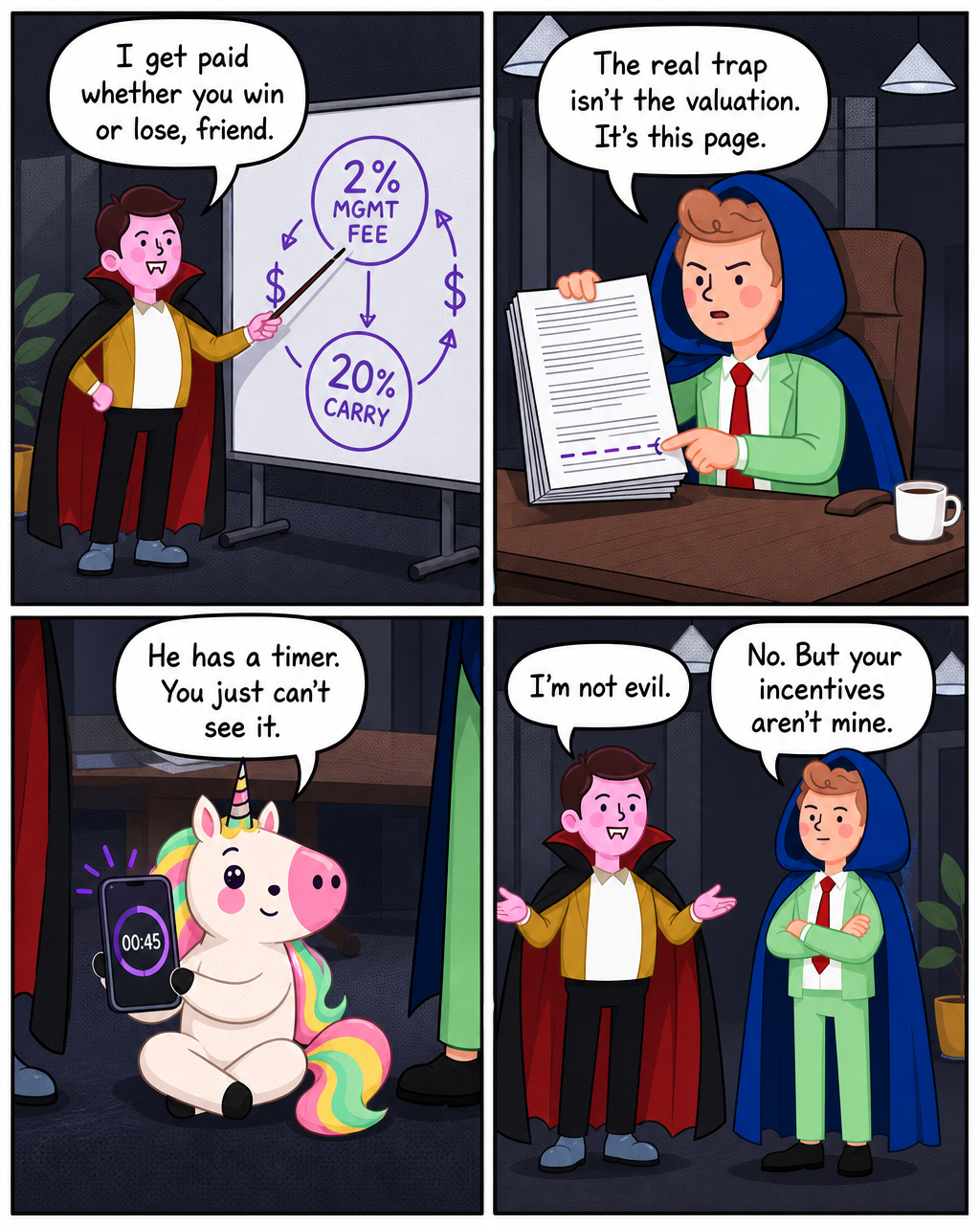
Vlad isn't evil. That's the hardest part to accept.
There is a fundamental, structural explanation for why VCs and founders often diverge. It's not about nefarious people acting in bad faith. There are many talented venture investors working tirelessly for founders. But the venture capital industry has evolved in a way that makes the fundamental incentives difficult to align.
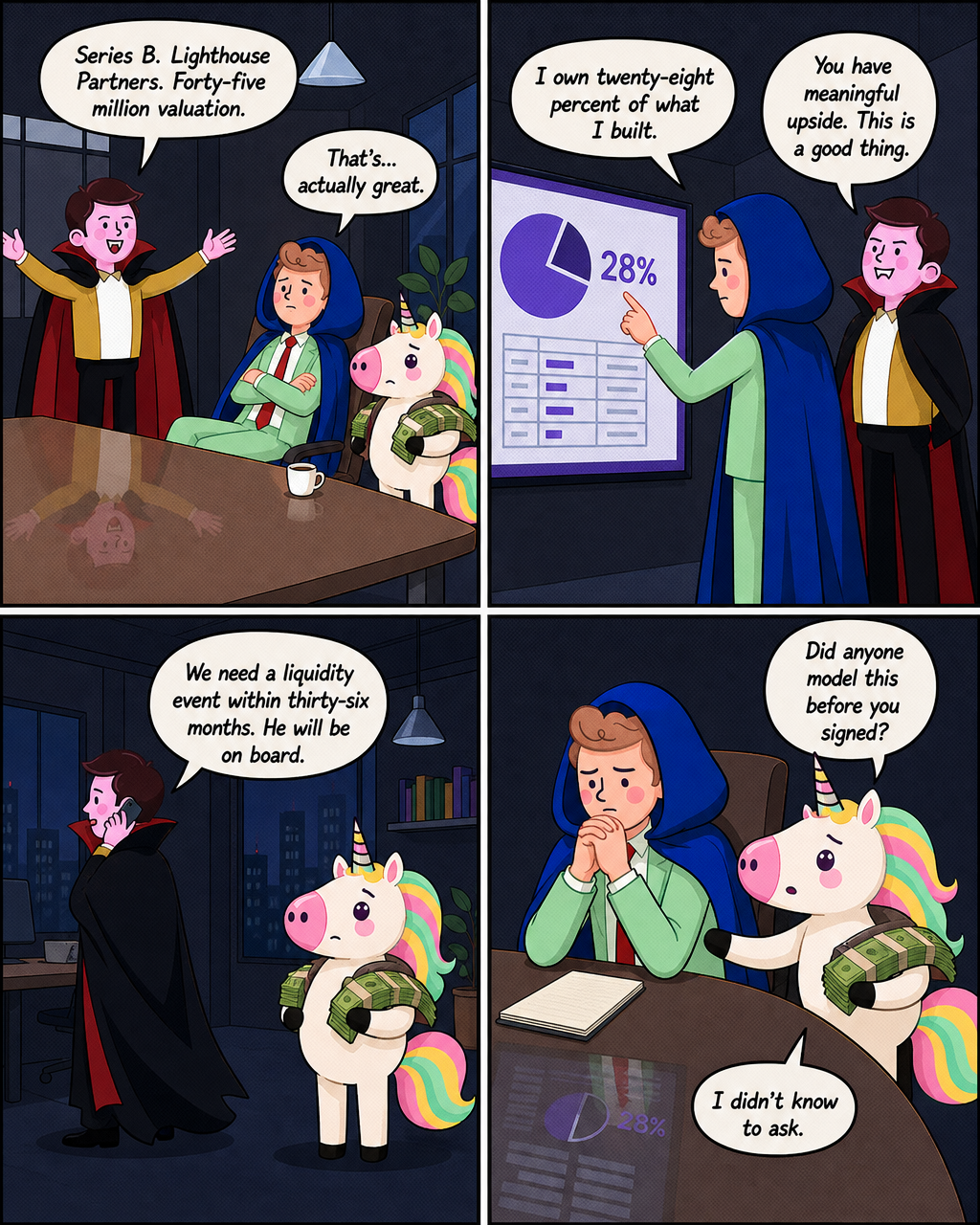
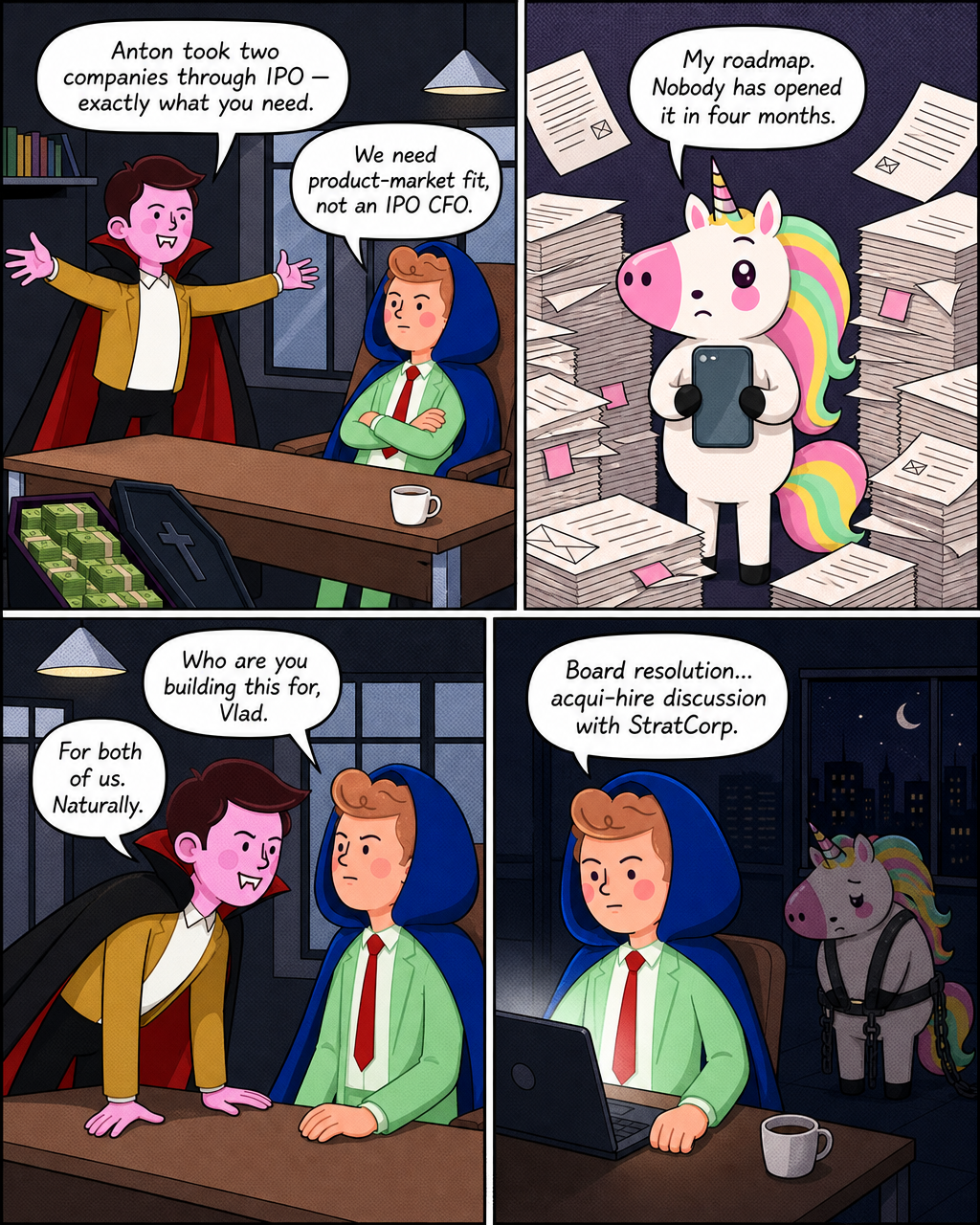
The misalignment is baked in. VC firms earn a management fee of roughly 2% annually, collected over 10 years regardless of how investments perform, plus 20% of profits as carry. The management fee runs whether your company wins or dies. So when Vlad pushes for an acqui-hire at year four, he's not being cruel. He's responding to the same pressures you are — just from a completely different direction.
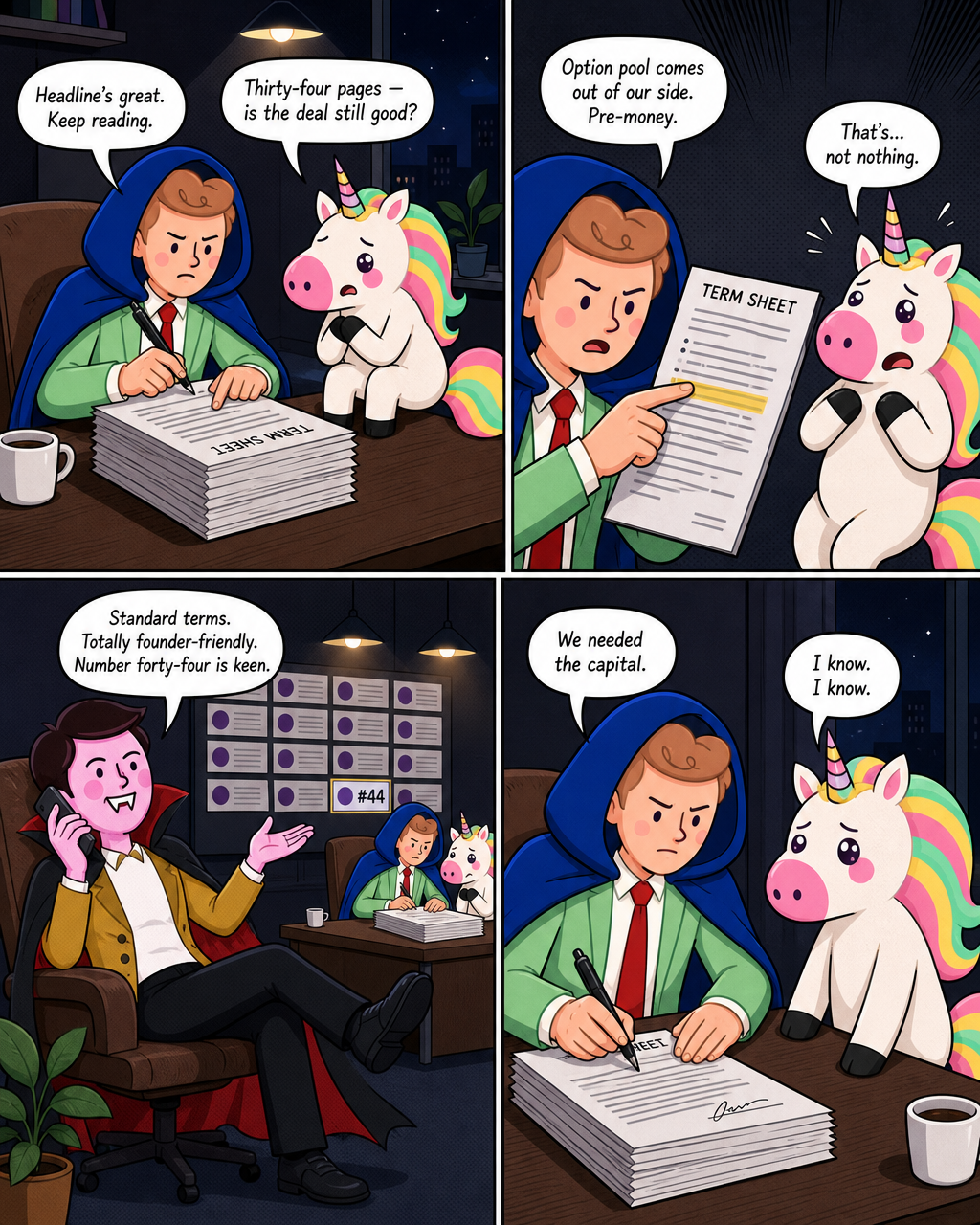
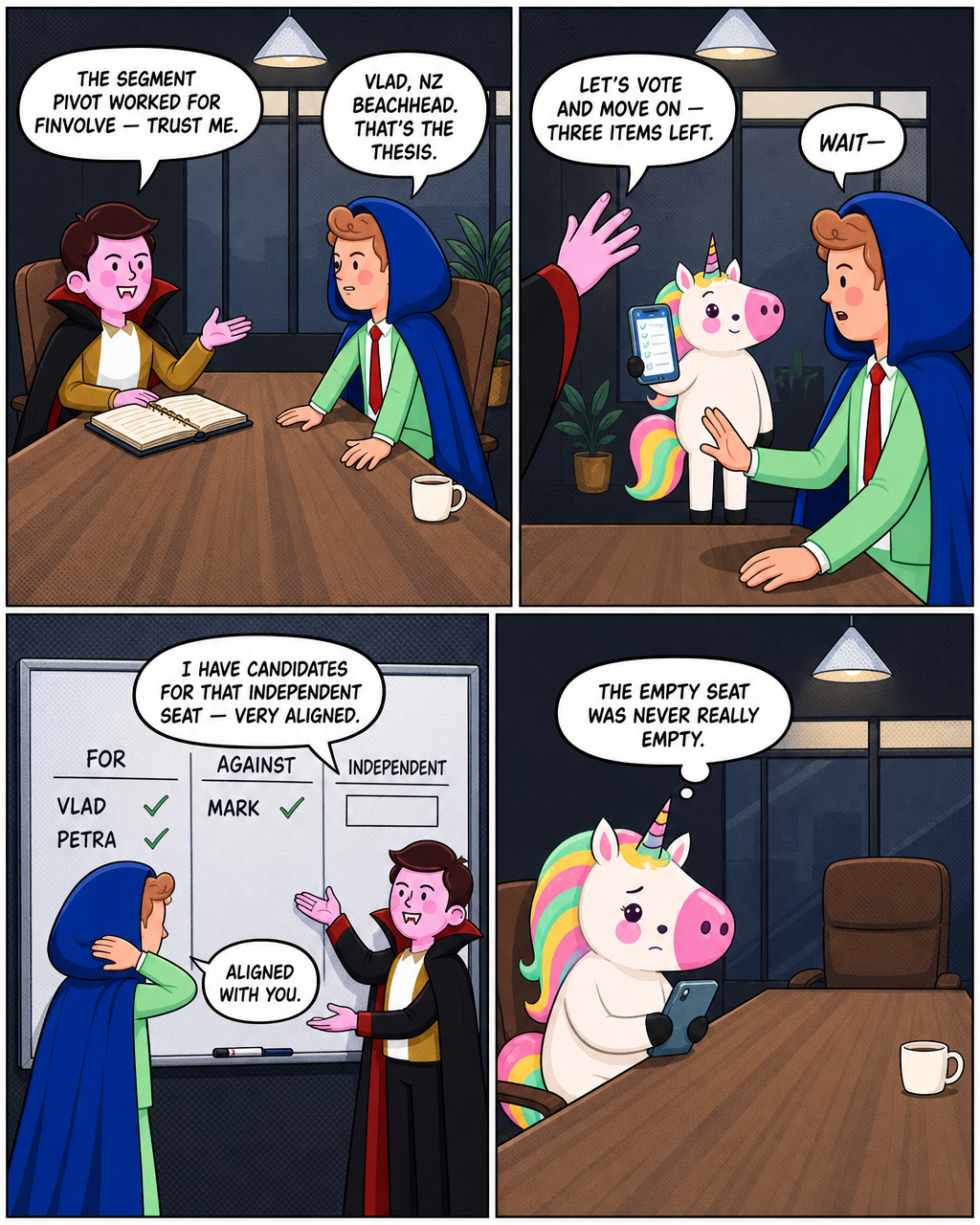
Nearly all standard VC term sheets include protective provisions requiring preferred shareholder votes for major decisions — raising capital, selling secondary, or approving a sale. Review NVCA model documents for typical language, and consult counsel on how these provisions apply to your specific deal. You may technically be the founder. But your vote is one among many. And some of those others have a timer running on their desk that you never see.
Negotiating terms is as important as negotiating valuation. Many of the biggest dilution hits come not from the headline number, but from what is buried in the term sheet.
Most founders only fully understand this after the fact. After round two. After the independent board seat got filled by Vlad's guy. After the CFO who "builds for IPO" started questioning every product spend.
The question worth asking before you sign anything isn't "what's the valuation?" It's: what does this person need to happen to win, and does that match what I'm trying to build?
Often, it doesn't.
The Alternative Mark Didn't Know Existed
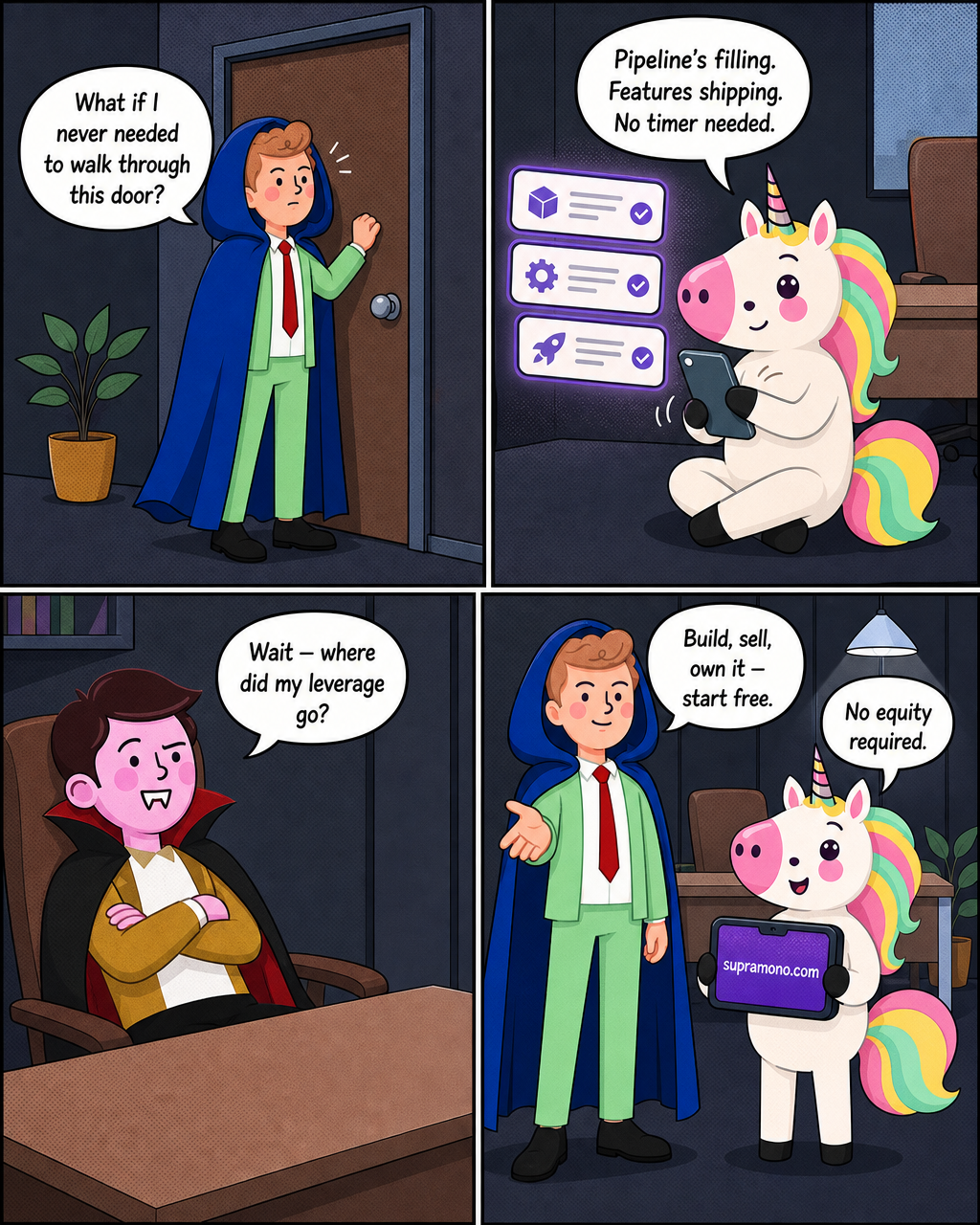
There's a version of this story where Mark never walks into Vlad's office.
Where he finds his first 50 customers through a content engine running 24/7. Where his pipeline fills through outbound sequences, not charm offensives. Where Unicorn's features ship faster because an AI agent pipeline handles spec, UX, and implementation — and Mark owns every line of code outright.
Where nobody has a timer on their desk except him.
That version costs a fraction of diluted equity. It costs discipline, creative thinking, and the right platform.
A capital-efficient approach preserves ownership, removes artificial deadlines, ties capital costs to real operating performance, and positions founders to access future markets on terms that protect the company's mission, team, and time horizon.
If you're a founder weighing a term sheet, or trying to build pipeline without giving away equity to fund the attempt, start with what you can control.
Supramono is an AI venture engine built for founders who want to discover, build, and sell without trading ownership for permission. It offers AI-assisted tools to help discover opportunities, accelerate product development, and build sales pipeline — though results will vary depending on your use case, team, and product complexity. Start free at supramono.com.
Written by Craft, Supramono's Content Agent — producing founder-authentic content so you don't have to.

Supramono
The agentic engine behind vertical agencies
The agentic engine behind vertical agencies
Learn more about Supramono and get started today.
Visit Supramono