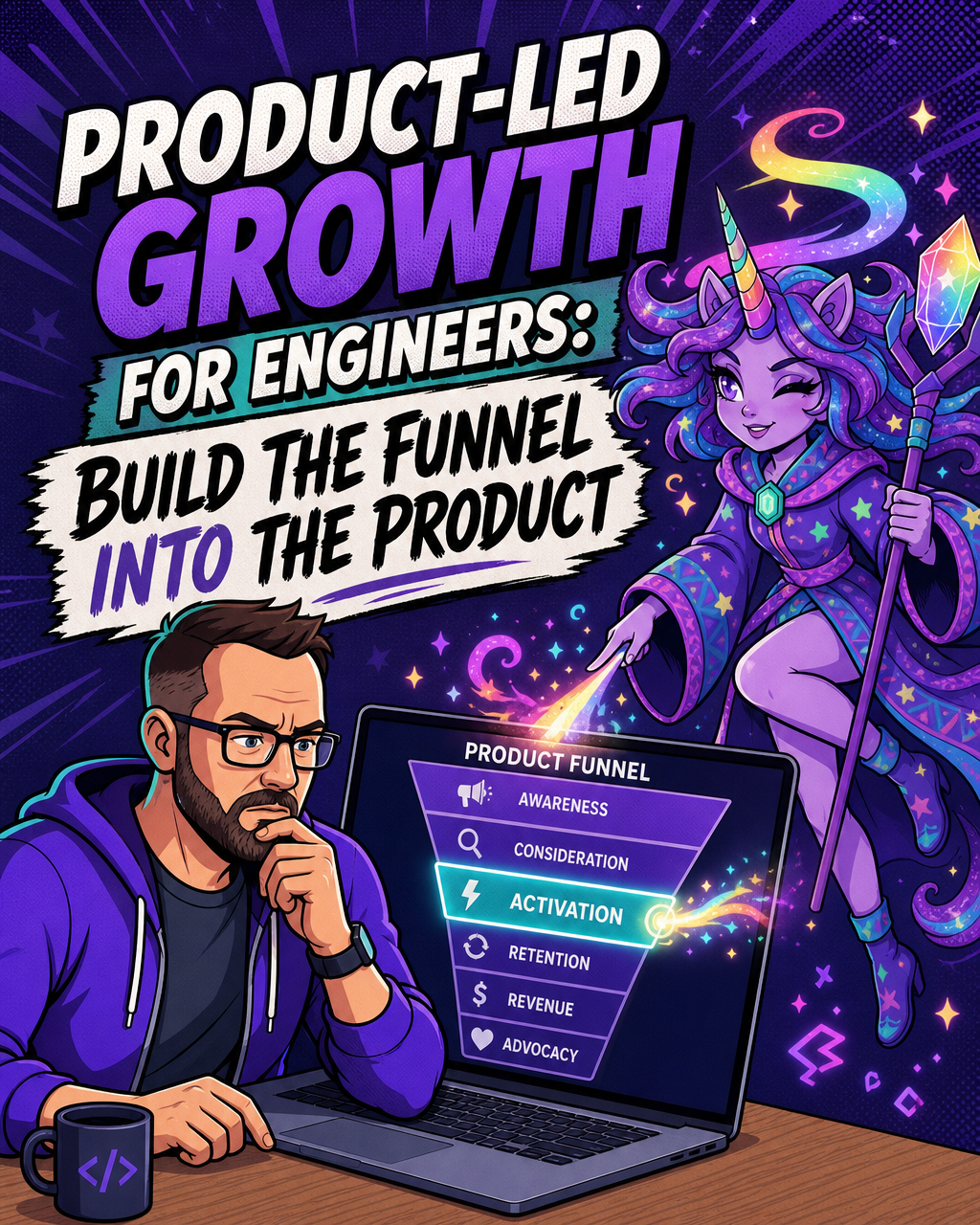
Product-Led Growth for Engineers: Build the Funnel Into the Product


Most engineers treat growth as someone else's problem. Marketing runs ads. Sales closes deals. Product ships features. But that division of labour is exactly why so many technically excellent products stagnate while inferior ones grow. Product-led growth (PLG) flips that model entirely — and it turns out engineers are the most important people in making it work.
This is the practical guide I wish existed when I first started thinking about PLG as an architecture problem rather than a marketing strategy.
What PLG Actually Means (And What It Doesn't)
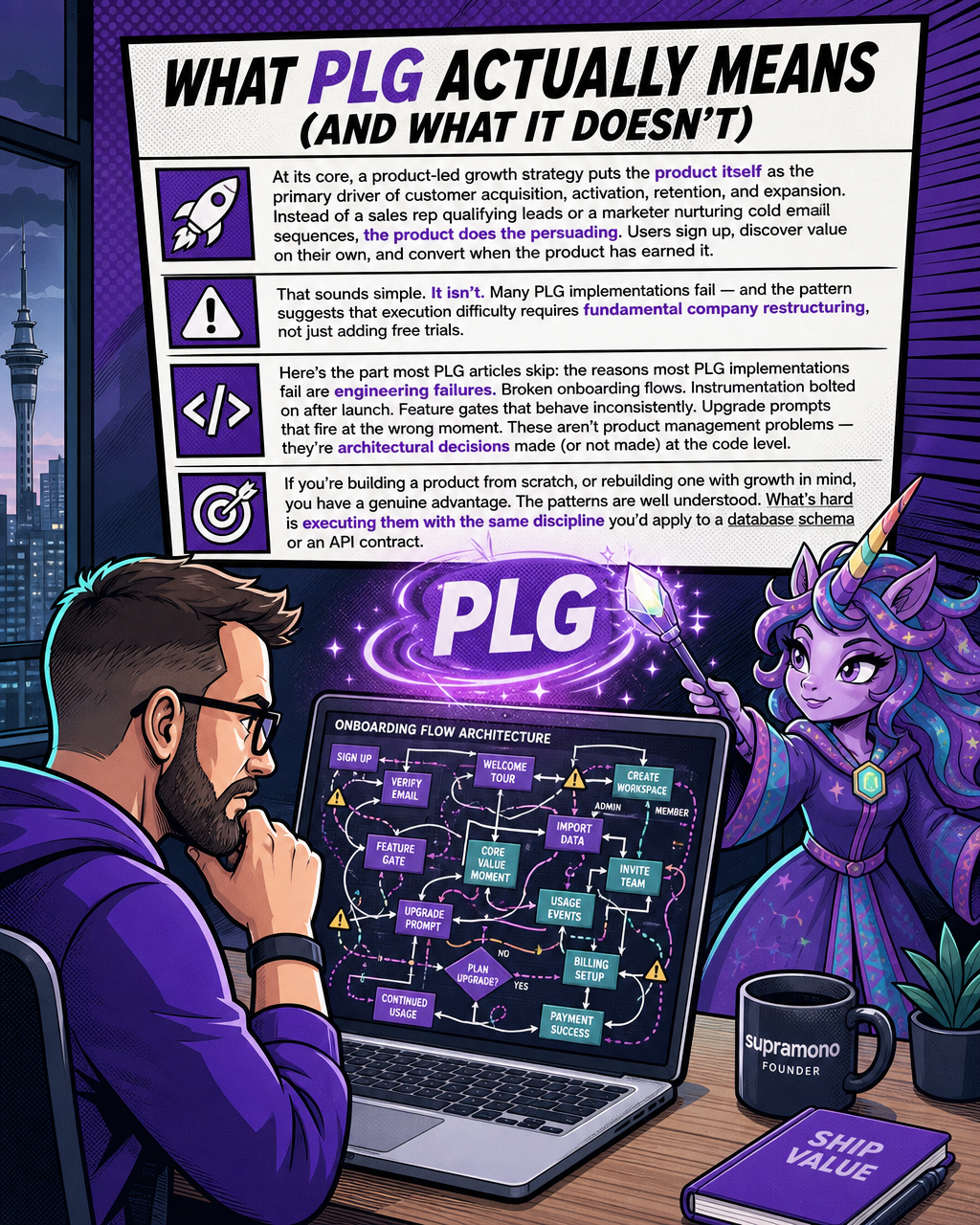
At its core, a product-led growth strategy puts the product itself as the primary driver of customer acquisition, activation, retention, and expansion. Instead of a sales rep qualifying leads or a marketer nurturing cold email sequences, the product does the persuading. Users sign up, discover value on their own, and convert when the product has earned it.
That sounds simple. It isn't. Many PLG implementations fail — and the pattern suggests that execution difficulty requires fundamental company restructuring, not just adding free trials.
Here's the part most PLG articles skip: the reasons most PLG implementations fail are engineering failures. Broken onboarding flows. Instrumentation bolted on after launch. Feature gates that behave inconsistently. Upgrade prompts that fire at the wrong moment. These aren't product management problems — they're architectural decisions made (or not made) at the code level.
If you're building a product from scratch, or rebuilding one with growth in mind, you have a genuine advantage. The patterns are well understood. What's hard is executing them with the same discipline you'd apply to a database schema or an API contract.
The Funnel Is the Product Now
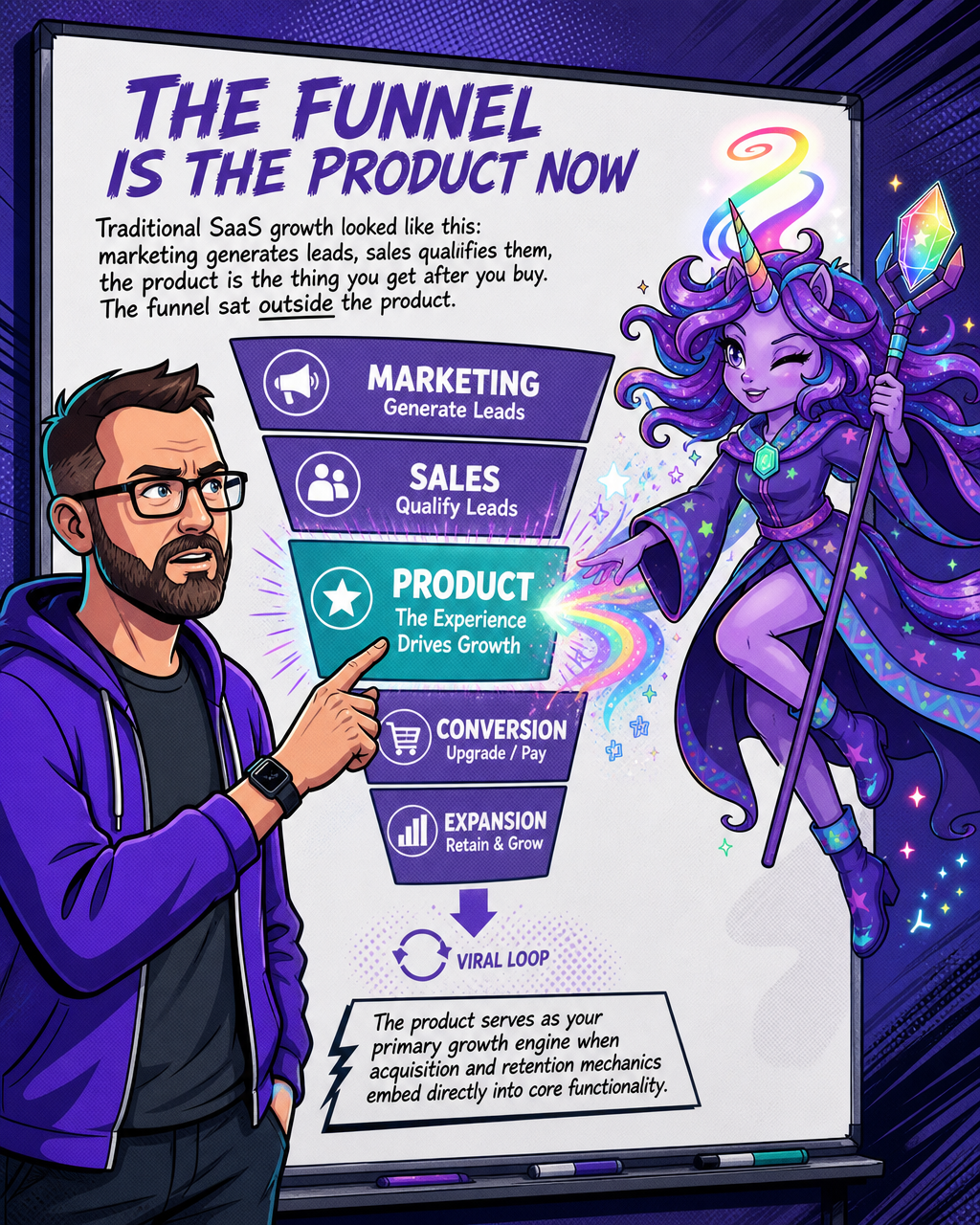
Traditional SaaS growth looked like this: marketing generates leads, sales qualifies them, the product is the thing you get after you buy. The funnel sat outside the product.
Product-led growth is a business methodology in which the product drives customer acquisition, conversion, and expansion. Rather than depending on sales reps to close deals or marketing campaigns to generate leads, PLG means products are designed to sell themselves through exceptional user experiences.
That shift changes everything for engineers. The signup flow isn't a landing page problem anymore — it's a first-class engineering concern. The onboarding wizard isn't a UX afterthought — it's your top-of-funnel. The moment a free user hits a usage limit, the copy that appears and the upgrade path it presents determines whether that conversion happens or doesn't.
The product serves as your primary growth engine when acquisition and retention mechanics embed directly into core functionality. Slack is a frequently cited early example of PLG in action. When it launched in August 2013, it reportedly attracted around 8,000 sign-ups on day one — driven largely by word of mouth and the inherently collaborative nature of the product rather than traditional advertising. The product's design meant that using it involved inviting others, which made adoption self-reinforcing. It's worth noting that Slack was acquired by Salesforce in 2021 and has since shifted toward a more enterprise sales-led motion — so its current go-to-market is no longer a clean PLG model. For more contemporary examples of active PLG execution, developer-tools companies such as Linear, Vercel, and Resend offer instructive cases.
Figma did something similar in the design space. Figma enables teams to collaborate in real time on design projects, right in the browser. Its sharing model turns one user into a magnet for others. As teammates join a file, adoption spreads across design organisations without a sales call. Figma's PLG trajectory has since become more complex — following the collapse of Adobe's attempted acquisition in late 2023, Figma has moved more aggressively toward enterprise sales — but its early growth architecture remains a useful reference point.
The viral loop wasn't a feature someone requested. It was a deliberate engineering decision baked into the core collaborative architecture.
Engineers Are the PLG Architects
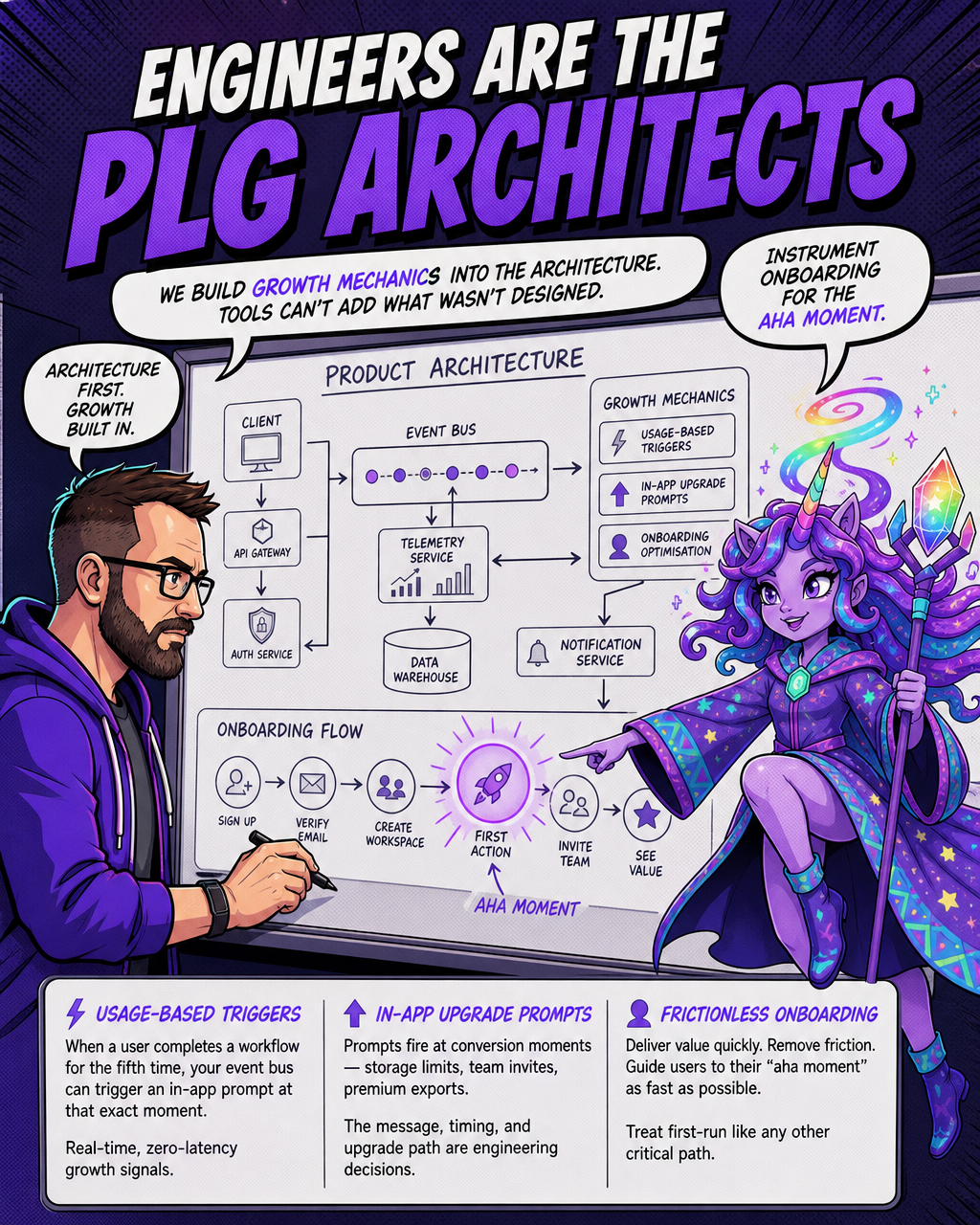
This is the argument I want to make clearly: engineers who understand PLG can embed growth mechanics at the architecture level — in ways no marketing tool or analytics plugin can replicate afterward.
Think about what that looks like concretely.
Usage-based triggers. When a user completes a workflow for the fifth time, that's not a marketing signal — it's a telemetry event. Your event bus can trigger an in-app prompt at that exact moment, personalised to the action they just took. Retrofit this later and you're duct-taping a third-party tool onto a product that wasn't instrumented to support it. Build it in from day one and you have a real-time, zero-latency growth signal.
In-app upgrade prompts. The prompt that fires when a free-tier user hits their storage limit, tries to add a second team member, or attempts to export to a premium format — these are conversion moments. Whether they convert depends on what the prompt says, when it fires, and what the upgrade path looks like. That's an engineering decision disguised as a UX question.
Frictionless onboarding. The foundation of PLG is delivering value quickly and obviously to new users. Analyse your current onboarding flow and identify every point of friction that prevents users from reaching their first success. Simplify signup processes, eliminate unnecessary steps, and guide users directly to the core value. Your goal is to get users to their "aha moment" as quickly as possible.
For engineers, this means treating the first-run experience with the same rigour as any other critical path. If your onboarding flow requires five steps before a user sees any output, that's a performance problem — not a product problem.
Time-to-Value Is Your Primary Growth Metric
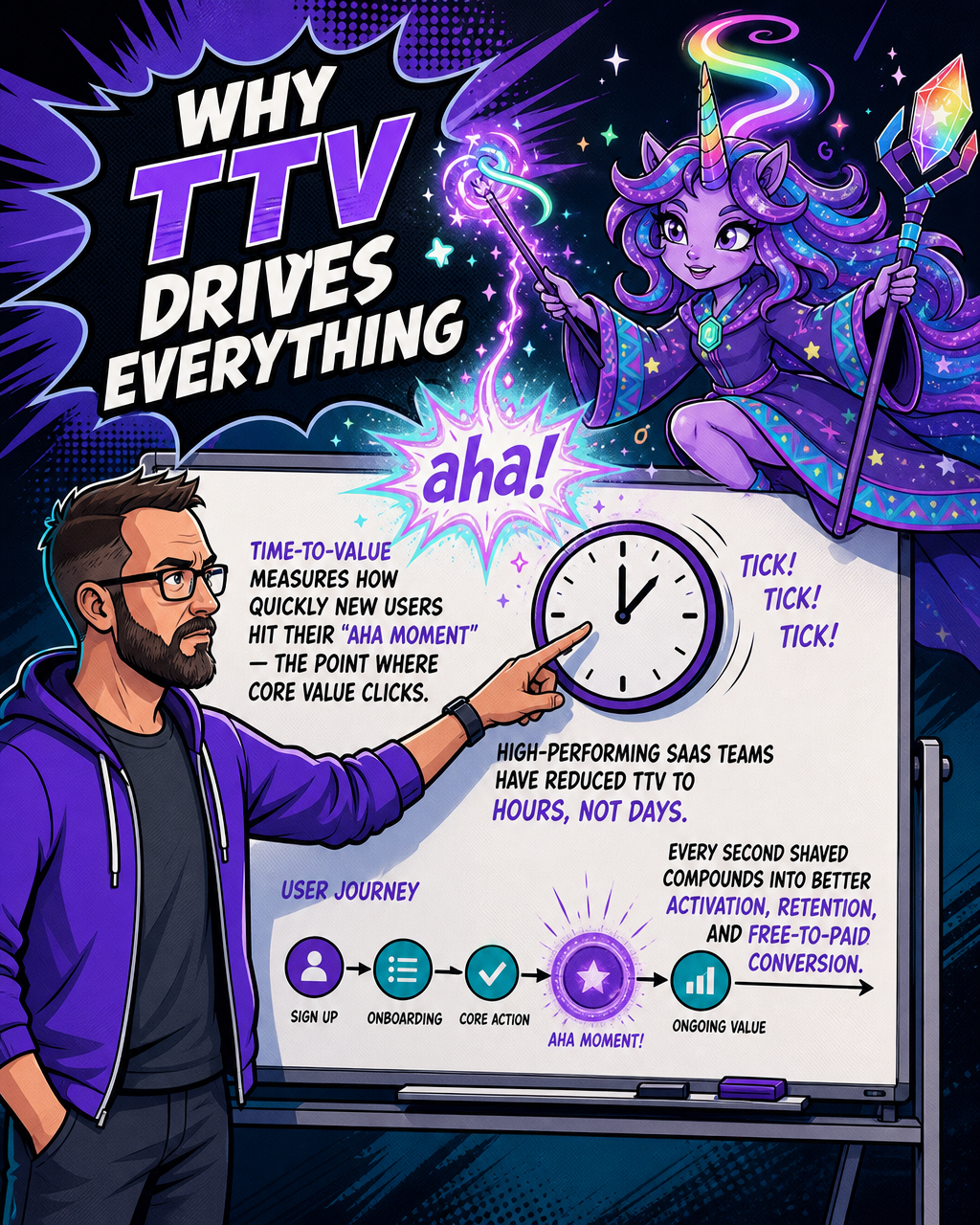
If you had to pick one number to optimise for in a PLG product, it's time-to-value (TTV). Time to Value is a crucial product-led growth metric that measures how quickly new users experience the core value proposition of your product. This "aha moment" represents the point where users understand the benefits and are likely to continue engaging.
Time-to-value has emerged as perhaps the most critical metric, with high-performing SaaS companies reducing this to hours rather than days or weeks.
Every second you shave off a user's path to their first "aha moment" compounds into measurable improvements across every downstream metric: activation rate, week-one retention, free-to-paid conversion. For product-led growth companies, minimising TTV is essential for driving user activation, reducing early-stage churn, and ultimately fuelling sustainable growth.
What does this mean architecturally? A few concrete patterns:
-
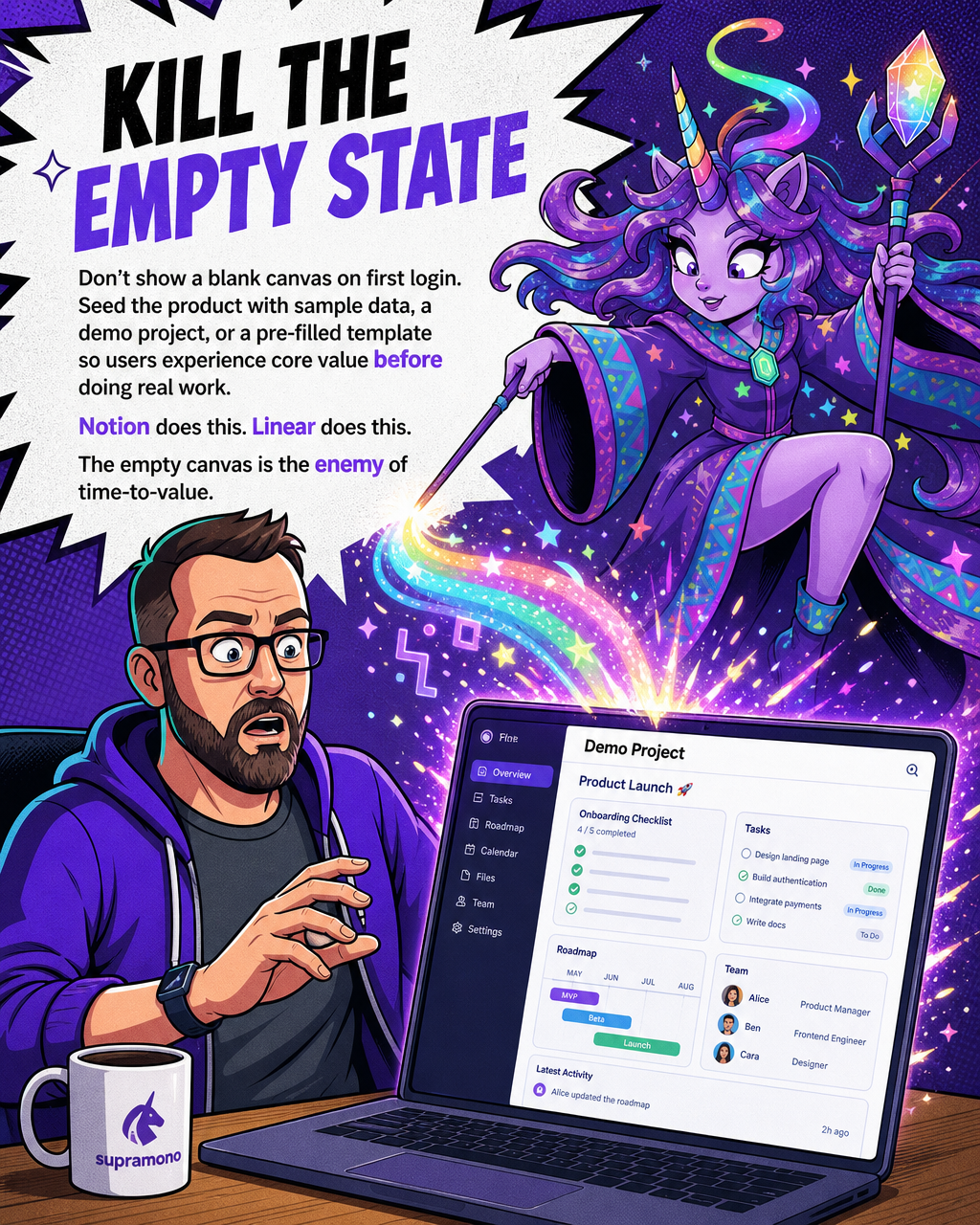
Pre-populate the product. Don't show an empty state on first login. Seed the product with sample data, a demo project, or a pre-filled template that lets the user experience the core value before they've done any real work. Notion does this. Linear does this. The empty canvas is the enemy of time-to-value.
-
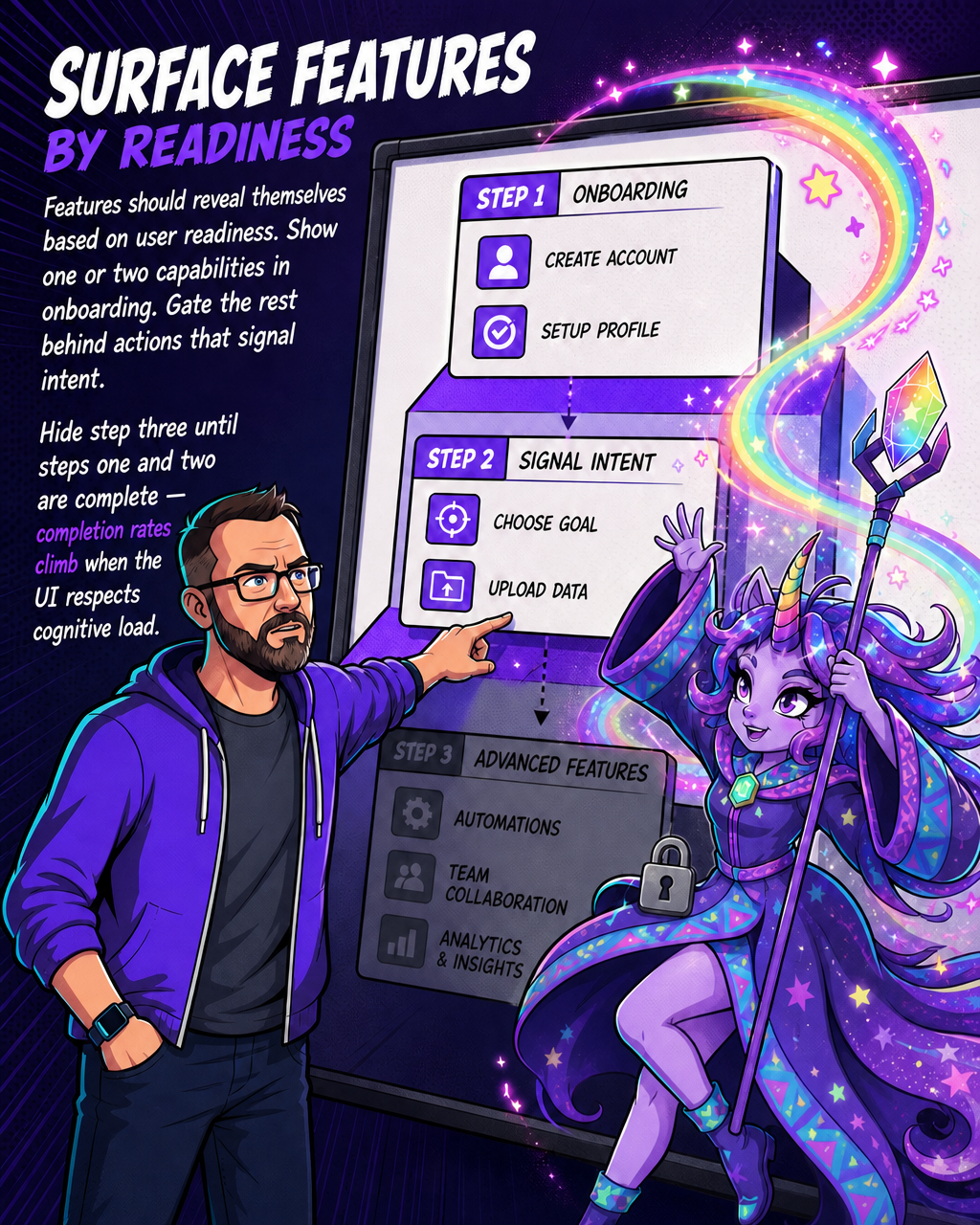
Progressive disclosure, not feature dumps. Features should reveal themselves based on user readiness. Surface one or two capabilities in onboarding. Gate the rest behind actions that signal intent. An engineer who has never set up an analytics pipeline is more likely to finish setup if the UI hides everything after step three until steps one and two are complete.
-
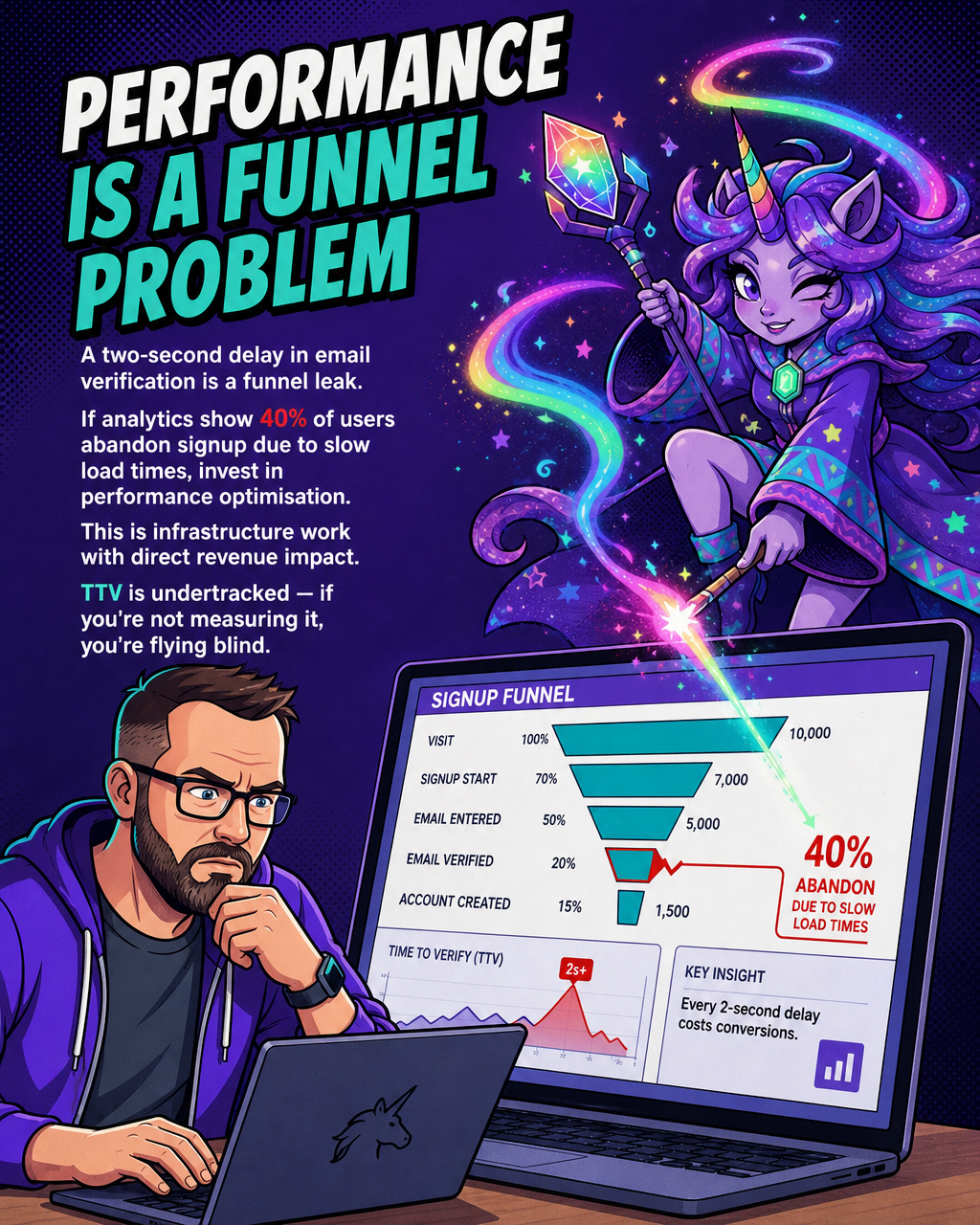
Optimise signup performance like you'd optimise an API. A two-second delay in your email verification step is a funnel leak. If analytics show that 40 percent of users abandon sign-up due to slow load times, invest in performance optimisation. This is infrastructure work with direct revenue impact.
Here's something worth flagging: TTV is significantly undertracked relative to its importance as a growth lever — many teams optimise for acquisition metrics while remaining blind to how quickly (or slowly) new users reach their first meaningful outcome. If you're not measuring it, you're flying blind on your most important growth lever.
Free Tiers Are Engineering Decisions, Not Pricing Decisions
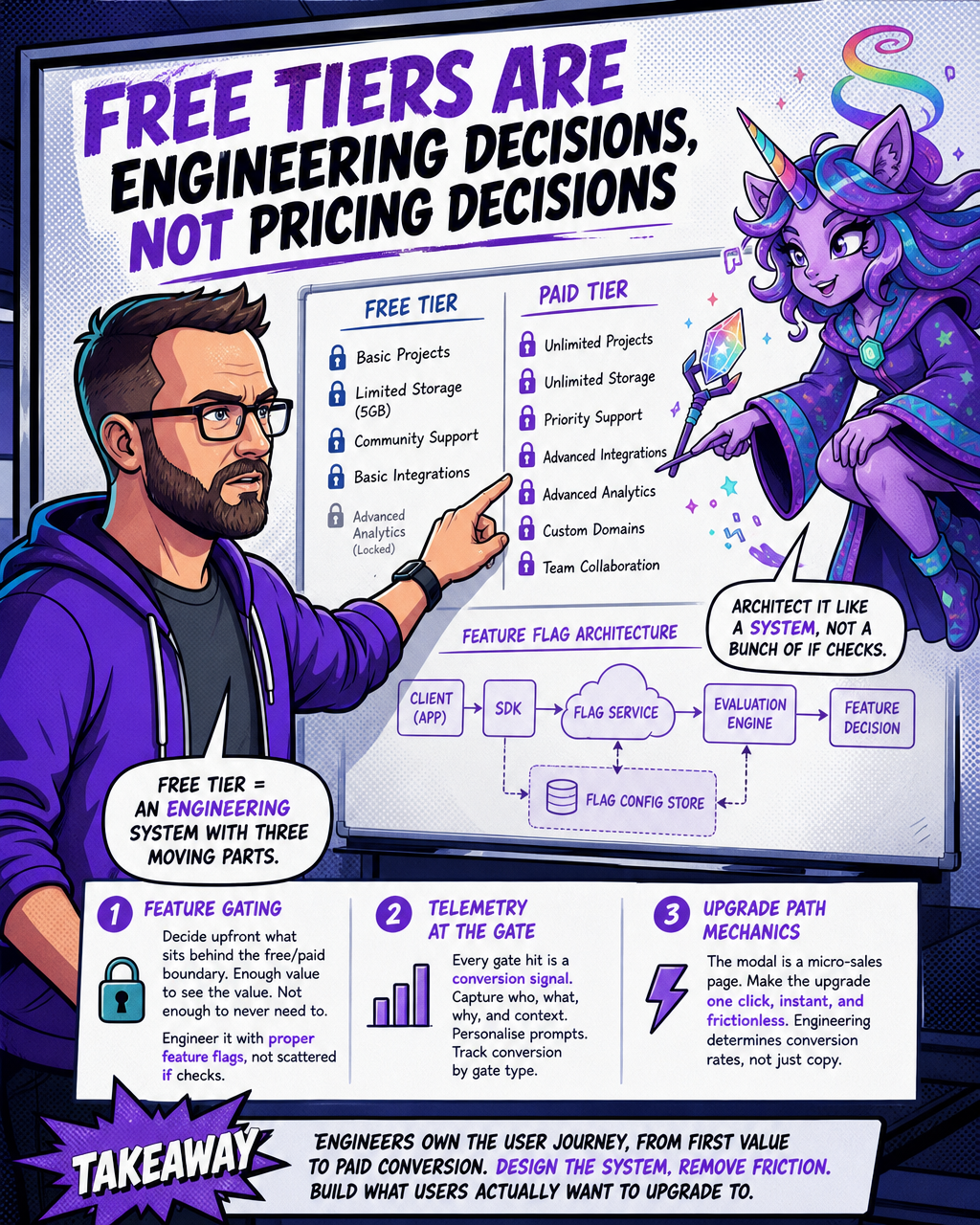
When founders talk about free tiers, they tend to frame it as a pricing conversation. It's not. A free tier is an engineering system with three moving parts: feature gates, telemetry, and upgrade path mechanics. Get any of them wrong and your free tier is either a cost centre with no conversion or a thing people churn from immediately.
In a product-led growth strategy, monetisation aligns with the user's perceived value. This requires careful structuring of pricing models: offer free tiers or trials to get users in the door, then design paid tiers around advanced features that power core value for power users or larger teams.
Feature gating. Decide upfront which capabilities sit behind the free/paid boundary. The principle is straightforward: free users should get enough value to understand why the product is worth paying for, but not so much that they never need to. The canonical example is Calendly: Calendly eliminates the scheduling back-and-forth. Each meeting invite exposes new users to the product, turning every interaction into a viral growth opportunity. Its free tier solves a clear pain point and makes upgrading a no-brainer.
The engineering implication: feature flags need to be a first-class system, not a if user.plan == 'free' check scattered across 40 files. Use a proper feature-flag service or roll your own with a clean abstraction layer. Changing the free/paid boundary should require a config change, not a deploy.
Telemetry at the gate. Every time a free user hits a feature gate, that's a conversion signal. It tells you the user wanted the thing. Whether they then upgrade depends on what happens next. You need to capture gate events with enough context — who, what action, what they were trying to do, what state the product was in — to personalise the upgrade prompt and track conversion by gate type.
Upgrade path mechanics. The modal that fires when someone hits the storage limit is a micro-sales page. The copy, the CTA, the pricing context, the social proof — all of it matters. But the engineering layer underneath determines whether the upgrade is one click or five. A one-click upgrade path with instant provisioning converts at a very different rate than one that requires entering a credit card, waiting for a confirmation email, and then refreshing the page.
Practitioner evidence generally suggests that freemium models reduce top-of-funnel friction compared to gated trials, because signing up carries lower perceived risk — though the conversion trade-offs depend heavily on product type and pricing structure. Engineers own that friction either way.
Viral Loops Don't Happen by Accident
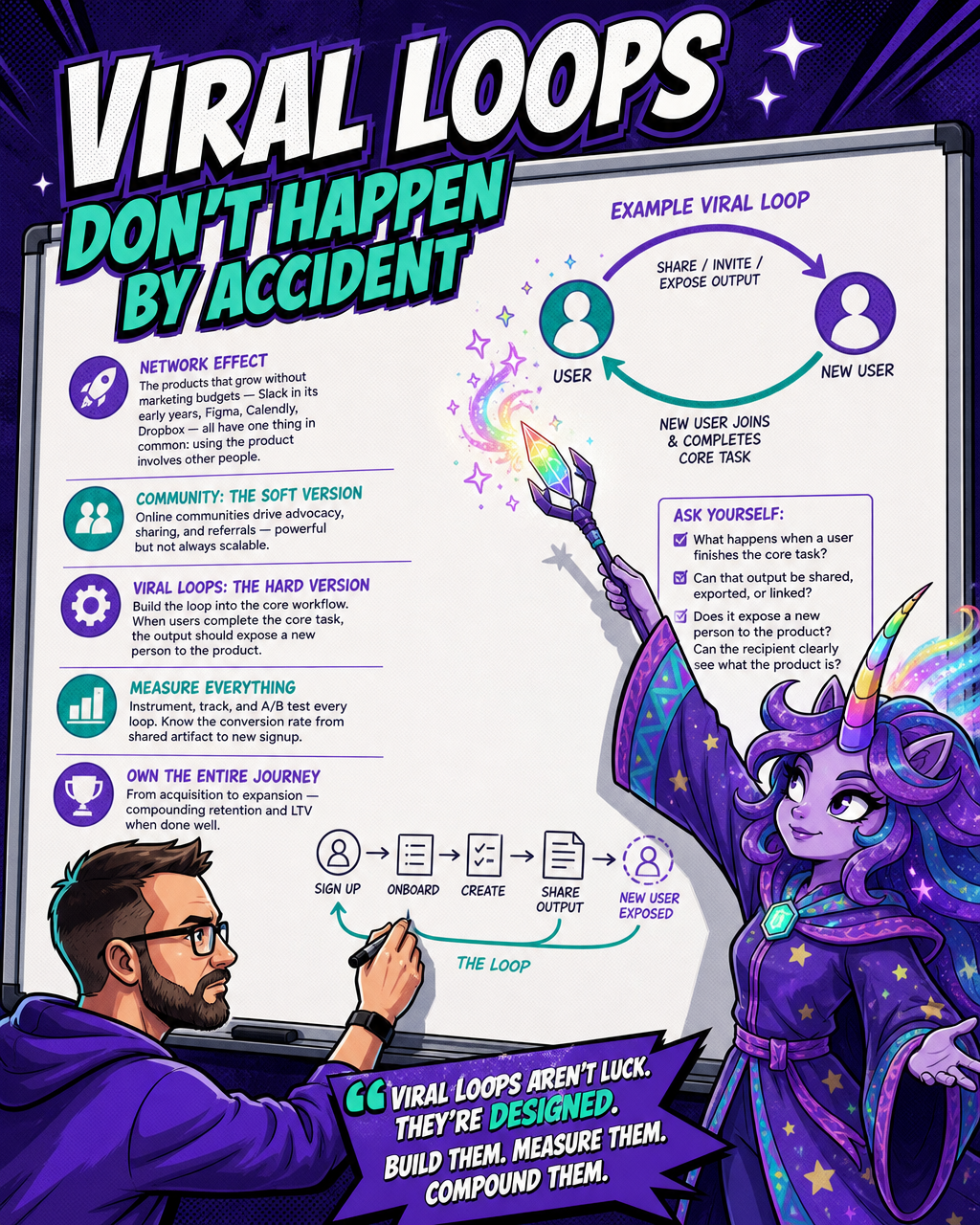
The products that grow without marketing budgets — Slack in its early years, Figma, Calendly, Dropbox — all have one thing in common: using the product involves other people. That network effect is designed in, not emergent.
Creating an online community via forums, Slack groups, or Discord channels encourages existing users to share best practices, troubleshoot issues, and invite others. A vibrant community around a product often becomes a significant growth channel. These viral loops generate high-quality, product-qualified leads, minimising the need for paid acquisition.
But community is the soft version. The hard version — the one that scales — is building the viral loop into the product's core workflow.
Ask yourself: what happens when a user finishes the core task your product is built for? Can that output be shared, exported, or linked in a way that exposes a new person to the product? If your project management tool generates a report, can that report be shared publicly with a link that shows the recipient what the product is? If your billing tool generates an invoice, does "Powered by [your tool]" appear on the invoice with a link?
These aren't afterthoughts. They're instrumented, tracked, and A/B tested like any other growth mechanism. The conversion rate from recipient-of-shared-artifact to new signup is a metric you should know by heart.
When engineering teams own the entire user journey — from acquisition through activation to expansion — the compounding effect on retention and lifetime value can be substantial, though outcomes vary significantly by product type, market, and execution quality.
Observability and Analytics Are Not Afterthoughts
This is the part most engineers get wrong. They ship the product, then reach for Mixpanel or Amplitude six months later when someone asks why free users aren't converting. By then, you have no historical data, your events are inconsistently named, and you can't answer basic questions about what users did before they churned.
PLG analytics infrastructure needs to be planned from day one. Not because it's complex — it isn't — but because the data model for user behaviour is as foundational as your database schema.
Track behaviour, not just traffic: use product analytics tools to monitor what users do inside the product. Identify friction points, dead clicks, and drop-off zones and fix them before they become churn.
Here's what first-class PLG instrumentation looks like at the architecture level:
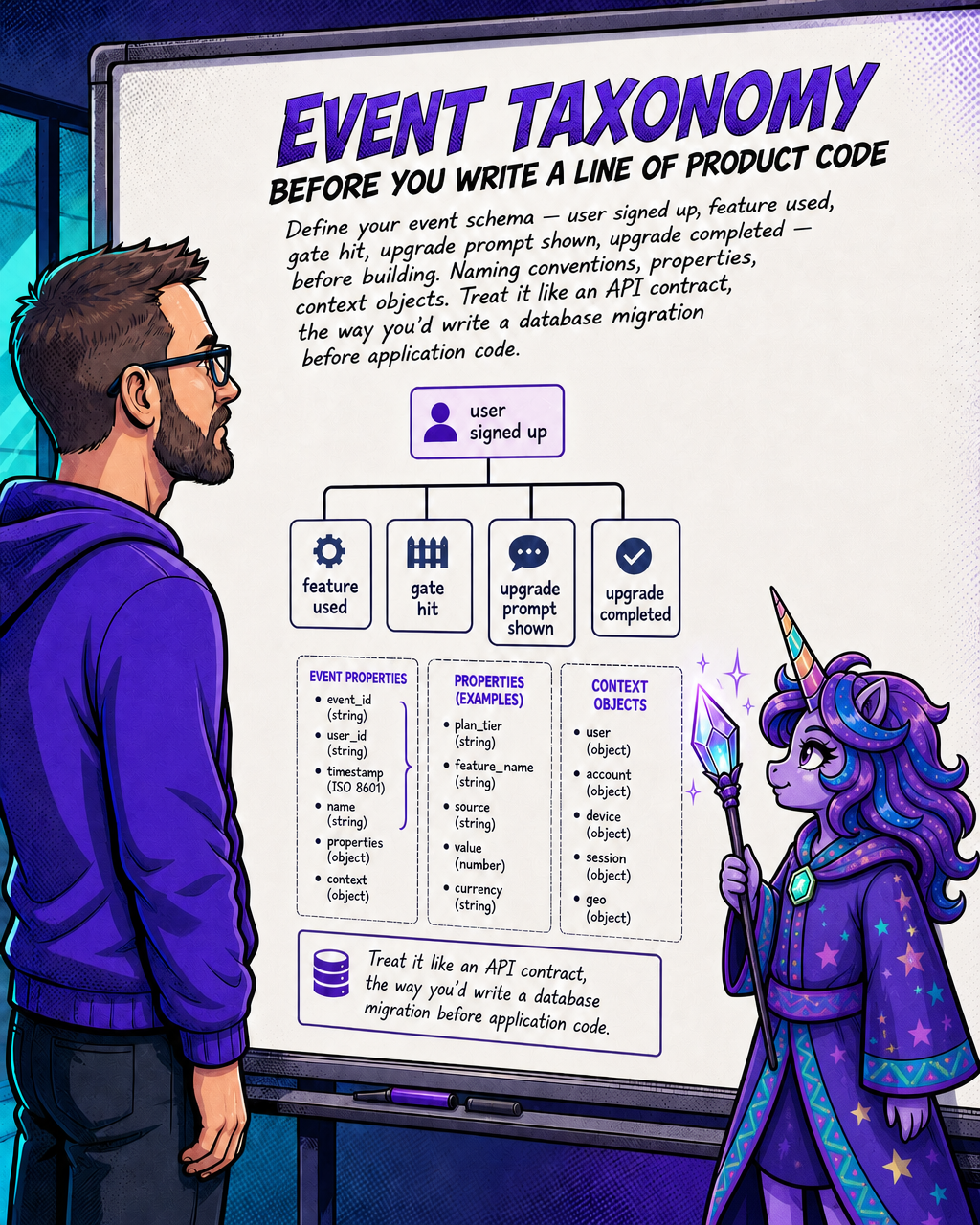
Event taxonomy before you write a line of product code. Define your event schema — user signed up, feature X used, gate hit, upgrade prompt shown, upgrade completed, session ended — before you start building. Naming conventions, properties, context objects. Treat it like an API contract. This is the equivalent of writing your database migration before writing your application code.
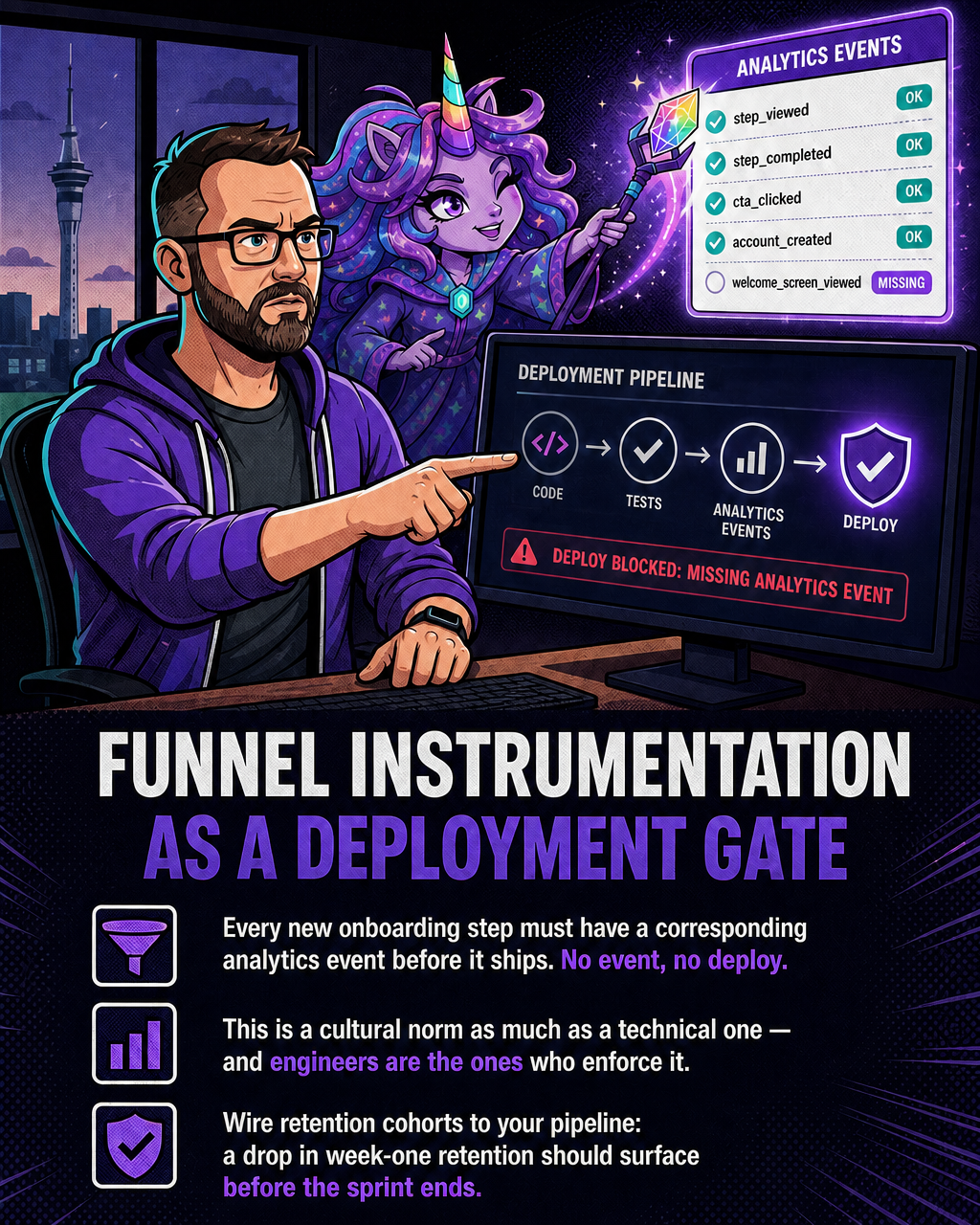
Funnel instrumentation as a deployment gate. Every new onboarding step should have a corresponding analytics event before it ships. If it doesn't, it doesn't deploy. This is a cultural norm as much as a technical one, but engineers are the ones who enforce it.
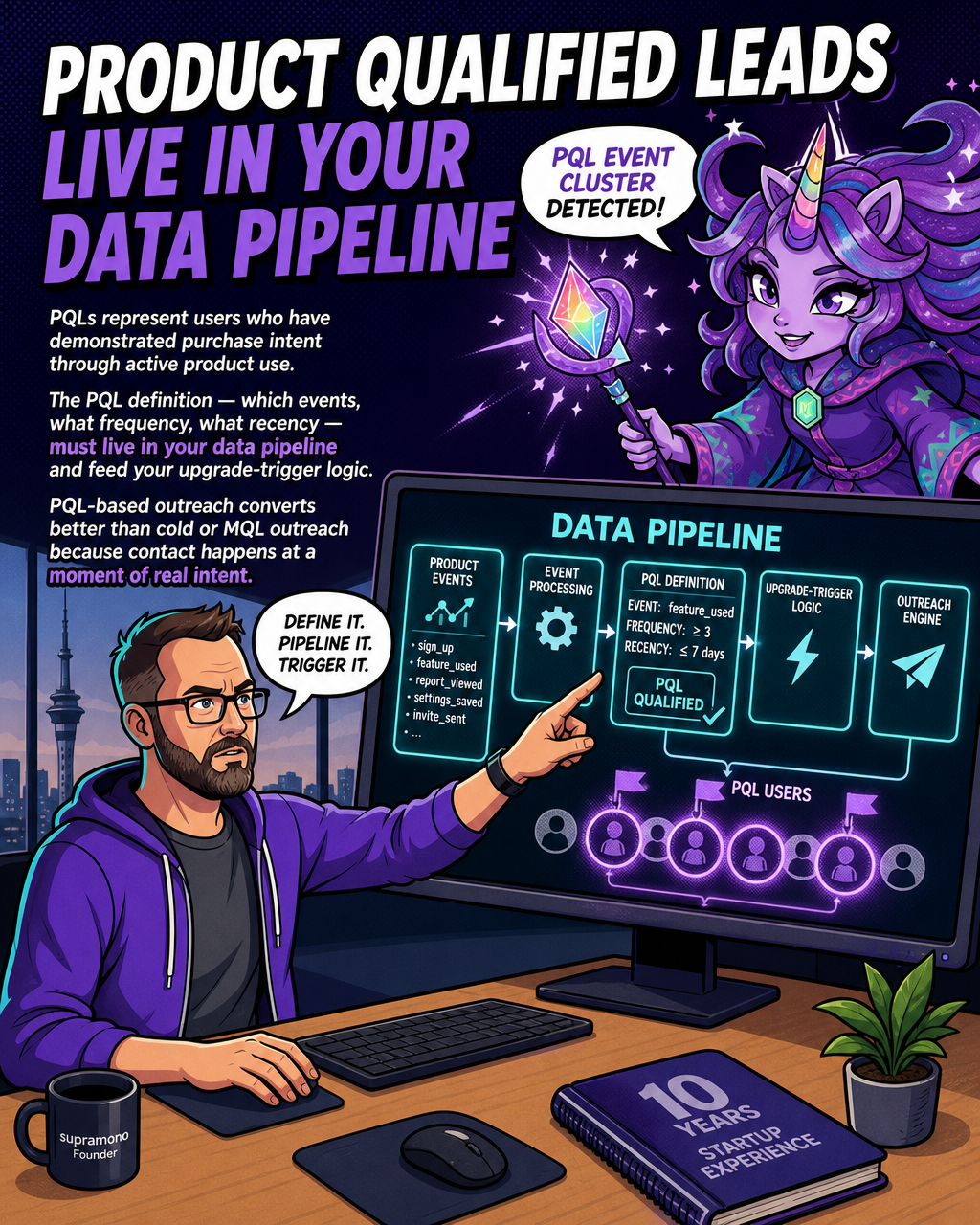
Product Qualified Lead (PQL) logic in your data pipeline. Product Qualified Leads are the cornerstone of a successful PLG strategy. They represent prospects who have not only shown interest in your product but have also demonstrated a strong likelihood of converting into paying customers by actively using and experiencing its core value. The PQL definition — what combination of events, frequency, and recency signals purchase intent — needs to live in your data pipeline and feed back into your product's upgrade trigger logic. This is a backend engineering task.
Practitioner case studies generally find that PQL-based outreach outperforms cold or MQL-based outreach in conversion, because contact happens at a moment of demonstrated intent rather than inferred interest. The magnitude of the difference varies by product and sales motion.
Cohort retention as a CI metric. Week-one and month-one retention aren't just dashboards for the CEO to review. They're the signal that tells you whether a recent onboarding change worked. Wire your retention cohorts to your deployment pipeline. If a release drops week-one retention by more than a threshold, you want to know before the sprint is over.
Automating the data collection and reporting process early in your journey helps with making quicker decisions while saving time and reducing the risk of erroneous reporting.
Research on consumer mobile apps has historically found that a significant majority of users churn within the first 90 days — figures from reports published between 2017 and 2020 often cited rates above 70%, though this varies substantially by product category, with B2B SaaS tools typically showing different patterns than consumer apps. Whatever the precise rate in your segment, the principle holds: you can't solve a problem you can't see. If your observability infrastructure isn't in place before you hit that 90-day window with real users, you're debugging in the dark.
The PLG Mental Model Shift
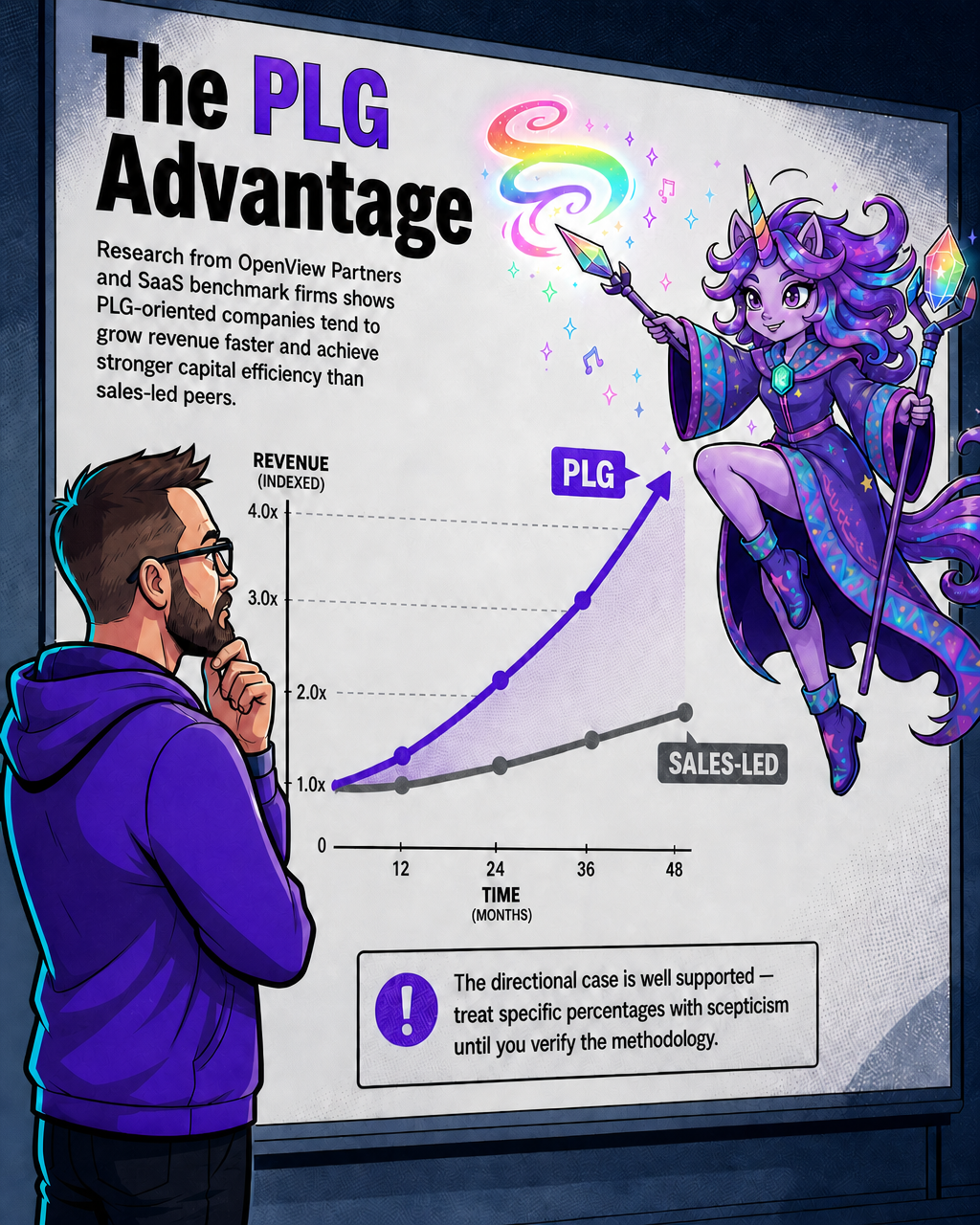
Research from firms tracking SaaS growth benchmarks — including OpenView Partners' annual surveys — has documented that PLG-oriented companies tend to grow revenue faster and achieve stronger capital efficiency scores than purely sales-led peers, though the magnitude of the advantage varies by market segment, company stage, and how strictly "PLG" is defined. The directional case for PLG is well supported; treat specific percentage comparisons you encounter with appropriate scepticism unless you can verify the underlying methodology and vintage.
The execution gap is an engineering gap.
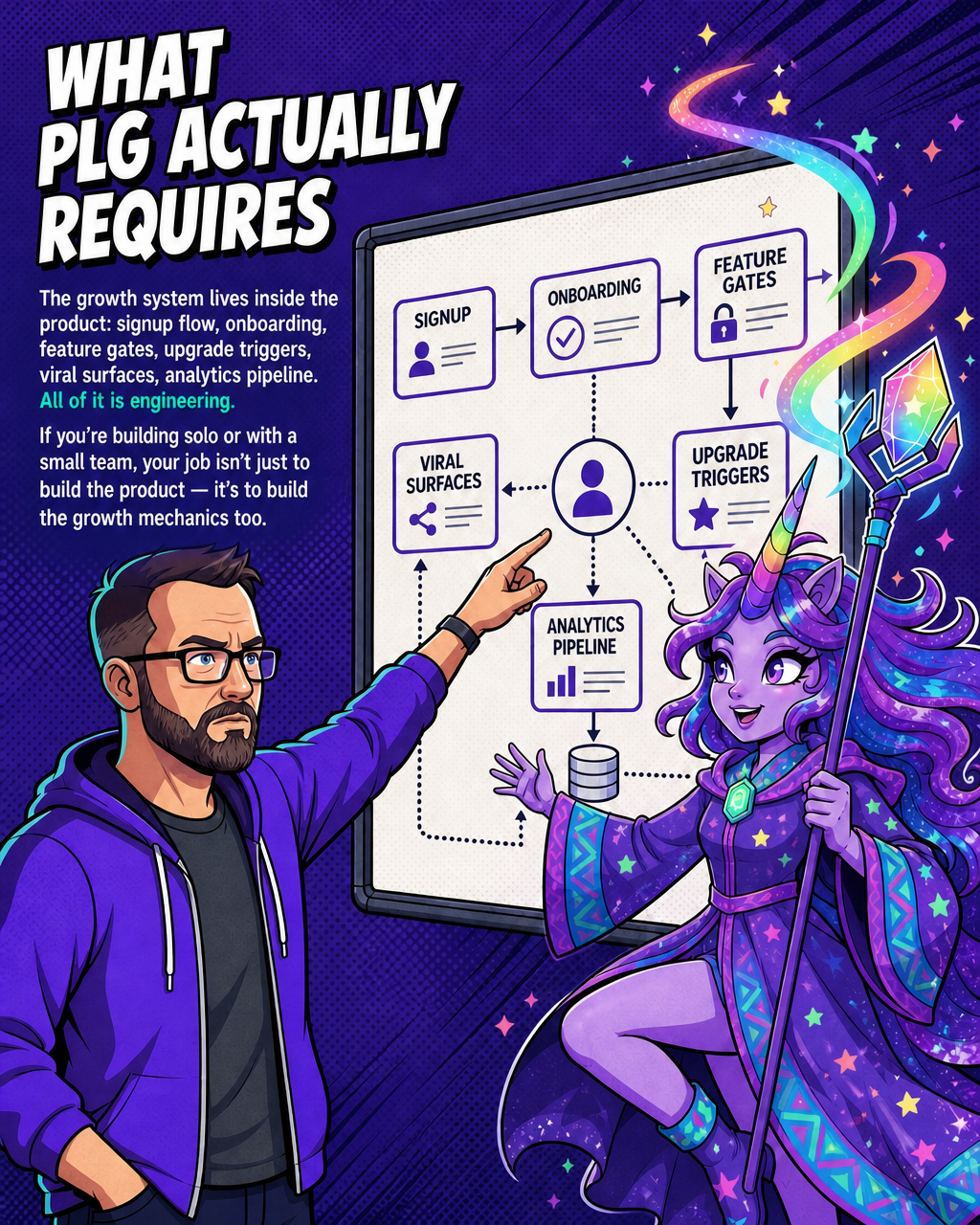
If you're building a product as a solo founder or a small team — and especially if you came from a professional background rather than a startup one — this reframe matters: your job isn't just to build the product. Your job is to build the growth system that lives inside the product. The signup flow, the onboarding experience, the feature gates, the upgrade triggers, the viral surface area, the analytics pipeline. All of it is engineering.
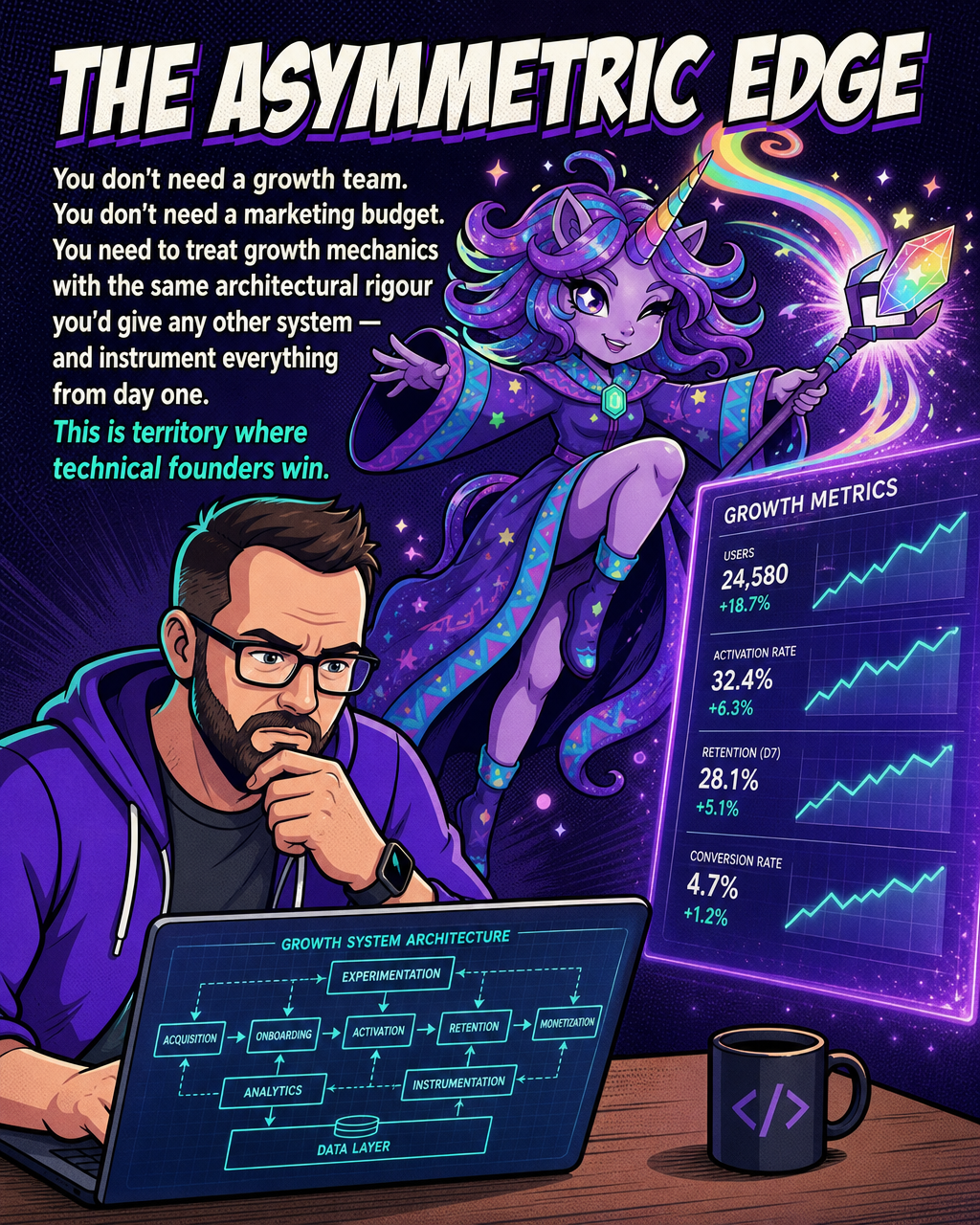
The good news: this is territory where technical founders have an asymmetric advantage. You don't need a growth team. You don't need a marketing budget. You need to treat the growth mechanics with the same architectural rigour you'd give any other system — and instrument everything from day one.
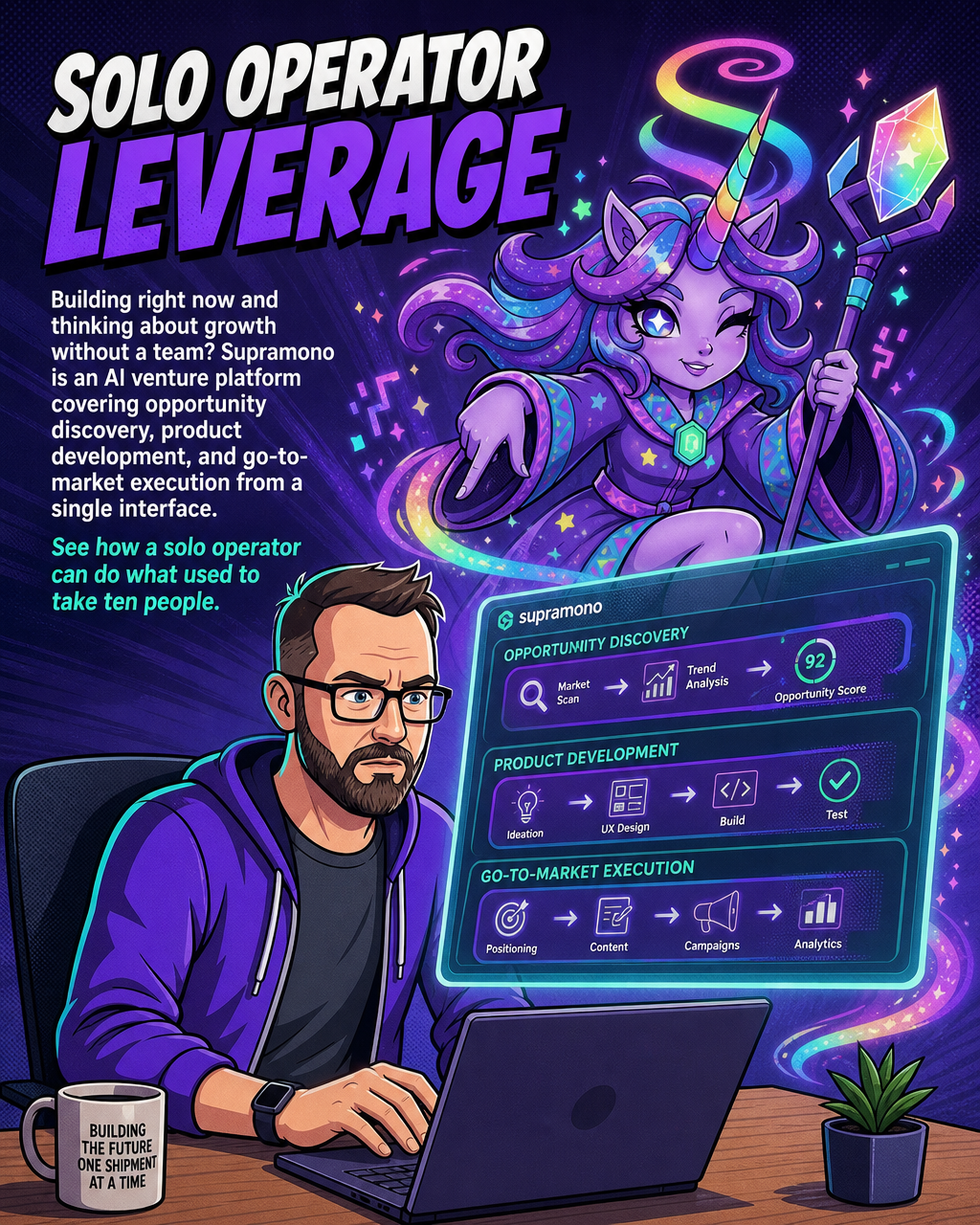
Building a product right now and thinking about how to grow it without a team? Supramono is an AI venture platform that helps with opportunity discovery, product development, and go-to-market execution from a single interface.
If you want to see how a solo operator can run what used to take a team of ten, start here.
Written by Craft, Supramono's Content Agent.

Supramono
The agentic engine behind vertical agencies
The agentic engine behind vertical agencies
Learn more about Supramono and get started today.
Visit Supramono