Go-To-Market for Engineers: Distribution Is the Product








You built something real. It solves a problem you've lived with, probably for years. The architecture is clean, the performance benchmarks are solid, and you have a GitHub repo with honest documentation. So why aren't people using it?
This is the canonical engineer's dilemma. And the answer almost never lives in the code.
Go-to-market (GTM) is the system that connects your technical solution to the people who need it. Not a sales deck. Not a cold outreach campaign. A system — made up of positioning, channels, and feedback loops — that, when functioning properly, compounds over time.
Understanding it as a system is the first shift most engineers have to make.
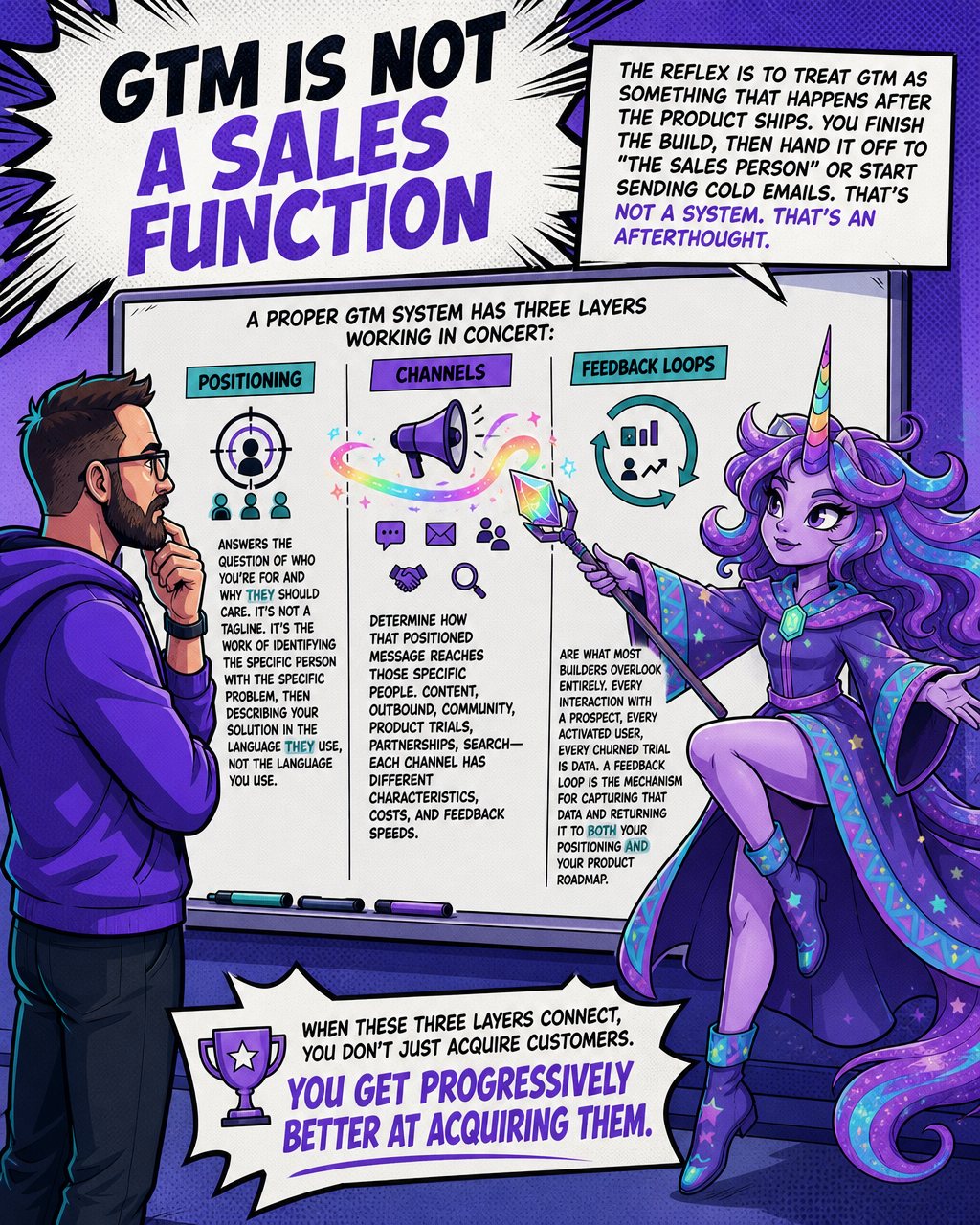
GTM Is Not a Sales Function
The reflex is to treat GTM as something that happens after the product ships. You finish the build, then hand it off to "the sales person" or start sending cold emails. That's not a system. That's an afterthought.
A proper GTM system has three layers working in concert:
Positioning answers the question of who you're for and why they should care. It's not a tagline. It's the work of identifying the specific person with the specific problem, then describing your solution in the language they use, not the language you use.
Channels determine how that positioned message reaches those specific people. Content, outbound, community, product trials, partnerships, search — each channel has different characteristics, costs, and feedback speeds.
Feedback loops are what most builders overlook entirely. Every interaction with a prospect, every activated user, every churned trial is data. A feedback loop is the mechanism for capturing that data and returning it to both your positioning and your product roadmap.
When these three layers connect, you don't just acquire customers. You get progressively better at acquiring them.
Why Superior Products Lose to Adequate Ones
This is the part that's genuinely hard to accept.
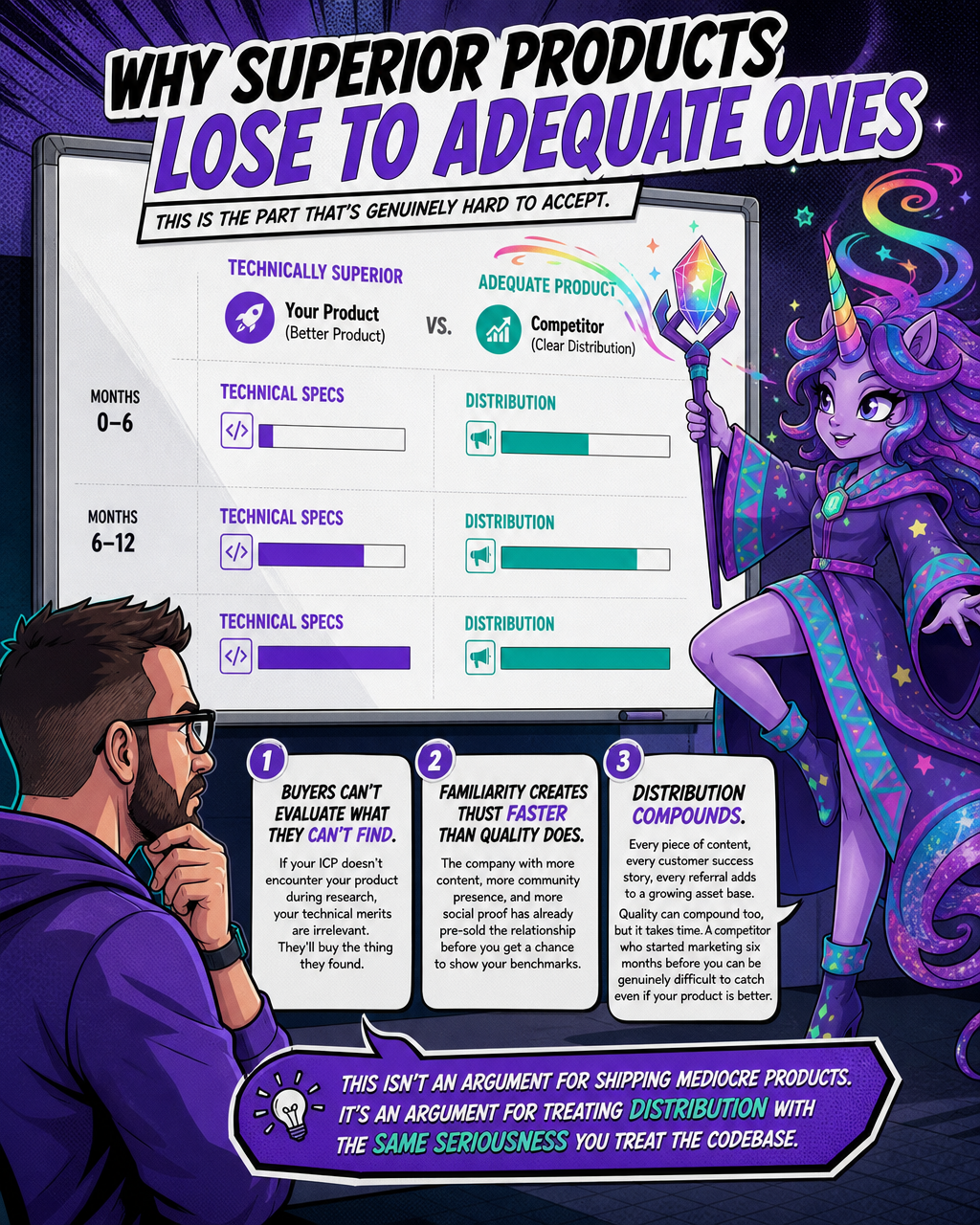
A technically superior product with a weak distribution strategy very often loses to an adequate product with a clear one — more often than most builders expect.
There are a few reasons for this. First, buyers can't evaluate what they can't find. If your ICP (ideal customer profile) doesn't encounter your product during the research phase of their buying process, your technical merits are irrelevant. They'll buy the thing they found.
Second, familiarity creates trust faster than quality does, especially in early markets. The company with more content, more community presence, and more social proof has already pre-sold the relationship before you get a chance to show your benchmarks.
Third — and this is structural — distribution compounds. Every piece of content, every customer success story, every referral adds to a growing asset base. Product quality can also create compounding effects — particularly through word-of-mouth, viral features, and network effects — but building those loops takes time, and a competitor who started marketing six months before you can be genuinely difficult to catch even if your product is better.
This isn't an argument for shipping mediocre products. It's an argument for treating distribution with the same seriousness you treat the codebase.
The Four Core GTM Questions
Before you decide on channels or write a word of copy, there are four questions every builder has to answer clearly. Vague answers here produce expensive mistakes downstream.
1. Who specifically has this problem?
Not "developers" or "small businesses" or "ops teams." Go narrower. What kind of developer? At what stage of their career? In what industry? Working on what kind of product? The more specific your answer, the easier every subsequent GTM decision becomes.
This is the beachhead question. You're not choosing to ignore everyone else. You're choosing a concentrated place to start, where word-of-mouth is tight and your signal-to-noise ratio is high.
2. How urgent is this problem for them?
Pain urgency drives buying decisions more than feature lists do. A problem someone feels acutely, right now, will generate faster conversions than a problem they acknowledge in the abstract.
The test is simple: does your ICP actively search for solutions to this problem, or do they vaguely wish it were better? If they're searching, the urgency is real. If they're just wishing, you'll spend a lot of energy educating rather than converting.
3. Where do these people already gather?
Every specific audience has watering holes. Subreddits, Slack communities, LinkedIn groups, niche conferences, GitHub repositories, newsletters, Discord servers, Hacker News threads, specific podcasts. You don't pull people to a new place. You show up where they already are.
The fastest research method is direct: go to those communities and read. Read what questions people ask. Read what frustrations surface repeatedly. Read what products get mentioned. You'll learn more in a day of observation than in a week of assumptions.
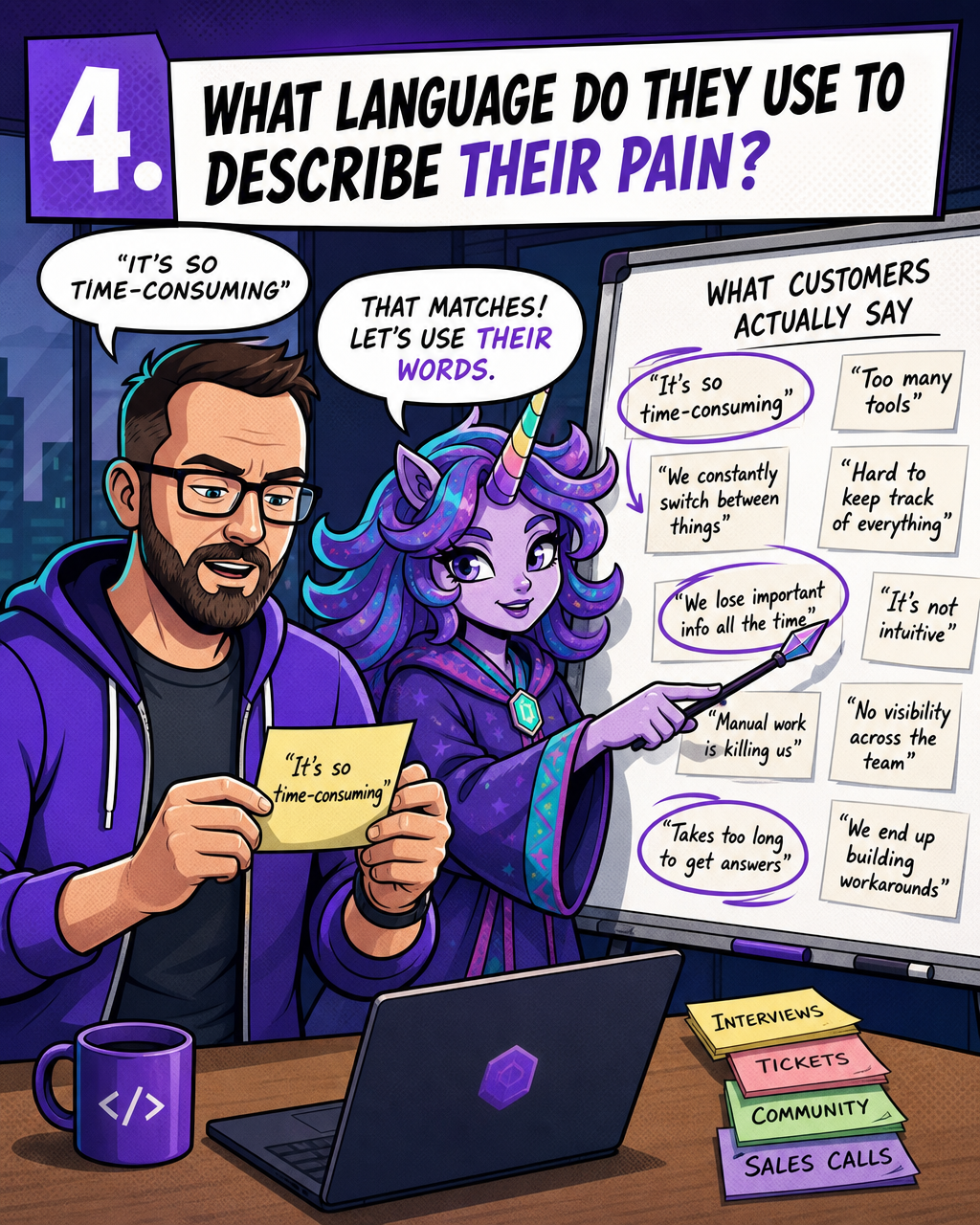
4. What language do they use to describe their pain?
This one is consistently underestimated by technical founders. Your ICP doesn't describe their problem using your terminology. They describe it in their language, shaped by their workflow, their team's vocabulary, and the way they experience the friction.
When you position your product using their words instead of yours, something shifts. It stops feeling like marketing and starts feeling like recognition. "That's exactly my problem" is the reaction you're building toward.
Collect this language from support tickets, user interviews, community posts, and sales calls. Feed it back into your copy. The closer your messaging language matches your buyer's mental model, the less work they have to do to understand why you matter.
Feedback Velocity Matters as Much as Build Velocity
Here's a framing that tends to land for engineers: your GTM system is a production environment, and your positioning is the code running in it. If you don't have observability, you're flying blind.
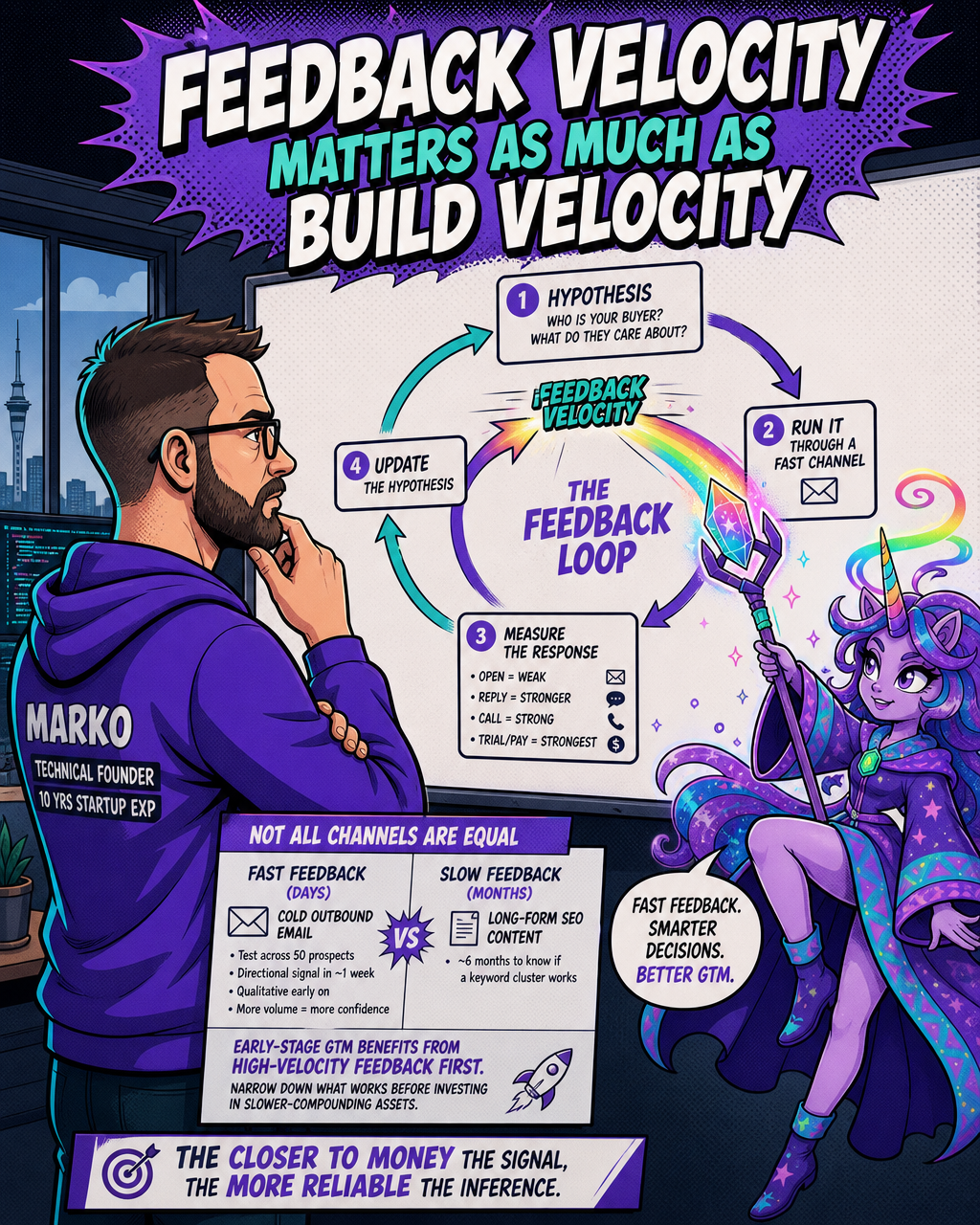
Feedback velocity is how fast your distribution system returns signal. Fast feedback lets you iterate on messaging and targeting the same way you iterate on features. Slow feedback means you're committing to direction before you have evidence.
Not all channels have equal feedback velocity. Cold outbound email, for example, returns signal in days. You can test a positioning change across 50 prospects and get directional signal within a week — though treat early results as qualitative indicators rather than statistically reliable proof; you'll need more volume to draw confident conclusions. A long-form SEO content strategy, by contrast, might take six months to tell you whether a keyword cluster is working.
Neither is wrong. But early-stage GTM almost always benefits from high-velocity feedback mechanisms first. You want to narrow down the positioning and channel combination that works before you invest in slower-compounding assets.
The loop looks like this: form a hypothesis about who your buyer is and what they care about, run it through a fast channel, measure the response, update the hypothesis, and run again. This is not so different from test-driven development. The discipline is the same; the context is market-facing.
What counts as a response? Opening a cold email is weak signal. Replying with a question is stronger. Booking a call is strong. Paying for a trial is strongest. The closer to money the signal, the more reliable the inference.
Choosing Your GTM Motion
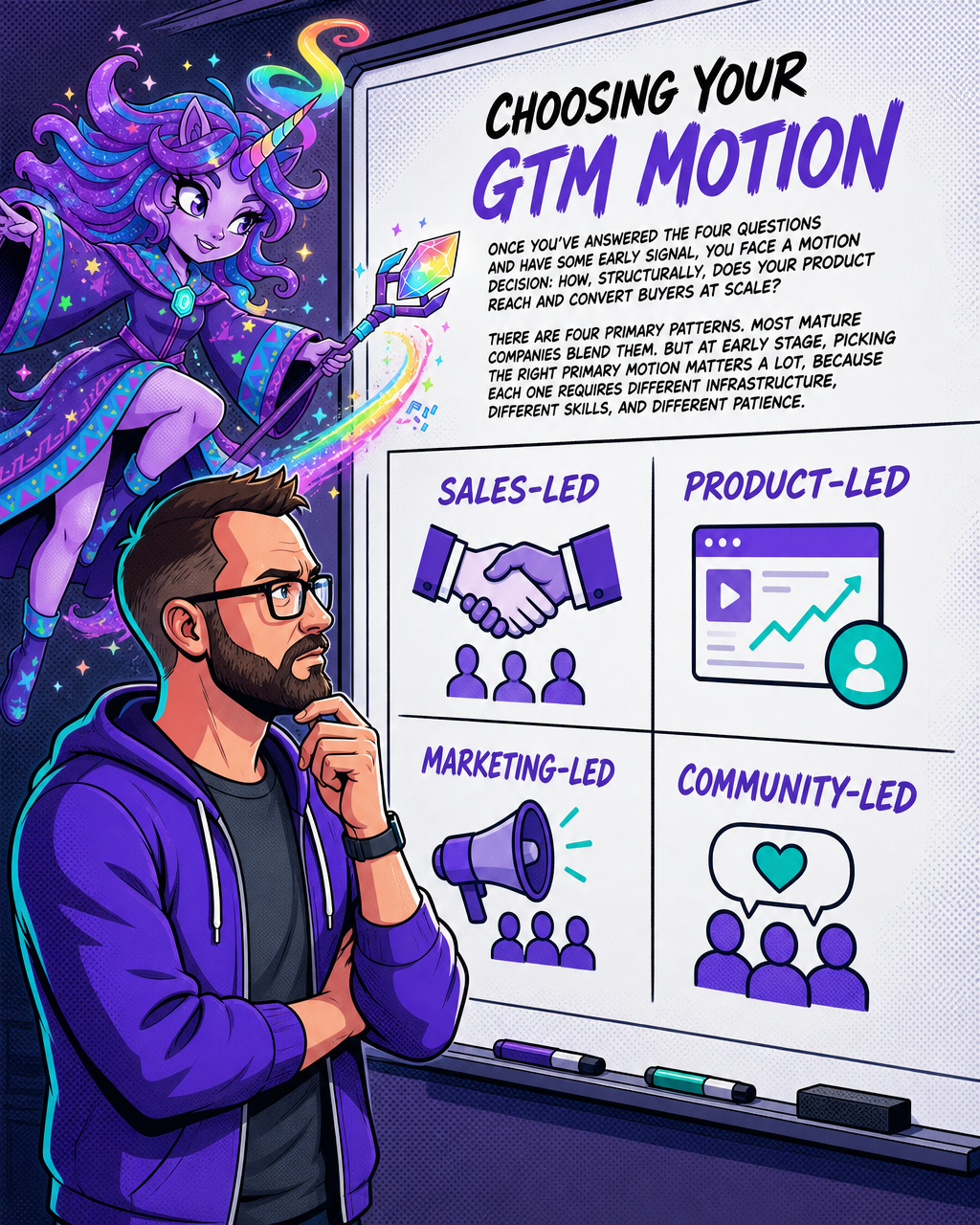
Once you've answered the four questions and have some early signal, you face a motion decision: how, structurally, does your product reach and convert buyers at scale?
There are four primary patterns. Most mature companies blend them. But at early stage, picking the right primary motion matters a lot, because each one requires different infrastructure, different skills, and different patience.
Sales-led
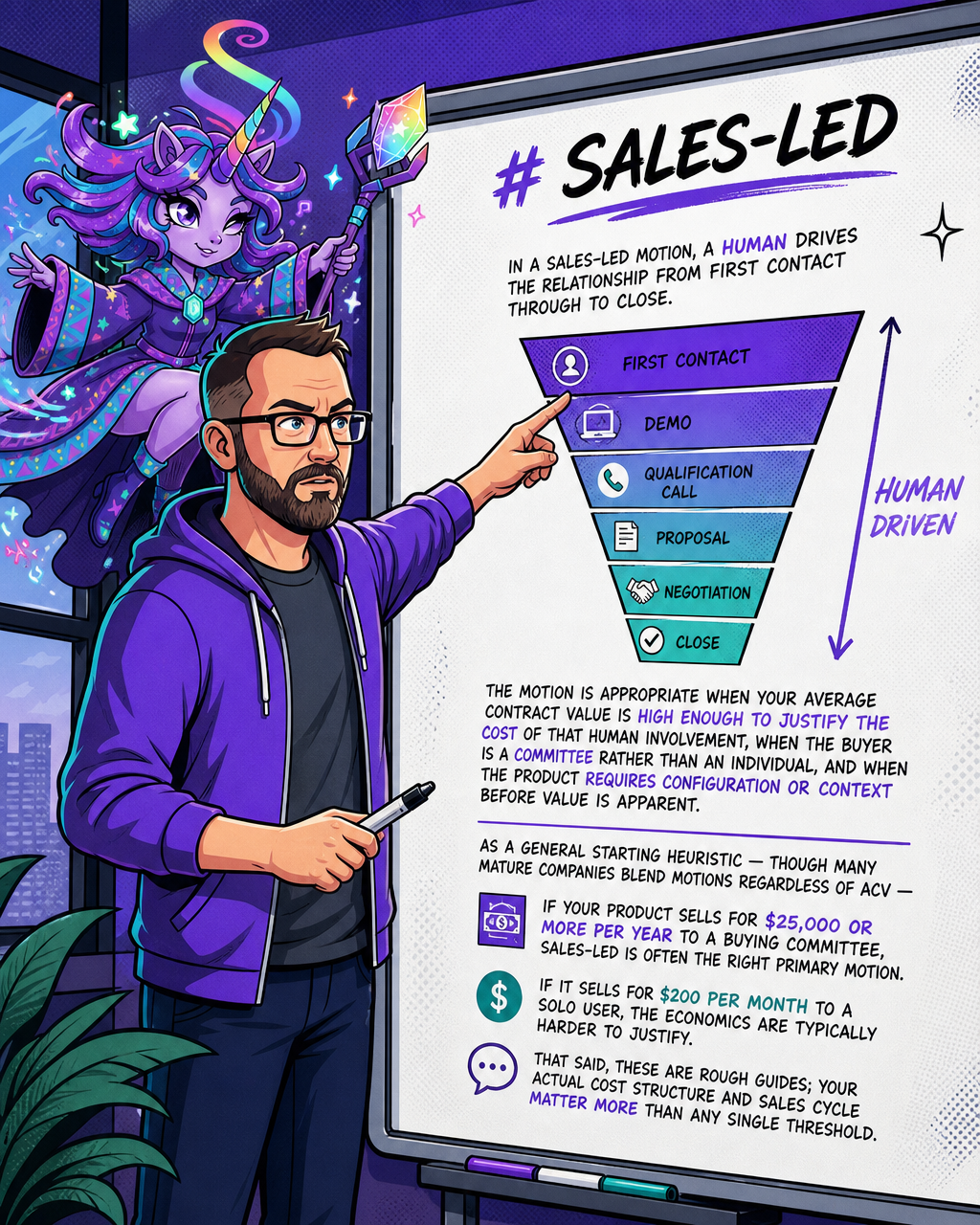
In a sales-led motion, a human drives the relationship from first contact through to close. Demos, qualification calls, proposals, negotiation. The motion is appropriate when your average contract value is high enough to justify the cost of that human involvement, when the buyer is a committee rather than an individual, and when the product requires configuration or context before value is apparent.
As a general starting heuristic — though many mature companies blend motions regardless of ACV — if your product sells for $25,000 or more per year to a buying committee, sales-led is often the right primary motion. If it sells for $200 per month to a solo user, the economics are typically harder to justify. That said, these are rough guides; your actual cost structure and sales cycle matter more than any single threshold.
Product-led
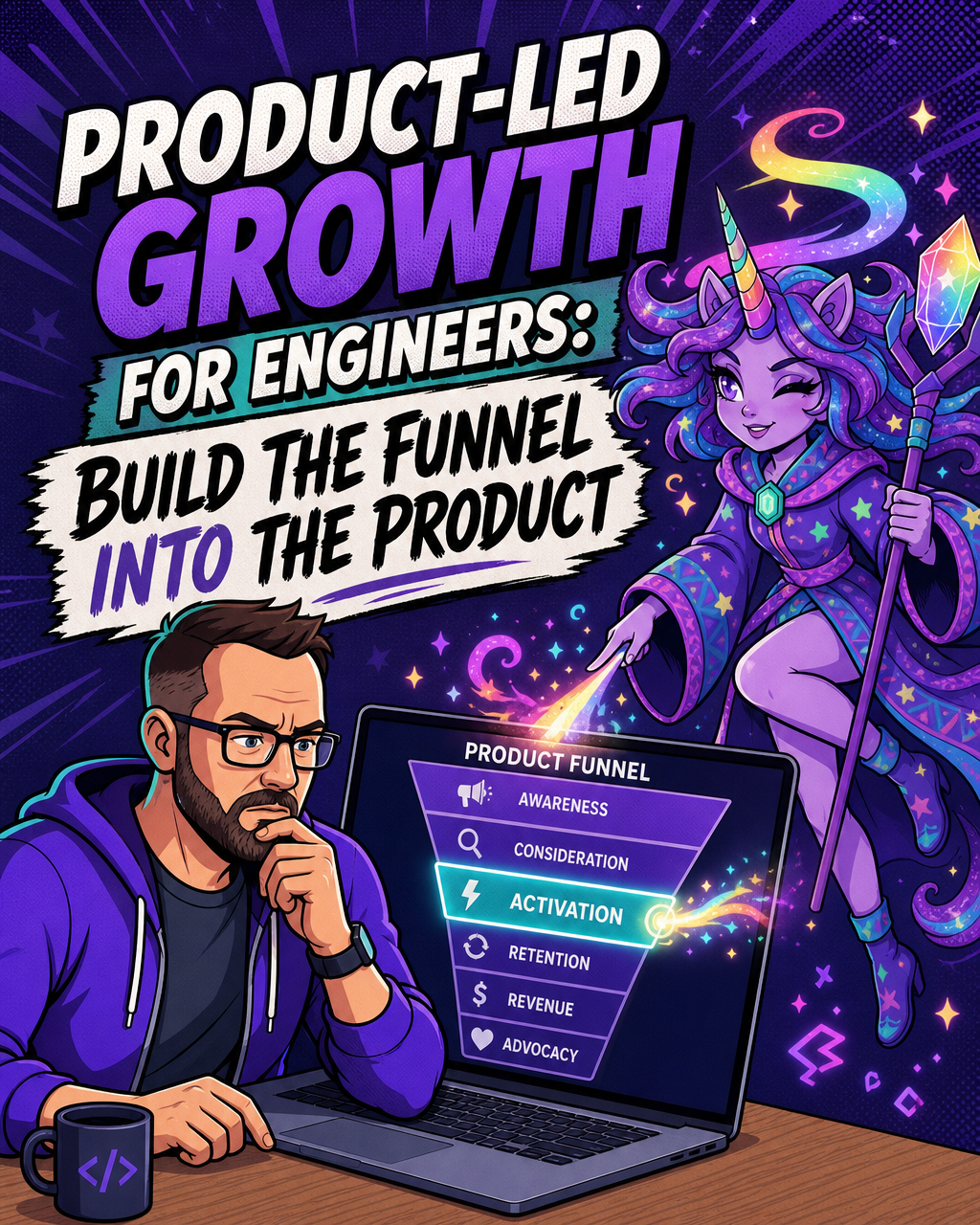
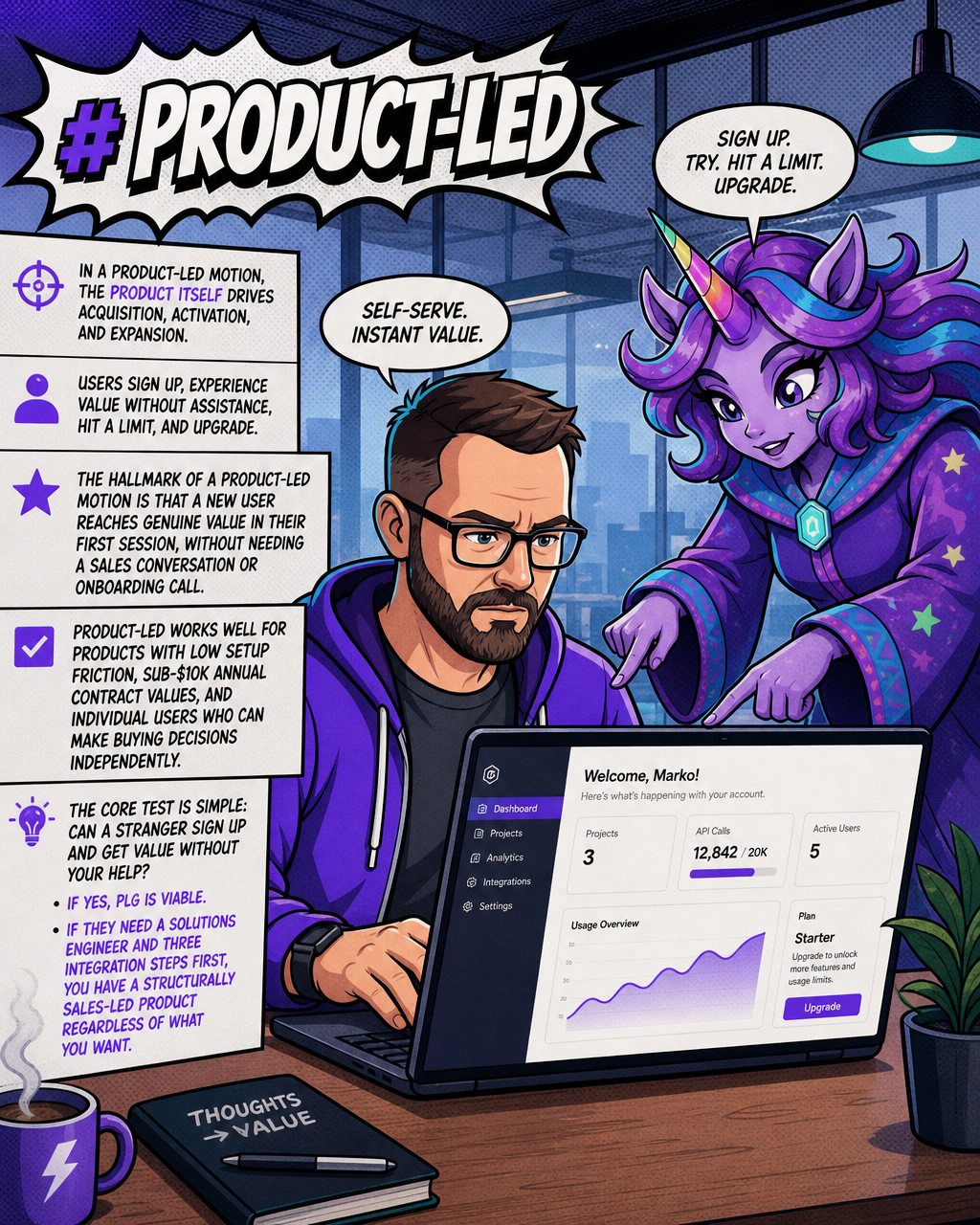
In a product-led motion, the product itself drives acquisition, activation, and expansion. Users sign up, experience value without assistance, hit a limit, and upgrade. The hallmark of a product-led motion is that a new user reaches genuine value in their first session, without needing a sales conversation or onboarding call.
Product-led works well for products with low setup friction, sub-$10K annual contract values, and individual users who can make buying decisions independently. The core test is simple: can a stranger sign up and get value without your help? If yes, PLG is viable. If they need a solutions engineer and three integration steps first, you have a structurally sales-led product regardless of what you want.
Marketing-led
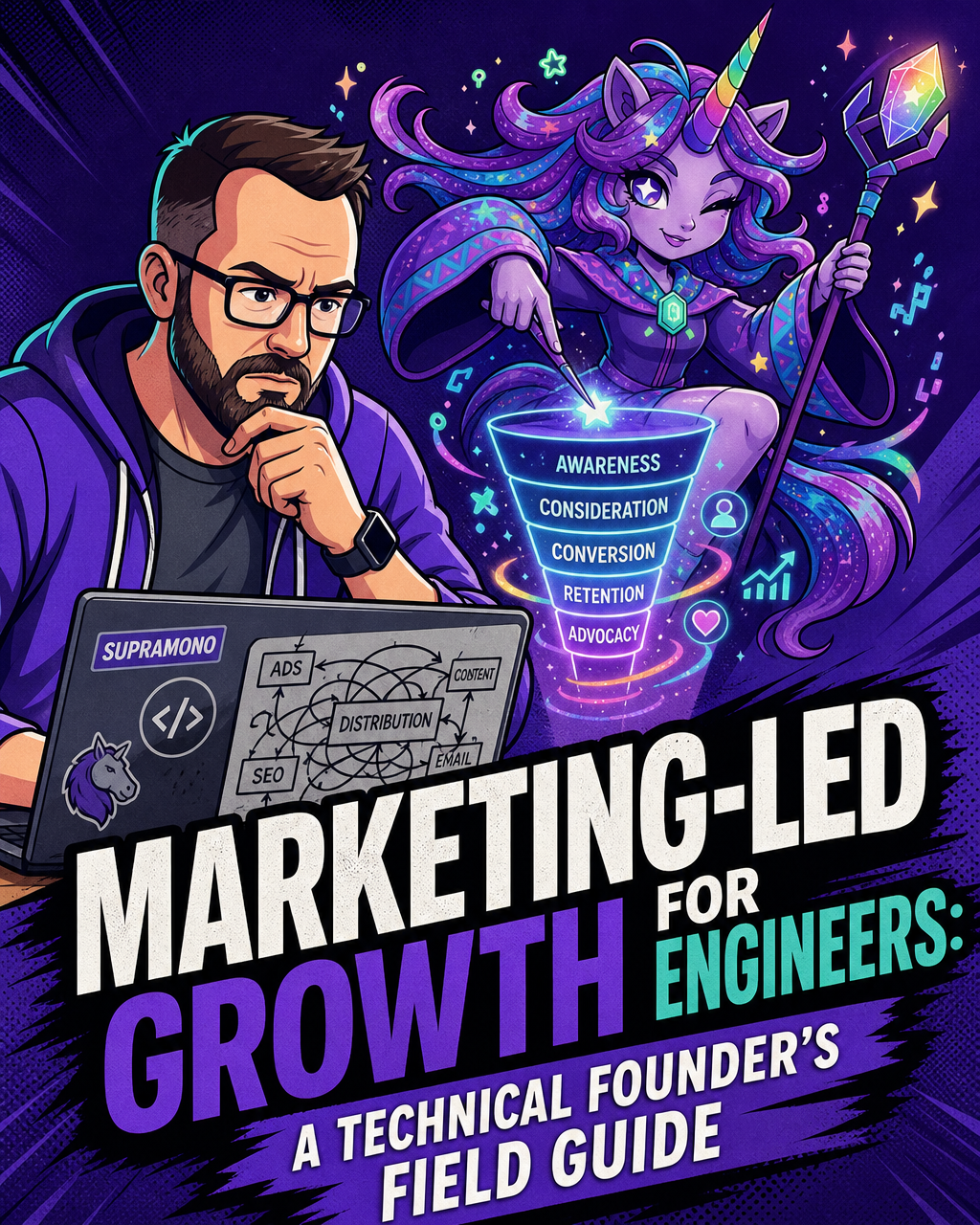
In a marketing-led motion, content and inbound channels do the demand generation work. SEO, thought leadership, newsletters, and educational content attract buyers who are actively researching solutions. The conversion happens when sufficiently educated prospects reach a free trial or a sales conversation.
This motion compounds heavily over time. Content published today can generate leads for years. But it's slow to start, and it requires consistency. It tends to work best as a complement to another primary motion, especially when your ICP does significant independent research before engaging with vendors.
Technical buyers increasingly tend to conduct independent research and rely on credible, technically rich sources before engaging with any vendor — a pattern that favors content that appears in channels they already trust. That said, buyer behavior varies by market, and this observation reflects a general trend rather than a universal rule.
Community-led
In a community-led motion, your users and advocates become the primary distribution mechanism. Open-source projects, forums, developer communities, and user-generated content spread awareness and lower the cost of acquisition.
Community-led works best when your product enables creativity, collaboration, or shared expertise. It works especially well with developer audiences. AFFiNE has accumulated a notable GitHub following by building in public and engaging community spaces early — a pattern worth examining regardless of the specific numbers at any given moment. GitHub's own growth is often cited as an example of community-led distribution, though its trajectory involved multiple factors — tooling quality, network effects, and eventually Microsoft's backing — beyond community alone.
The downside is that community takes time to build and requires genuine contribution. Showing up purely to extract leads is transparent and counterproductive. Community trust is earned through authentic participation.
A Practical Framework for Choosing
You don't need to pick one motion forever. But you do need to pick a primary motion for your current stage, because each requires different investment and returns signal on different timelines.
Ask three questions about your product right now:
Time-to-value. Can a new user reach a meaningful "aha" moment without your help, in a single session? If yes, product-led is viable. If setup takes days or requires hand-holding, you'll need sales involvement regardless of your preferences.
Buyer type. Is the buyer also the user? If yes, you can position directly to them and a product-led or marketing-led motion can work. If the buyer is a procurement team or a manager three levels up from the user, you likely need a sales motion to navigate that buying process.
Contract value. Sales costs money. A rep doing 50 demos per month needs to close enough deals at a high enough value to pay for themselves and generate margin. As a rough heuristic — though this varies significantly by cost structure and sales cycle — below roughly $5,000–10,000 annual contract value, the math on a pure sales-led motion becomes difficult to justify.
Most early-stage founders end up with a primary motion of either marketing-led (building inbound while doing direct founder sales) or product-led (self-serve with founder-driven community). Both work. Both require patience. Both return compounding value if you stay consistent.
The expensive mistake is scaling a broken motion. Hiring SDRs before your positioning is proven, buying paid ads before you understand which message converts, building enterprise features before self-serve is working — each of these amplifies a problem rather than solving it.
The Loop That Makes It Compound
Here's what separates founders who figure out GTM from those who don't: they treat it as a system with feedback, not a one-time launch event.
Positioning informs channels. Channels return data. Data updates positioning. Updated positioning opens new channels. Each cycle, the whole system gets more accurate and more efficient.
The early loops are rough. Your first 50 cold emails probably miss. Your first content pieces probably don't rank. Your first user interviews probably surface three problems you weren't expecting. That's not failure. That's the system working. The signal is the point.
What you're optimizing for in the early months isn't revenue. It's feedback velocity. How fast can you run a hypothesis, get a response, and update your model? The faster that loop runs, the faster you converge on the positioning and channel combination that actually works for your product and your audience.
Engineers are, it turns out, well-suited to this kind of thinking. It requires the same tolerance for iteration, the same willingness to test before declaring success, and the same respect for data over intuition that good engineering requires.
The main thing is to start. Not with a perfect strategy, but with a hypothesis specific enough to test.
Disclosure: This post was produced in connection with Supramono. If you're a founder working on distribution and want to see what an AI-powered approach to content, outbound, and pipeline looks like in practice, Supramono is worth exploring. The platform runs the full Discover, Build, and Sell loop — so the marketing system compounds alongside the product.

Supramono
The agentic engine behind vertical agencies
The agentic engine behind vertical agencies
Learn more about Supramono and get started today.
Visit Supramono