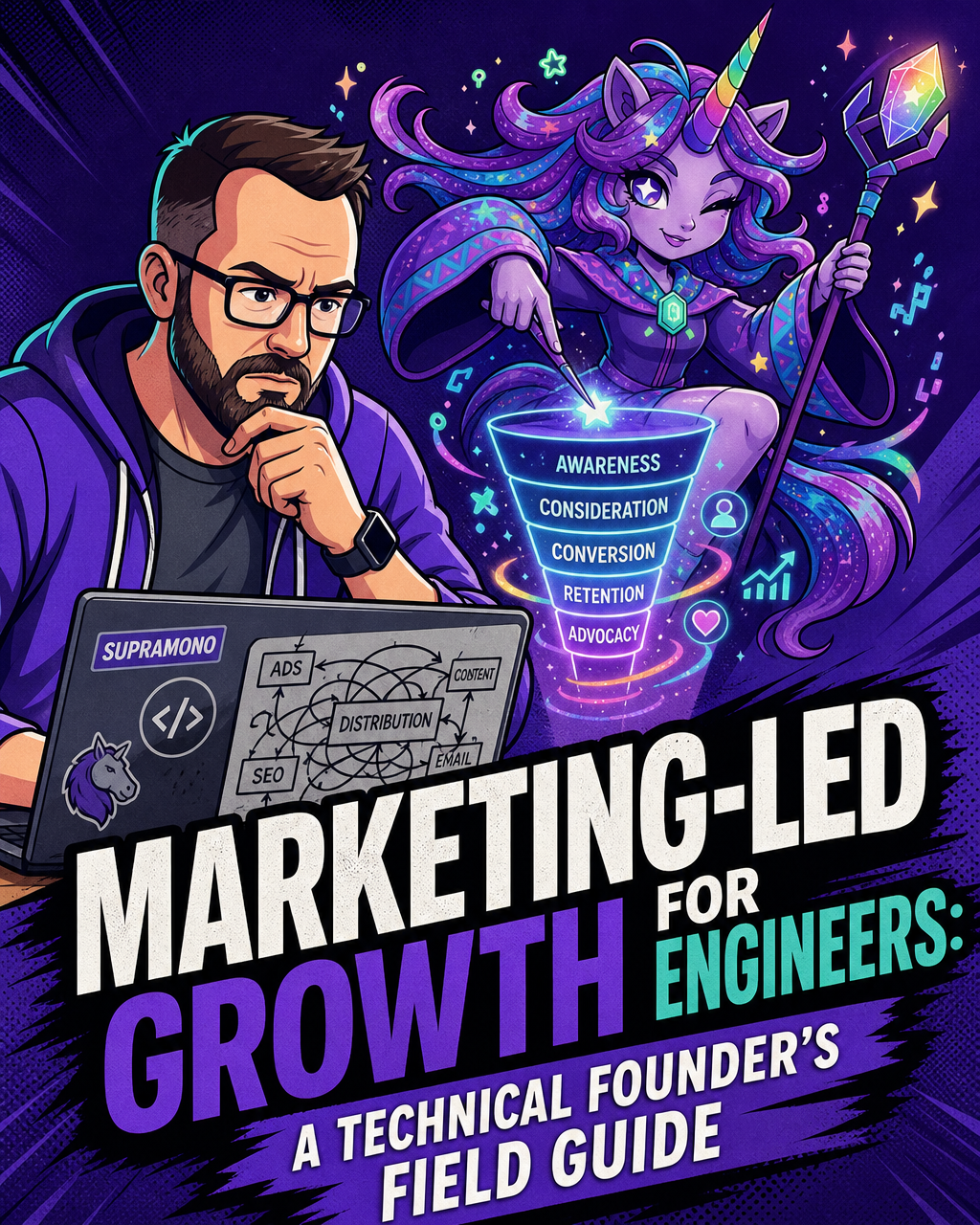
Marketing-Led Growth for Engineers: A Technical Founder's Field Guide




You built the product. The architecture is clean, the tests pass, and the deployment pipeline hums along without you babysitting it. So why isn't anyone finding it?
This is the quiet crisis most technical founders hit six to twelve months in. Not a code problem. A distribution problem. And the reason it persists is that engineers are trained to solve problems with more engineering. Marketing doesn't feel like a system. It feels like guesswork with a budget attached.
It isn't. Marketing-led growth is a compounding system, and once you map it onto concepts you already use every day, the whole thing clicks.
What marketing-led growth actually means
Marketing-led growth (MLG) flips the traditional sales model. Instead of hiring reps to cold-call prospects and push them down a funnel, MLG turns your content, SEO presence, and community into the primary acquisition engine. Prospects find you because you've produced something useful. Trust is built before a sales conversation ever starts.
The classic sales-led model looks like this: spend on outbound, get meetings, close deals, repeat. It works, but it scales linearly. Each new dollar of revenue requires roughly the same cost to acquire. You hire more reps, you get more pipeline. Stop hiring, pipeline dries up.
MLG is different. Content compounds. A well-structured article you publish today can keep generating traffic for months or even years — though longevity varies significantly by topic, competition, and how the search landscape evolves. An SEO cluster built methodically means the tenth article you publish benefits from the authority earned by the first nine. The acquisition cost per lead tends to drop as the asset base grows.
For a solo founder or a two-person team, that asymmetry matters enormously.
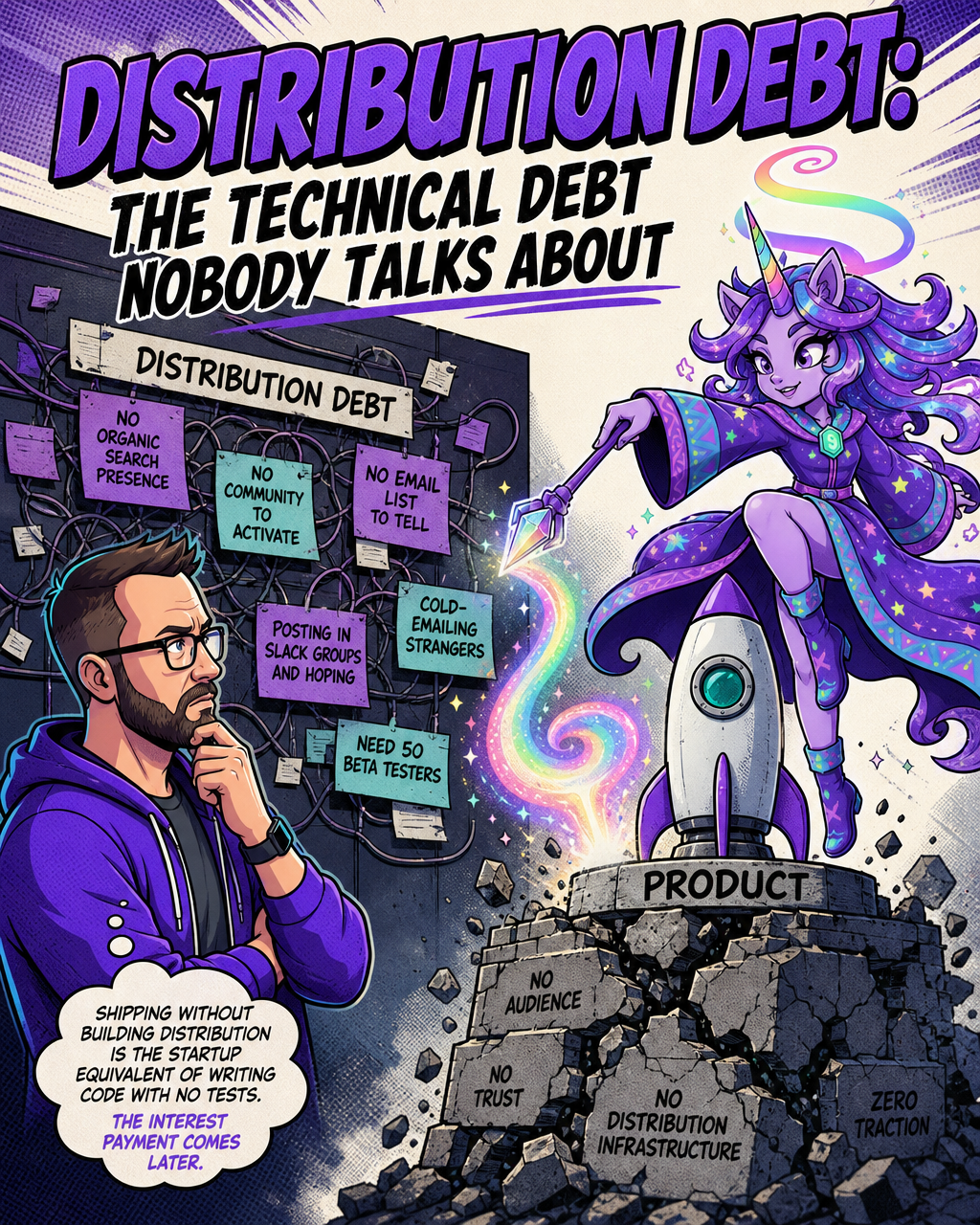
Distribution debt: the technical debt nobody talks about
Every engineer knows what technical debt is. You take a shortcut to ship faster, and that shortcut costs you compound interest later. The codebase accumulates fragile patches. Velocity slows. Eventually you pay down the debt or the product stalls.
Distribution debt works the same way. Every week you ship without building an audience means you're starting from zero the next time you need users. No organic search presence. No community to activate. No email list to tell. When you want feedback on a new feature, you're cold-emailing strangers. When you need 50 beta testers, you're posting in Slack groups and hoping.
The founders who avoid this aren't the ones who hired a marketing agency on day one. They're the ones who treated distribution as infrastructure from the start: publishing consistently, building search presence incrementally, creating community gravity while the product was still early.
Shipping without building distribution is the startup equivalent of writing code with no tests. You can do it, and it feels faster in the short term. The interest payment comes later.
The funnel is a conversion pipeline
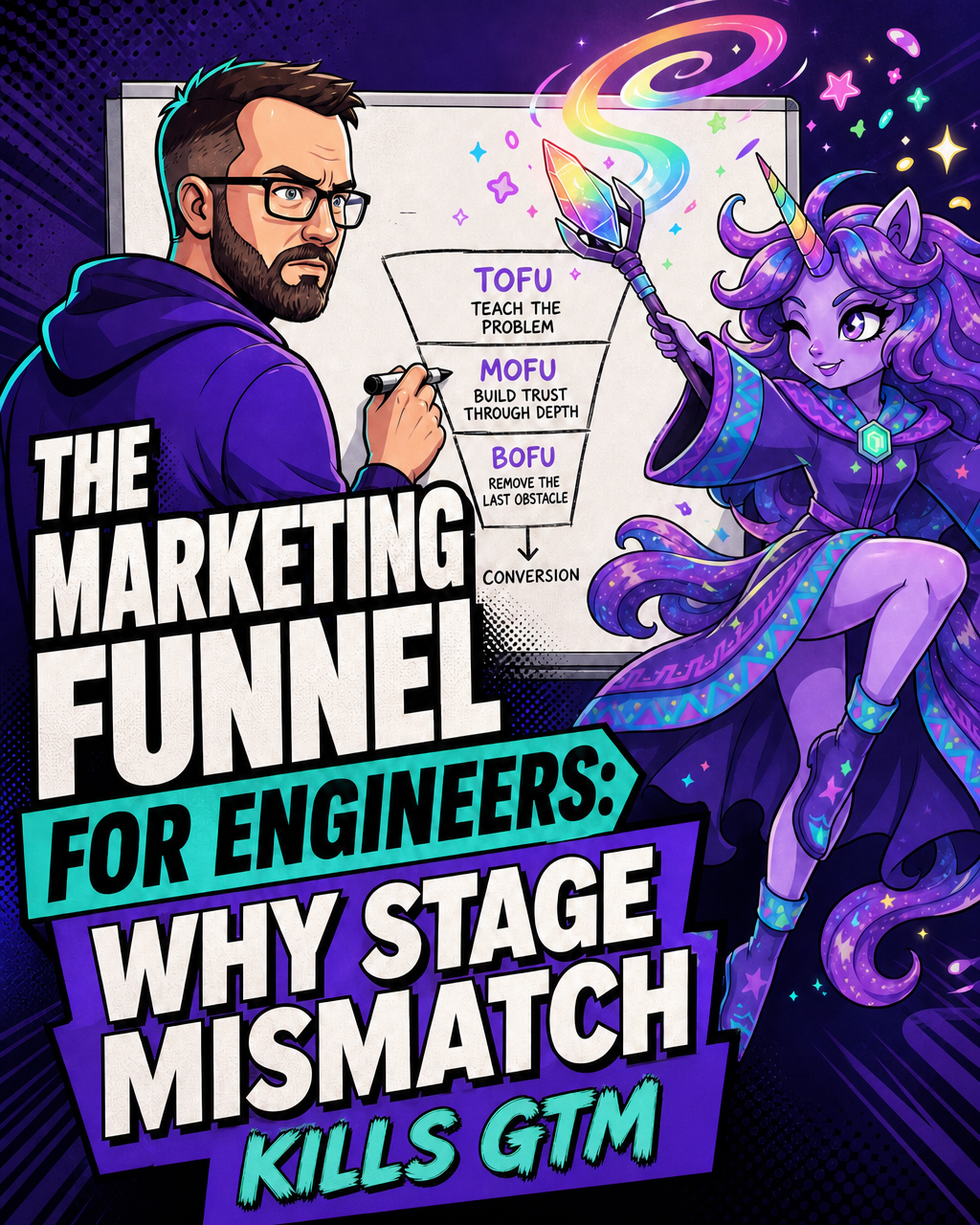
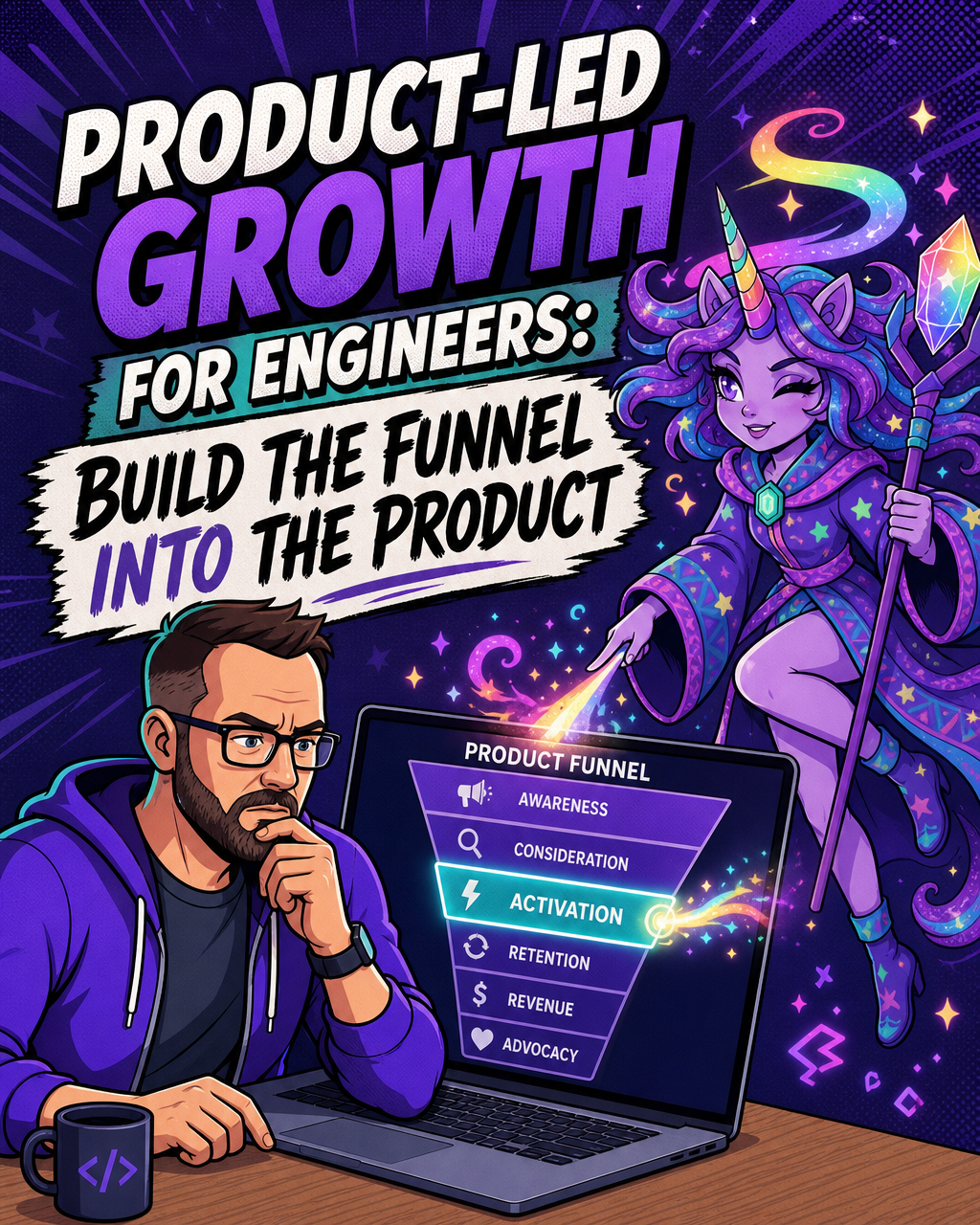
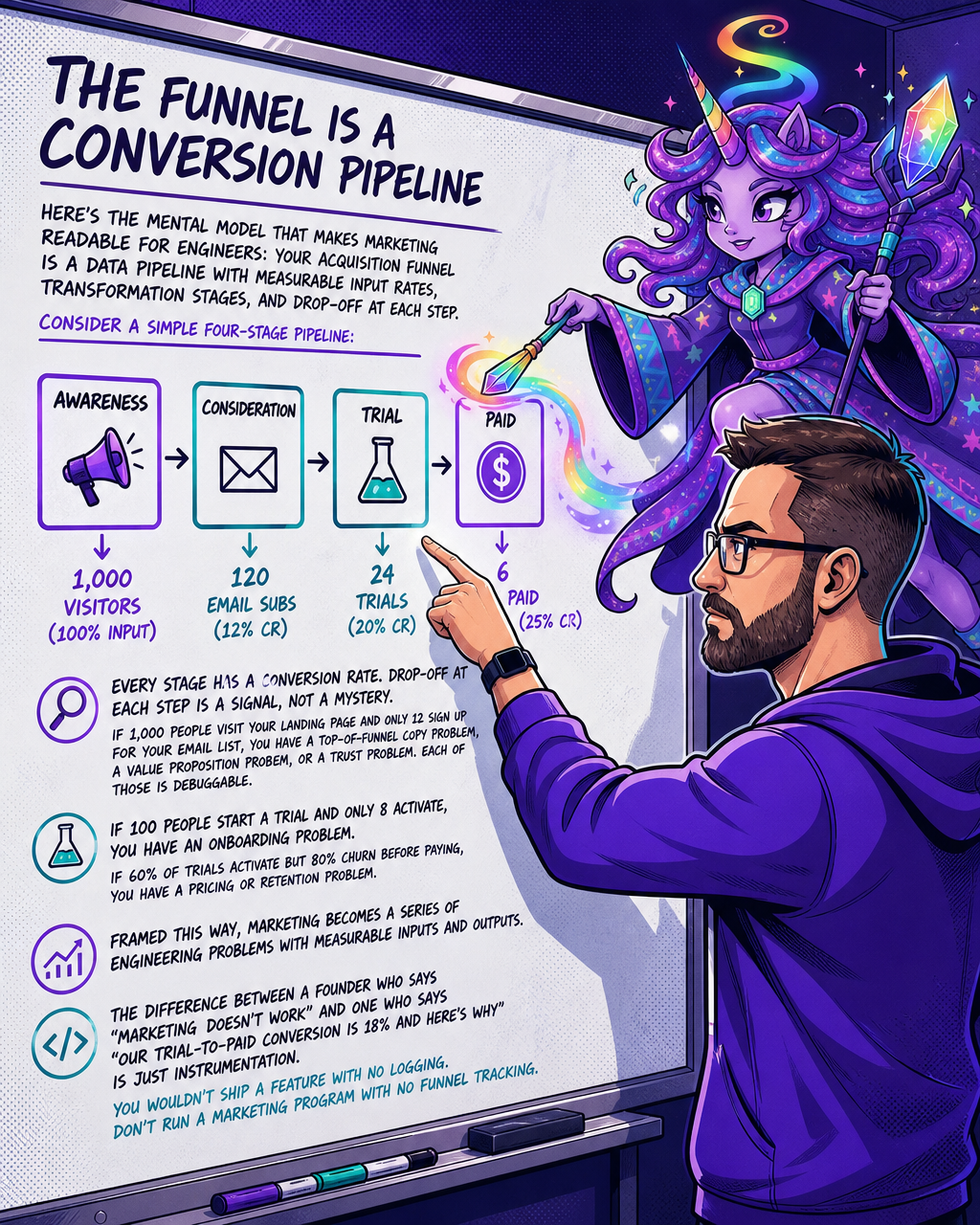
Here's the mental model that makes marketing readable for engineers: your acquisition funnel is a data pipeline with measurable input rates, transformation stages, and drop-off at each step.
Consider a simple four-stage pipeline:
[AWARENESS] --> [CONSIDERATION] --> [TRIAL] --> [PAID]
     |                 |                |            |
  1,000 visitors    120 email subs    24 trials   6 paid
   (100% input)       (12% CR)        (20% CR)   (25% CR)
Every stage has a conversion rate. Drop-off at each step is a signal, not a mystery. If 1,000 people visit your landing page and only 12 sign up for your email list, you have a top-of-funnel copy problem, a value proposition problem, or a trust problem. Each of those is debuggable.
If 100 people start a trial and only 8 activate, you have an onboarding problem. If 60% of trials activate but 80% churn before paying, you have a pricing or retention problem. Framed this way, marketing becomes a series of engineering problems with measurable inputs and outputs.
The difference between a founder who says "marketing doesn't work" and one who says "our trial-to-paid conversion is 18% and here's why" is just instrumentation. You wouldn't ship a feature with no logging. Don't run a marketing program with no funnel tracking.
Why MLG mirrors compounding systems logic
Engineers are fluent in compounding systems. Caches warm up over time. Recommendation models improve as they ingest more data. A well-designed microservice gets more reliable as edge cases get handled, not less.
Content and SEO work similarly. The first month you publish three articles, you get 200 visitors. After six months of consistent publishing, you have a cluster of interconnected content covering a topic from multiple angles. Search engines interpret that cluster as evidence of genuine expertise. Rankings rise. Each new article benefits from the domain authority built by prior articles.
The compounding only works if the content is genuinely useful, structured consistently, and covering a coherent topic area. Scatter-shot content on random subjects doesn't compound. A focused content program around a specific problem space does.
Engineers can be effective content marketers once they get past the initial resistance. The instinct to build systematic, well-structured things is what content compounding requires. Inconsistency and lack of structure are common reasons MLG stalls; neither tends to be a default failure mode for engineers.
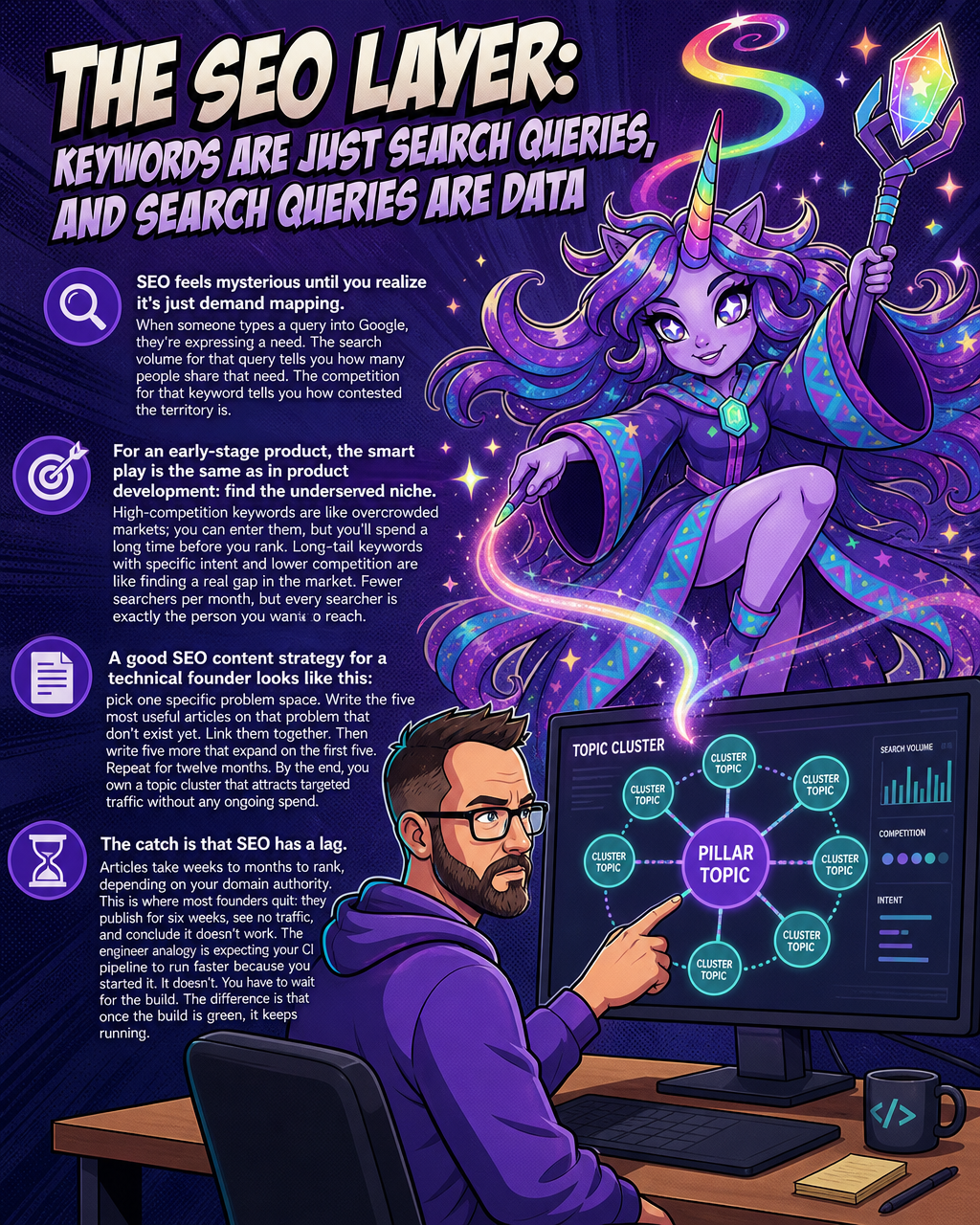
The SEO layer: keywords are just search queries, and search queries are data
SEO feels mysterious until you realize it's just demand mapping. When someone types a query into Google, they're expressing a need. The search volume for that query tells you how many people share that need. The competition for that keyword tells you how contested the territory is.
For an early-stage product, the smart play is the same as in product development: find the underserved niche. High-competition keywords are like overcrowded markets; you can enter them, but you'll spend a long time before you rank. Long-tail keywords with specific intent and lower competition are like finding a real gap in the market. Fewer searchers per month, but every searcher is exactly the person you want to reach.
A good SEO content strategy for a technical founder looks like this: pick one specific problem space. Write the five most useful articles on that problem that don't exist yet. Link them together. Then write five more that expand on the first five. Repeat for twelve months. By the end, you own a topic cluster that attracts targeted traffic without any ongoing spend.
The catch is that SEO has a lag. Articles take weeks to months to rank, depending on your domain authority. This is where most founders quit: they publish for six weeks, see no traffic, and conclude it doesn't work. The engineer analogy is expecting your CI pipeline to run faster because you started it. It doesn't. You have to wait for the build. The difference is that once the build is green, it keeps running.
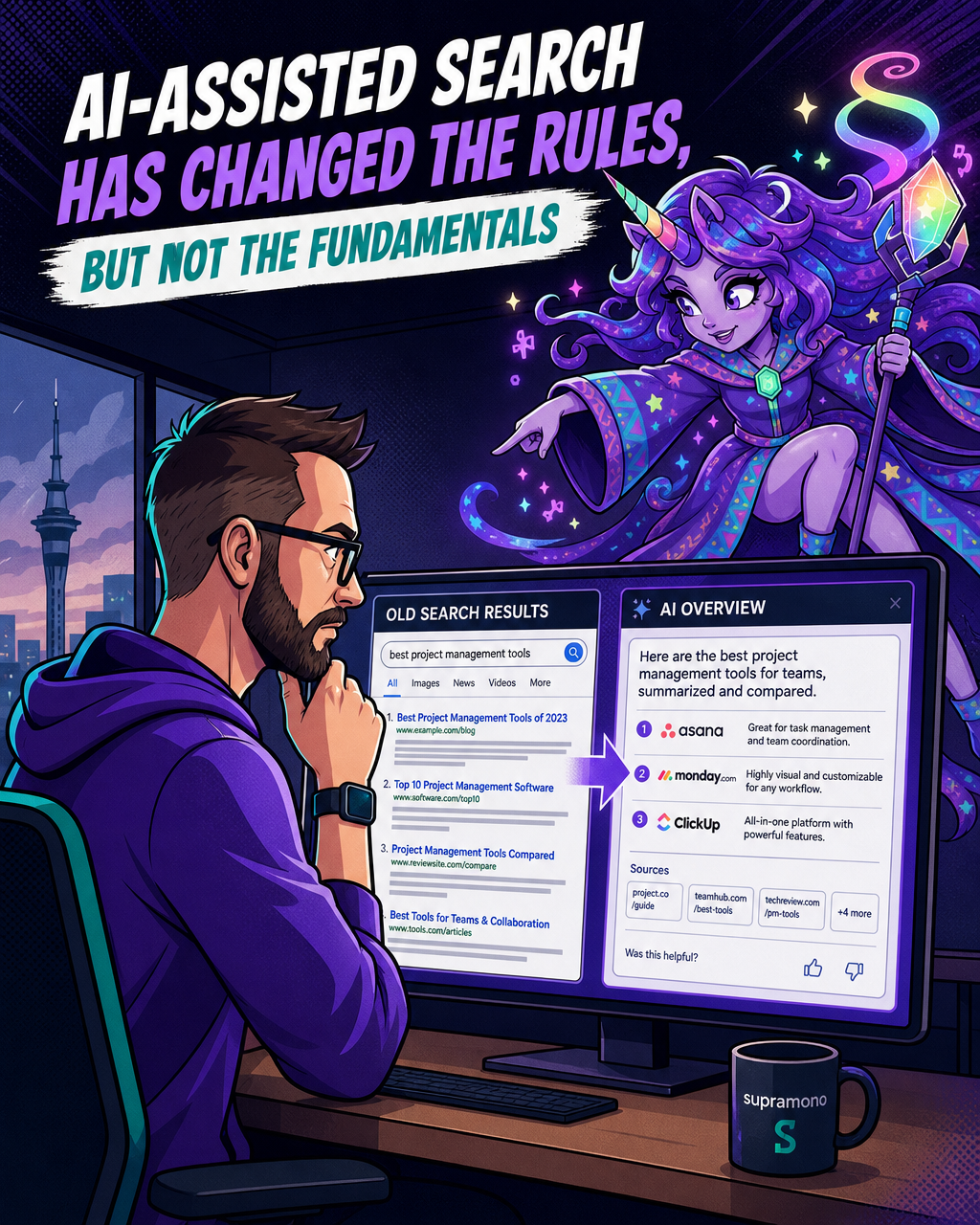
AI-assisted search has changed the rules, but not the fundamentals
This part is worth understanding clearly, because the search environment in mid-2026 is genuinely different from what it was two or three years ago.
AI Overviews, Google's AI Mode, and conversational platforms like Perplexity and ChatGPT now synthesize answers before users click on anything. Multiple industry studies and practitioners have documented a meaningful decline in organic click-through rates on searches that trigger AI Overviews, with some estimates suggesting drops in the range of 20–60% depending on query type and industry — though the precise figures vary by source and methodology, and the landscape continues to shift. AI Overviews have expanded significantly in 2025–2026, appearing on a growing share of searches, and research suggests that a substantial portion of pages cited inside AI Overviews do not rank in Google's traditional top results.
So traffic-focused SEO, where the goal was to rank first and get clicks, is no longer sufficient on its own. But this doesn't make content less important. It makes the quality and depth of your content more important.
For many query types, discovery is increasingly occurring through synthesized answers rather than ranked URLs, shifting the strategic question toward citation and brand authority — from "Does this page rank?" to "Is our brand cited correctly in AI-generated responses?" This represents a significant and growing trend, even if its full extent varies by industry and use case.
What earns citations from AI systems? Evidence suggests AI systems tend to favor sources with in-depth, comprehensive coverage of a topic area — making topical authority a key strategic objective, even if the exact weighting criteria are not publicly documented by the platforms themselves.
Observed behavior in systems like Perplexity — which uses multi-step, multi-hop retrieval — suggests that some AI search engines expand beyond the user's initial query to search related topics and contextually relevant information. Where this pattern holds, businesses may increase their citation chances by creating comprehensive content across multiple relevant subtopics, though this behavior is not universal across all AI search implementations.
A growing consensus among SEO practitioners suggests founders should shift from traffic-only SEO to citation, authority, and conversion-focused visibility. Your goal is not just to rank for a keyword. It's to become the source an AI system reaches for when someone asks about your specific problem domain.
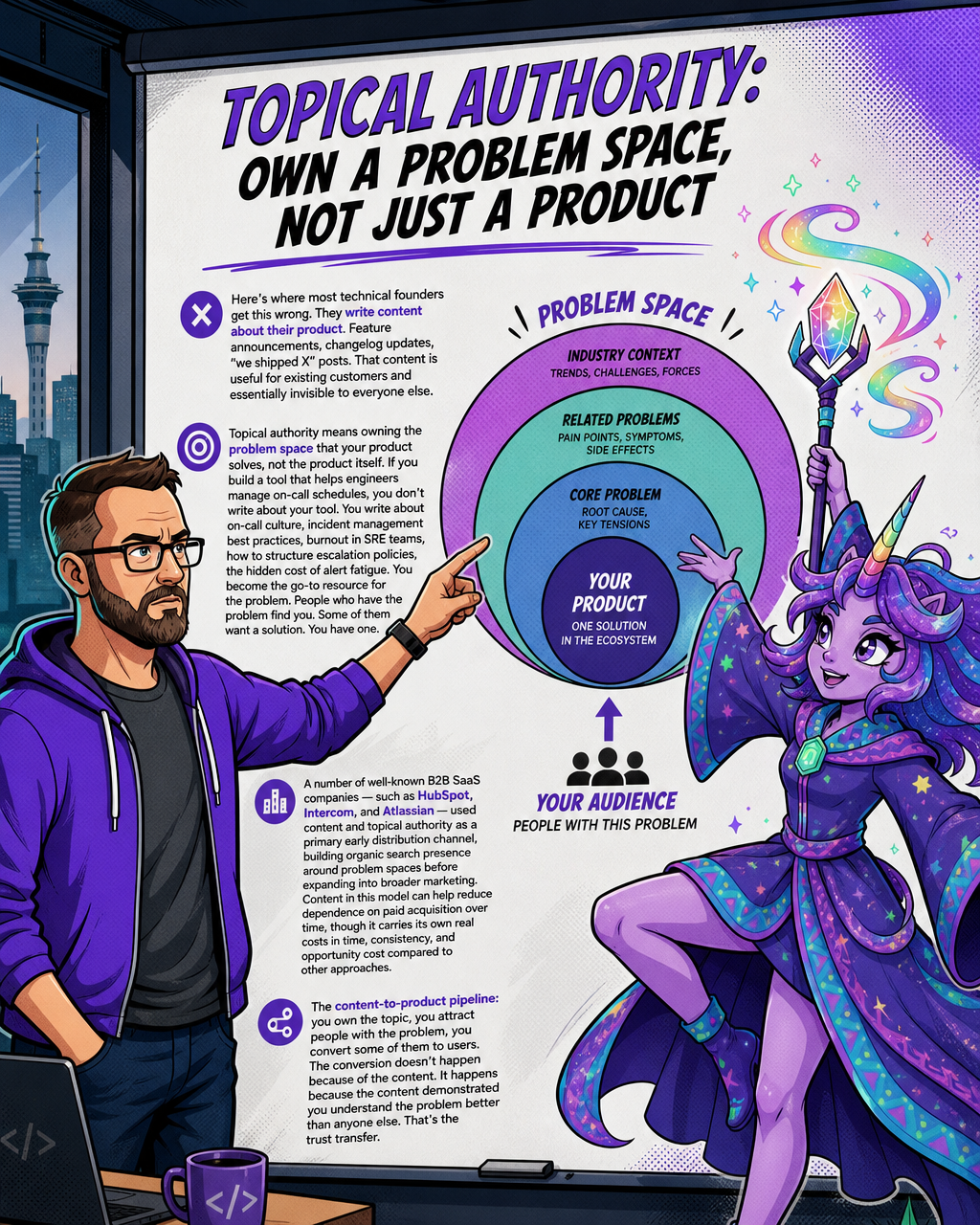
Topical authority: own a problem space, not just a product
Here's where most technical founders get this wrong. They write content about their product. Feature announcements, changelog updates, "we shipped X" posts. That content is useful for existing customers and essentially invisible to everyone else.
Topical authority means owning the problem space that your product solves, not the product itself. If you build a tool that helps engineers manage on-call schedules, you don't write about your tool. You write about on-call culture, incident management best practices, burnout in SRE teams, how to structure escalation policies, the hidden cost of alert fatigue. You become the go-to resource for the problem. People who have the problem find you. Some of them want a solution. You have one.
A number of well-known B2B SaaS companies — such as HubSpot, Intercom, and Atlassian — used content and topical authority as a primary early distribution channel, building organic search presence around problem spaces before expanding into broader marketing. Content in this model can help reduce dependence on paid acquisition over time, though it carries its own real costs in time, consistency, and opportunity cost compared to other approaches.
The content-to-product pipeline: you own the topic, you attract people with the problem, you convert some of them to users. The conversion doesn't happen because of the content. It happens because the content demonstrated you understand the problem better than anyone else. That's the trust transfer.
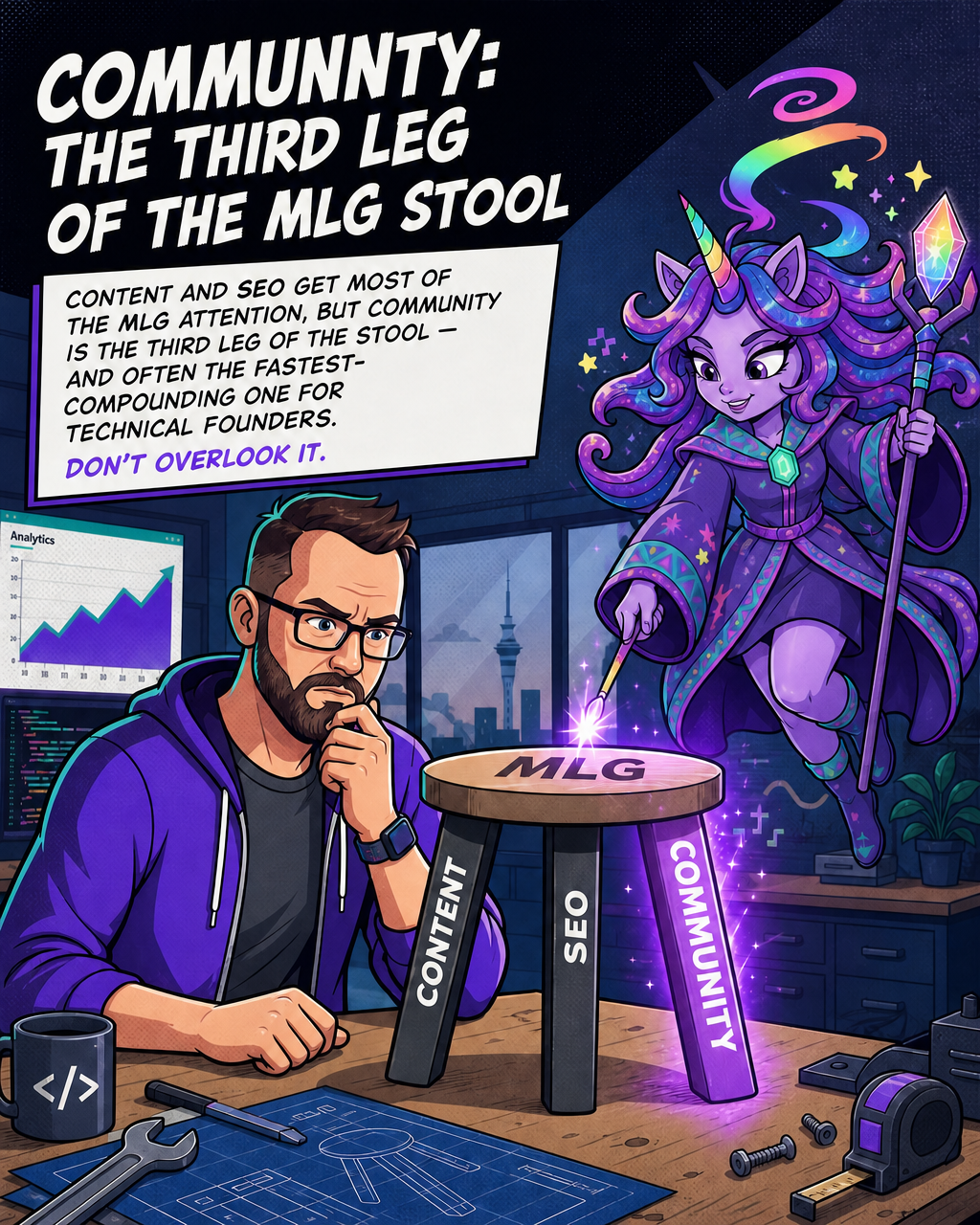
Community as distribution infrastructure
Content and SEO get most of the MLG attention, but community is the third leg of the stool and often a fast-compounding one for technical founders.
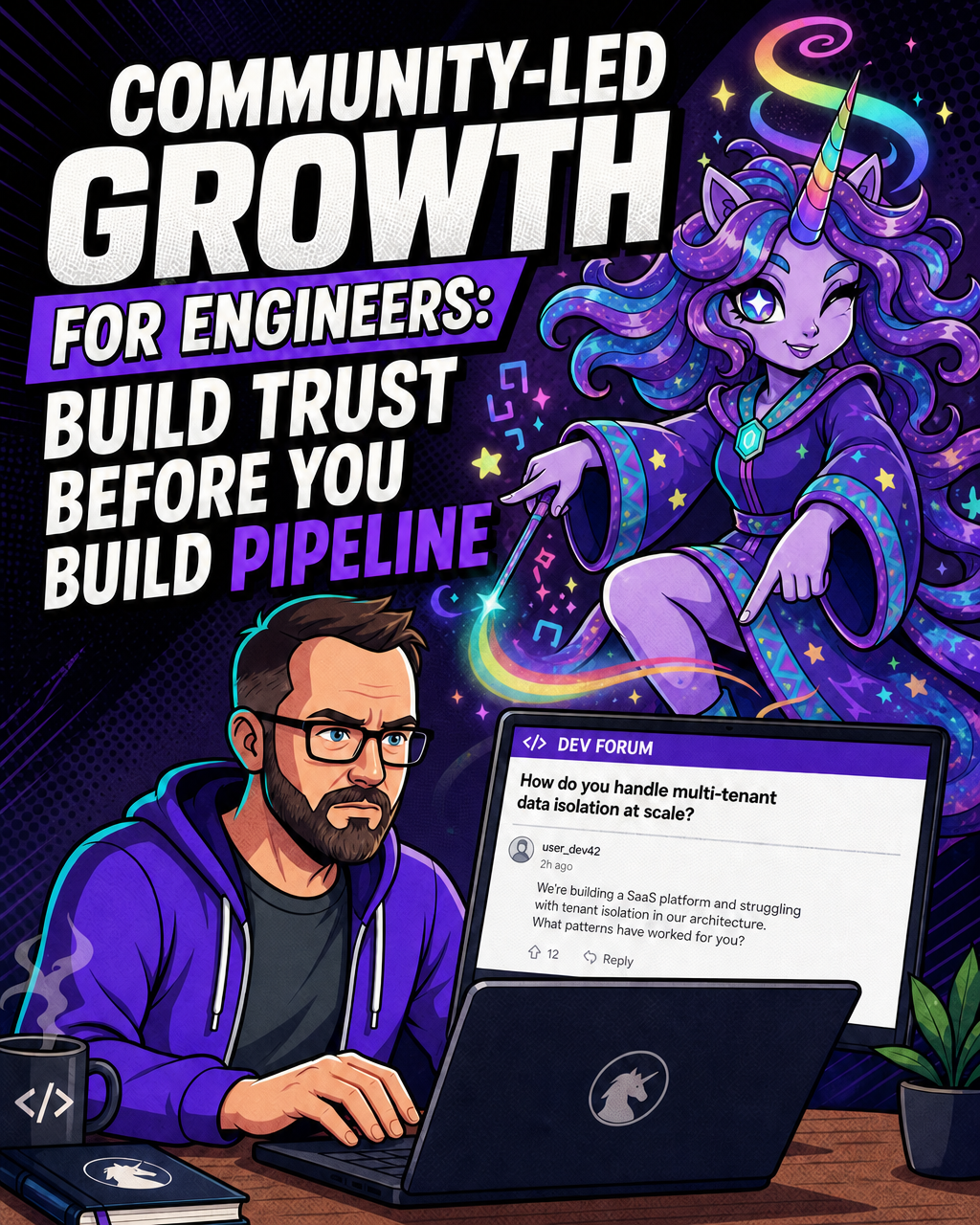
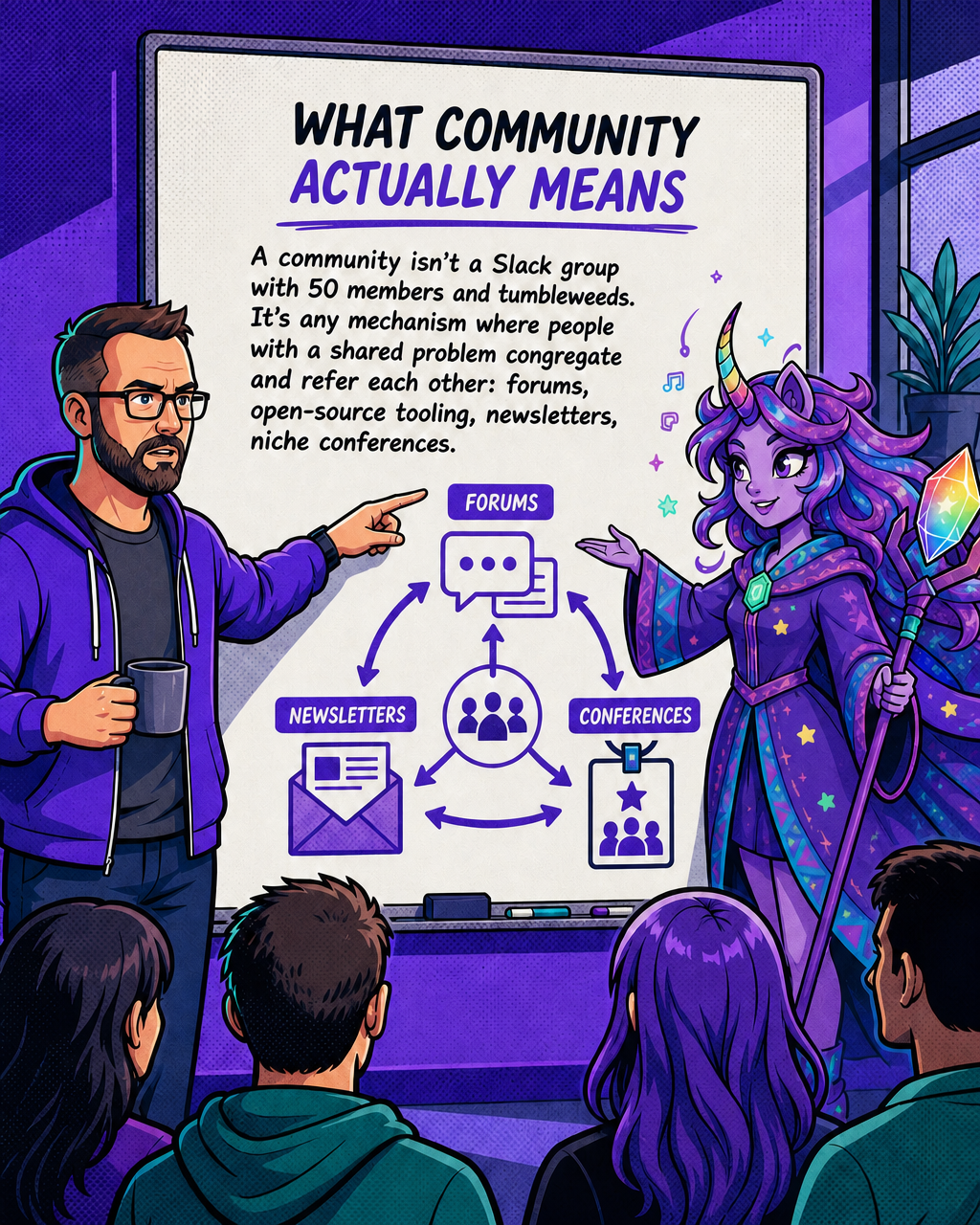
A community isn't a Slack group with 50 members and tumbleweeds. It's any mechanism where people with a shared problem congregate and refer each other. For technical founders, this often means: contributing genuinely useful answers in developer forums, publishing open-source tooling in your problem space, running a newsletter where you share hard-won insights from building in your domain, and speaking at niche conferences where your exact customer hangs out.
Community builds what SEO can't: warm referrals. When someone in your community recommends your product, the conversion rate is typically higher than cold organic traffic. The prospect arrives already trusting you because someone they trust does.
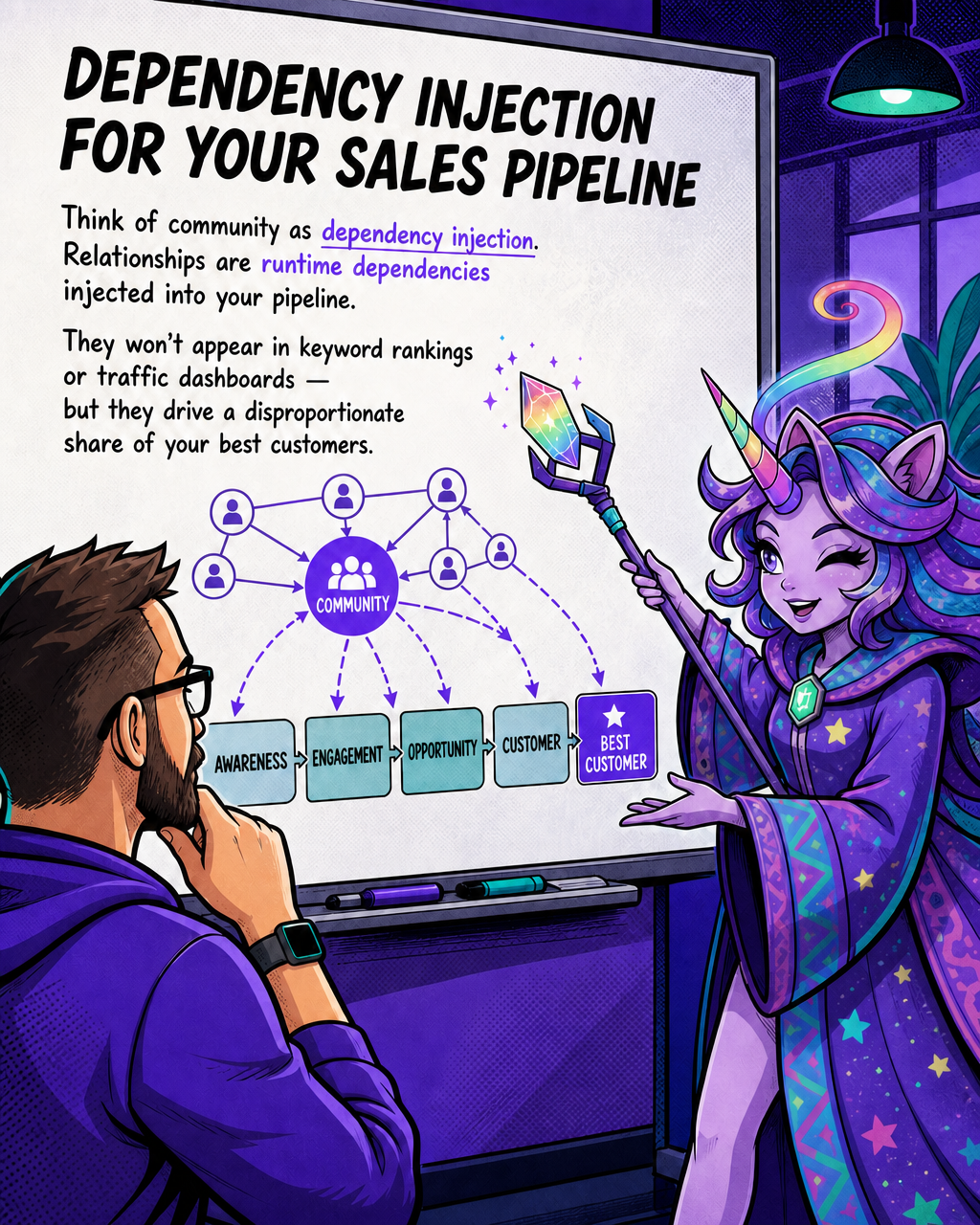
The engineering analogy here is dependency injection. Community relationships are runtime dependencies that get injected into your sales pipeline. They don't show up in your keyword rankings or your traffic dashboard, but they're responsible for a disproportionate share of your best customers.
A practical starting point for technical founders
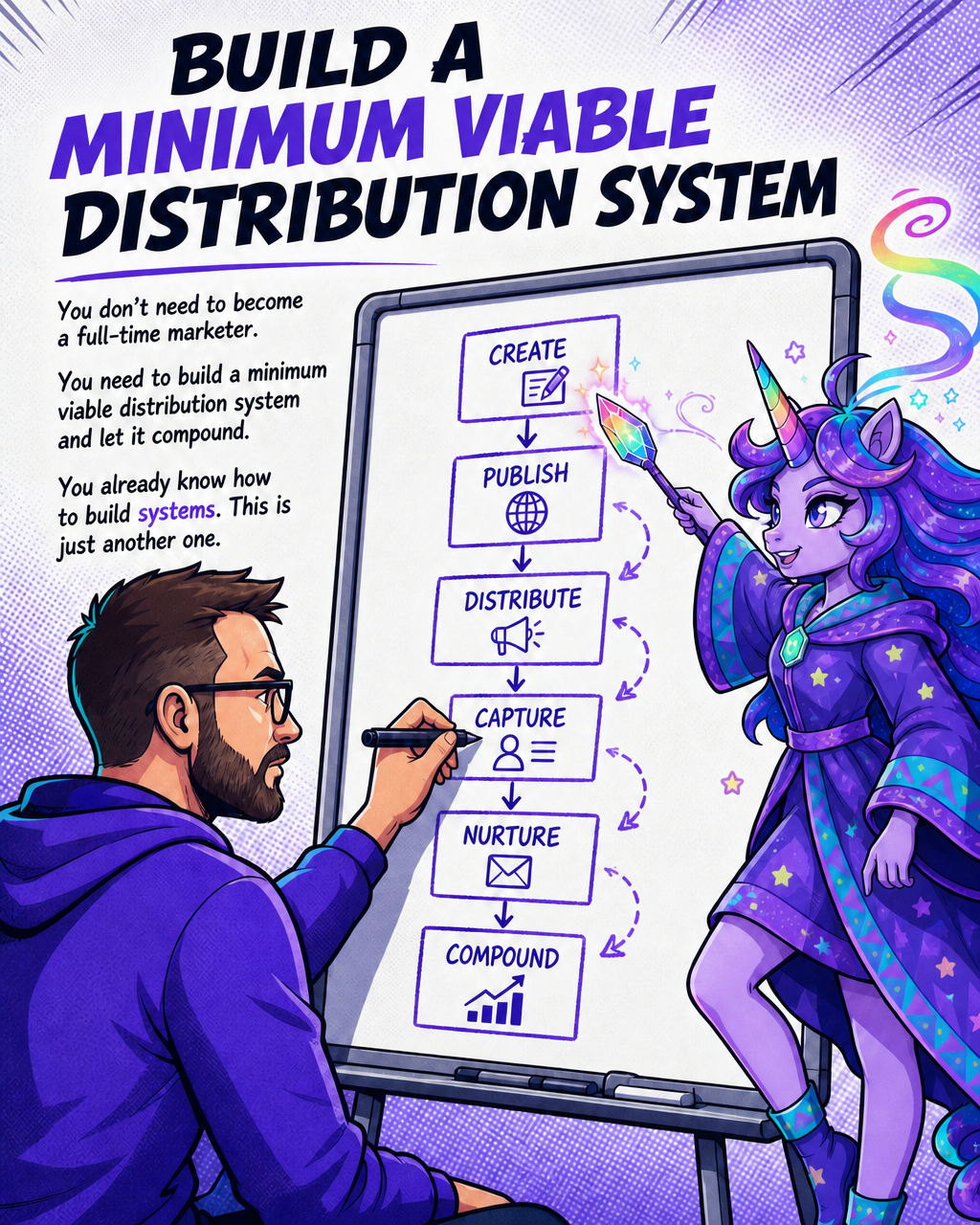
You don't need to become a full-time marketer. You need to build a minimum viable distribution system and let it compound.
Here's what that looks like in the first 90 days:
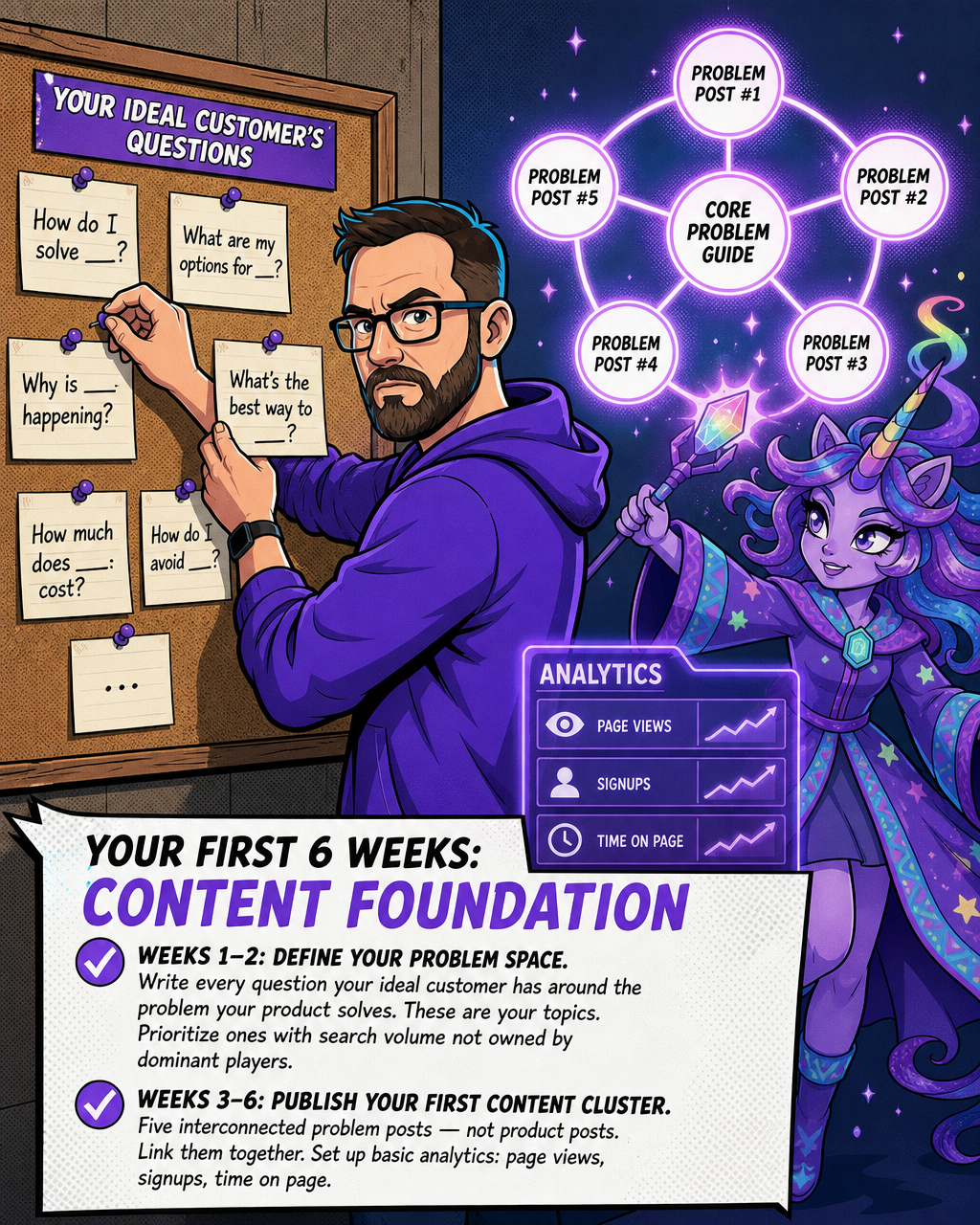
Weeks 1-2: Define your problem space. Write out every question your ideal customer has before, during, and after experiencing the problem your product solves. These are your content topics. Prioritize the ones with search volume that aren't already owned by dominant players.
Weeks 3-6: Publish your first content cluster. Aim for five interconnected articles covering your core problem from different angles. Not product posts. Problem posts. Link them together. Set up basic analytics: page views, email signups, time on page.
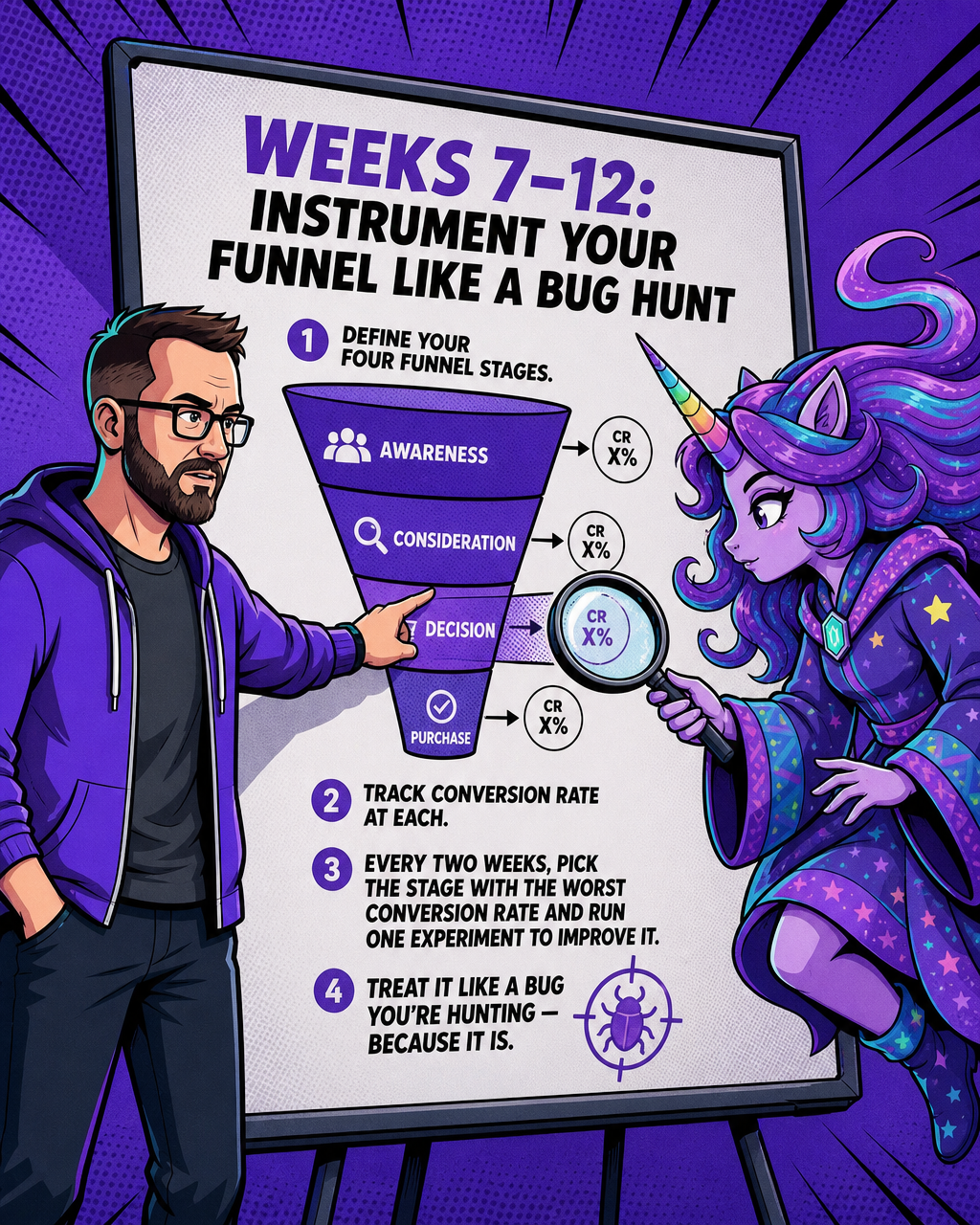
Weeks 7-12: Instrument your funnel. Define your four funnel stages. Track the conversion rate at each stage. Every two weeks, pick one stage with the worst conversion rate and run one experiment to improve it. Treat it like a bug you're hunting.
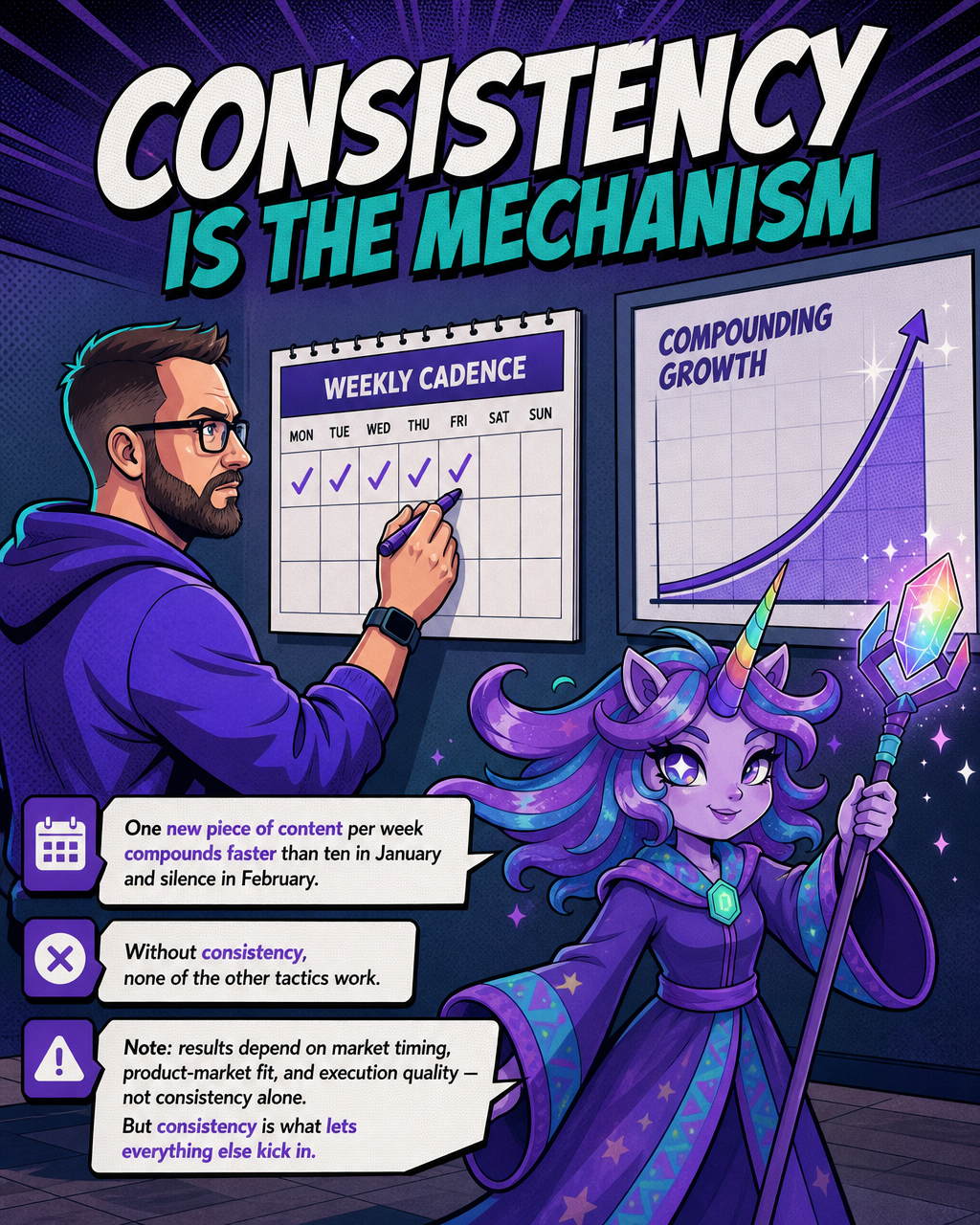
Ongoing: Show up consistently. One new piece of content per week compounds faster than a burst of ten pieces in January and silence in February. Consistency is the mechanism. Without it, none of the other tactics work.
In the author's experience and observation, the founders who tend to succeed at MLG are not necessarily those with the best writing or the most creative campaigns, but those who treat distribution like a system, instrument it properly, and stay consistent long enough for the compounding to kick in. That said, individual results vary — distribution success depends on market timing, product-market fit, and execution quality as much as consistency alone.
You already know how to build systems. This is just another one.
The closed-loop advantage
One thing that changes when you run MLG properly: the data starts talking to you. You see which topics bring in users who actually convert. You see which content clusters produce trial signups versus just traffic. You see which community conversations precede a spike in demos.
That data feeds back into your product decisions. If 40% of your inbound traffic comes from people searching for a specific workflow problem, and they convert at twice the rate of other visitors, that's a signal about where to build next. Your distribution data becomes your product roadmap signal.
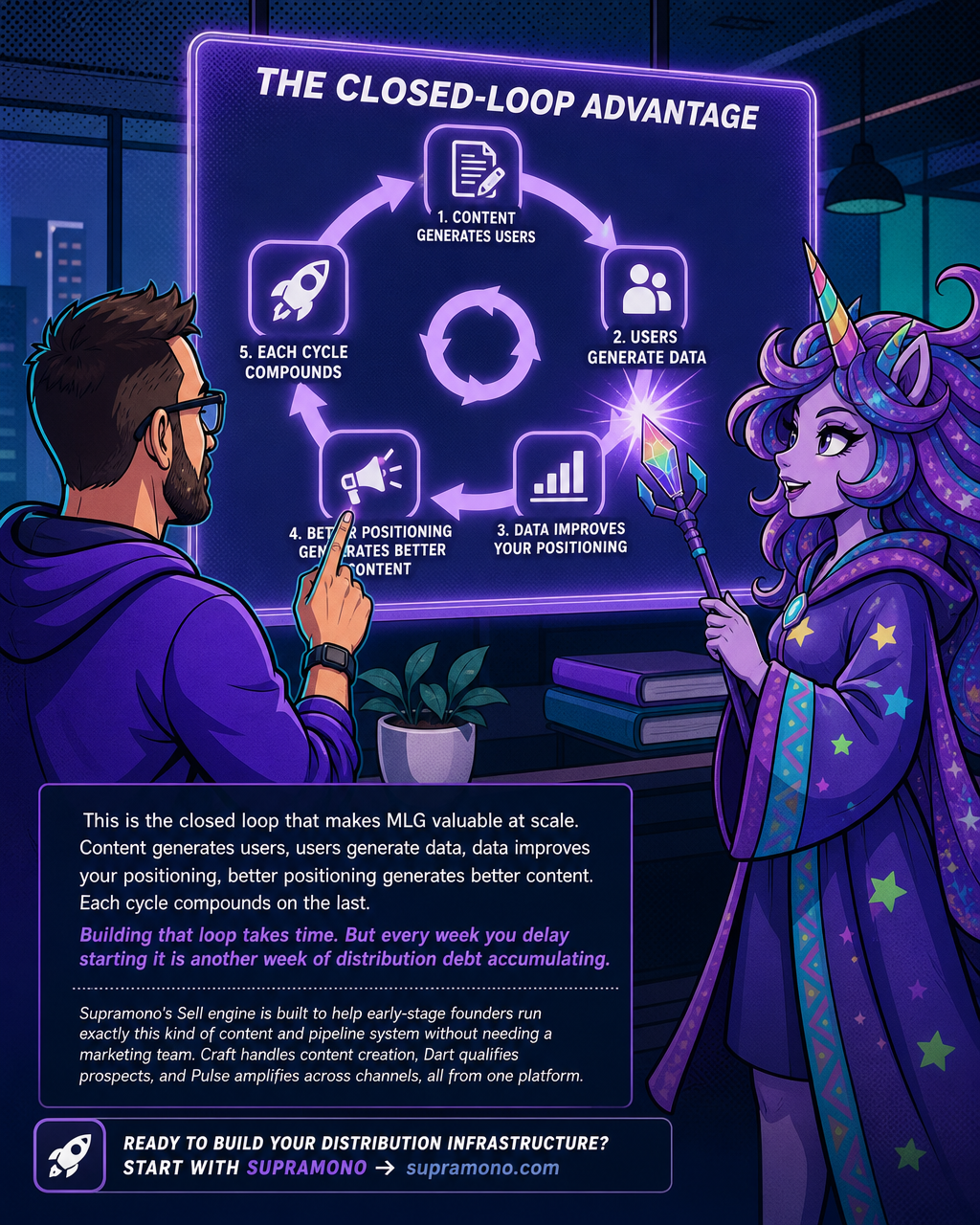
This is the closed loop that makes MLG valuable at scale. Content generates users, users generate data, data improves your positioning, better positioning generates better content. Each cycle compounds on the last.
Building that loop takes time. But every week you delay starting it is another week of distribution debt accumulating.
Supramono's Sell engine is built to help early-stage founders run exactly this kind of content and pipeline system without needing a marketing team. Craft handles content creation, Dart qualifies prospects, and Pulse amplifies across channels, all from one platform.
Ready to build your distribution infrastructure? Start with Supramono and let the agents do the compounding work.

Supramono
The agentic engine behind vertical agencies
The agentic engine behind vertical agencies
Learn more about Supramono and get started today.
Visit Supramono