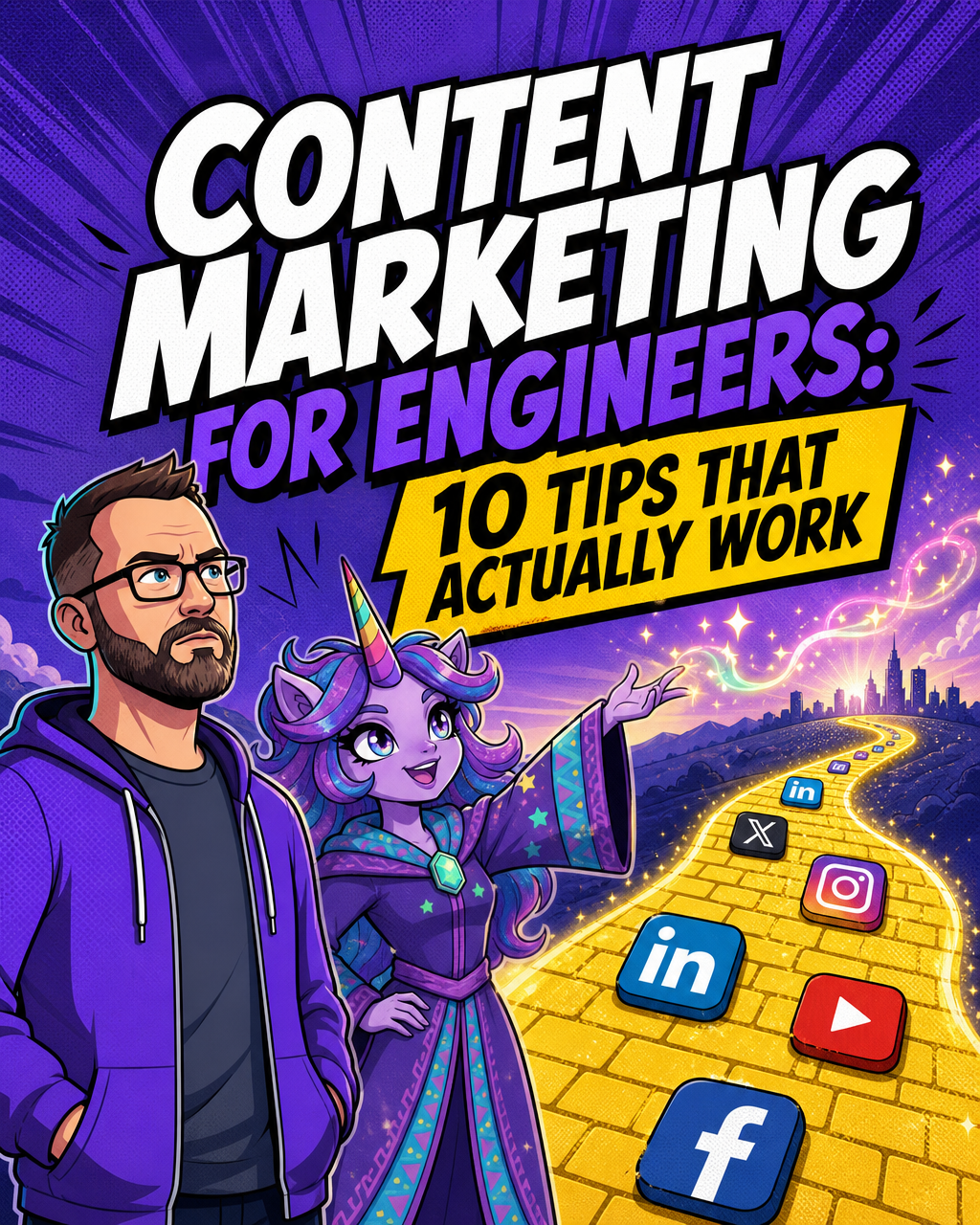
Content Marketing for Engineers: 10 Tips That Actually Work


Most engineers who start content marketing make the same mistake: they treat it like a coding problem. Find the right framework, apply it consistently, ship output. But content marketing is less like writing code and more like building a product nobody asked you for yet. The feedback loops are slower. The signals are fuzzier. And the skills you're brilliant at — precision, depth, rigour — can actually work against you if you deploy them wrong.
The good news is that engineers have real advantages in content. You can write with authority because you actually understand what you're writing about. You can spot the bad takes. You can go deep where generalist writers skim the surface. The differentiation isn't necessarily who can post faster; originality and depth tend to be stronger long-term differentiators than frequency alone — though frequency still plays a measurable role in algorithmic reach and audience-building, and the two aren't mutually exclusive.
Here are ten practical tips for turning your technical background into a content marketing advantage.
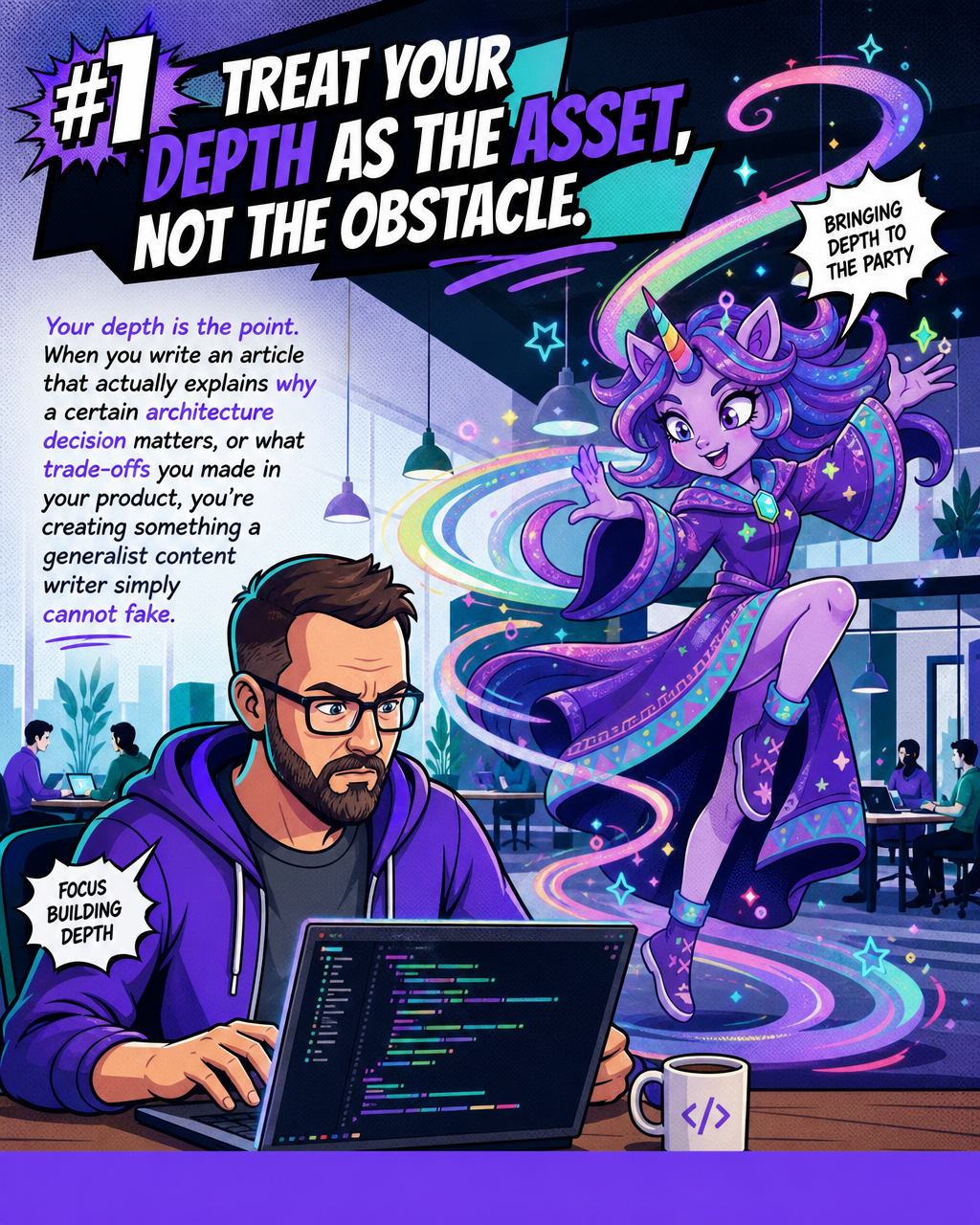
1. Treat your depth as the asset, not the obstacle
Engineers often worry their content will be too technical. The opposite problem is more common: content that's technically accurate but so cautious it says nothing memorable.
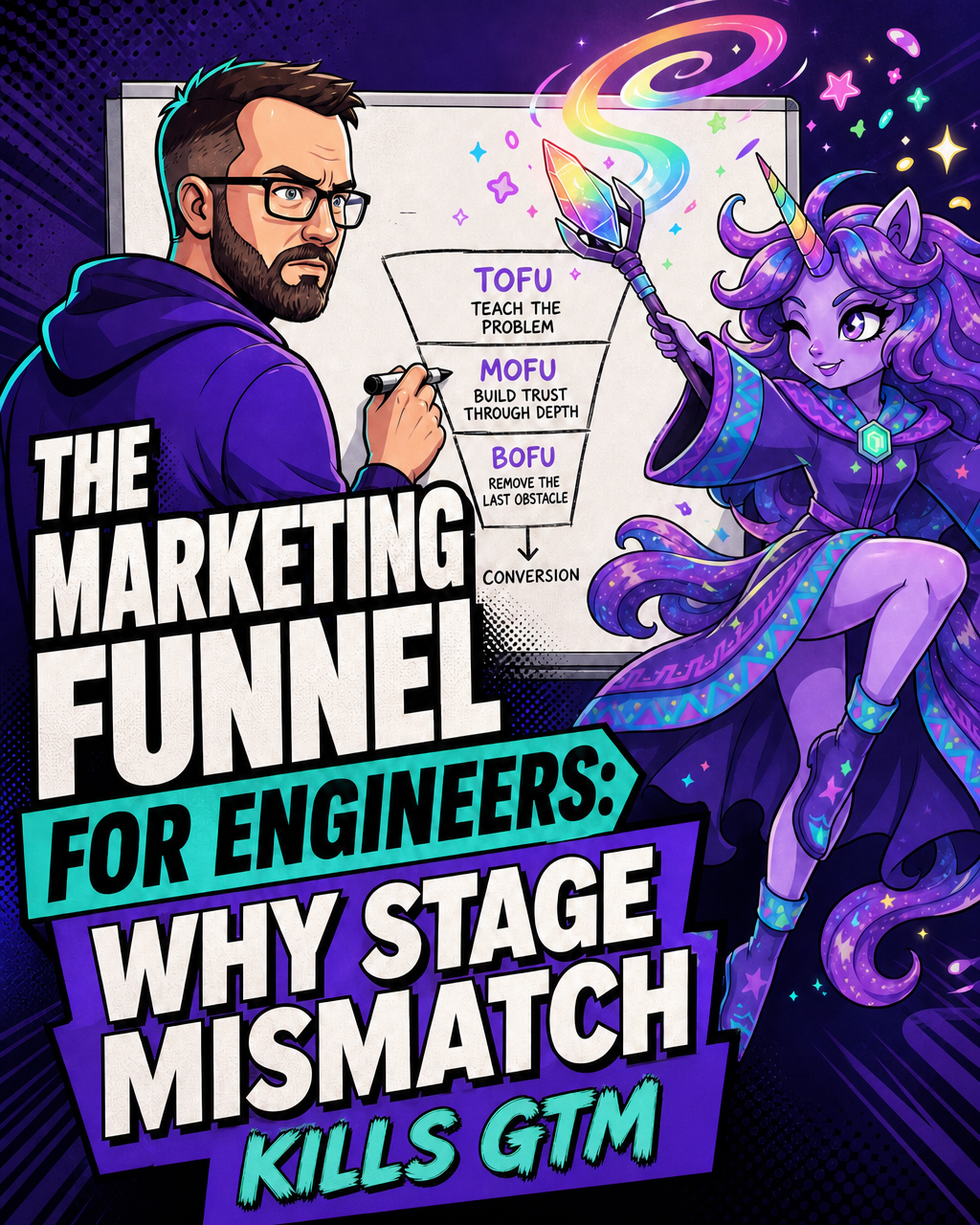
Your depth is the point. Research from Gartner and similar analyst firms has consistently found that technical buyers rely heavily on vendor websites and online technical publications when evaluating solutions — making detailed, credible content more valuable than surface-level messaging. When you write an article that actually explains why a certain architecture decision matters, or what trade-offs you made in your product, you're creating something a generalist content writer simply cannot fake.
Stop editing out the interesting parts. A paragraph explaining a specific technical decision — with real context and constraints — is more valuable to your ideal reader than three paragraphs of vague positioning.
Practical move: pick one technical decision you made last week and write 300 words explaining it to a peer. That's your first article draft.
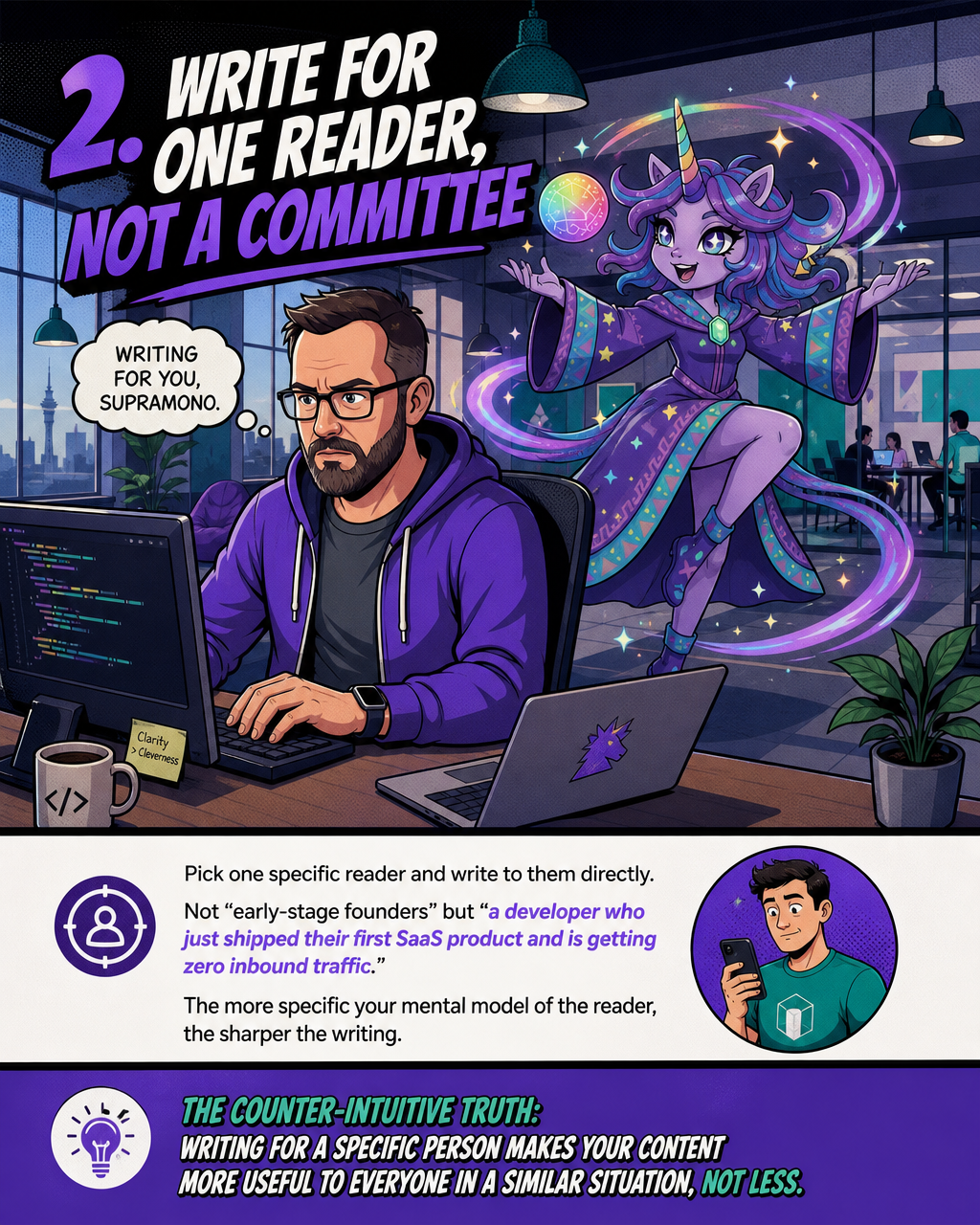
2. Write for one reader, not a committee
Engineers are trained to handle edge cases. In content, this shows up as hedging — "it depends," "in some scenarios," "your mileage may vary" — until the post says nothing concrete.
Pick one specific reader and write to them directly. Not "early-stage founders" but "a developer who just shipped their first SaaS product and is getting zero inbound traffic." The more specific your mental model of the reader, the sharper the writing.
You can't just talk about what you know and assume it'll resonate. In some cases it will. In others, crickets. And sometimes you'll think you're talking to your audience when you're actually talking to DIYers. You need to get clear on who you're really trying to engage.
The counter-intuitive truth: writing for a specific person makes your content more useful to everyone in a similar situation, not less.
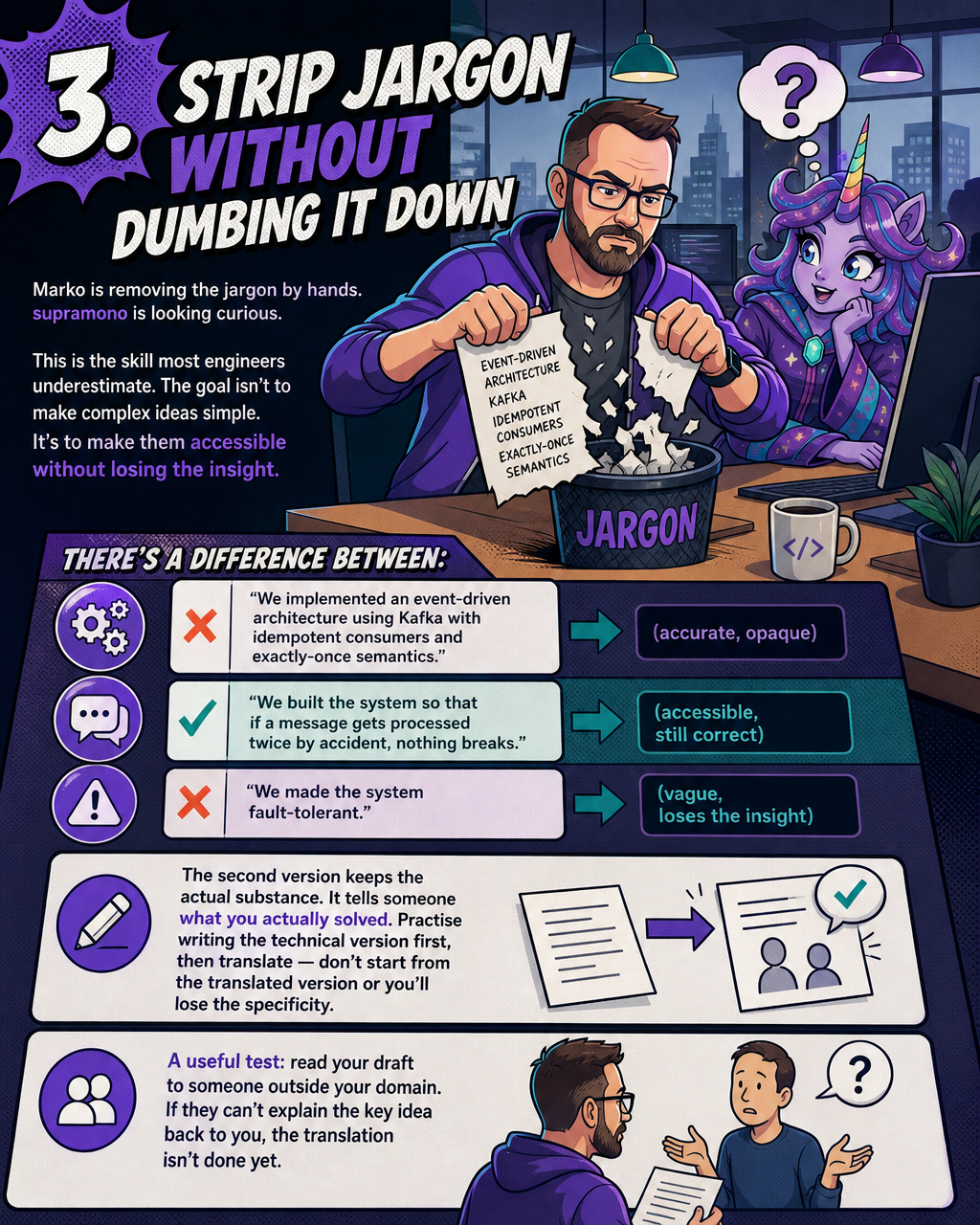
3. Strip jargon without dumbing it down
This is the skill most engineers underestimate. The goal isn't to make complex ideas simple. It's to make them accessible without losing the insight.
There's a difference between:
- "We implemented an event-driven architecture using Kafka with idempotent consumers and exactly-once semantics." (accurate, opaque)
- "We built the system so that if a message gets processed twice by accident, nothing breaks." (accessible, still correct)
- "We made the system fault-tolerant." (vague, loses the insight)
The second version keeps the actual substance. It tells someone what you actually solved. Practise writing the technical version first, then translate — don't start from the translated version or you'll lose the specificity.
A useful test: read your draft to someone outside your domain. If they can't explain the key idea back to you, the translation isn't done yet.
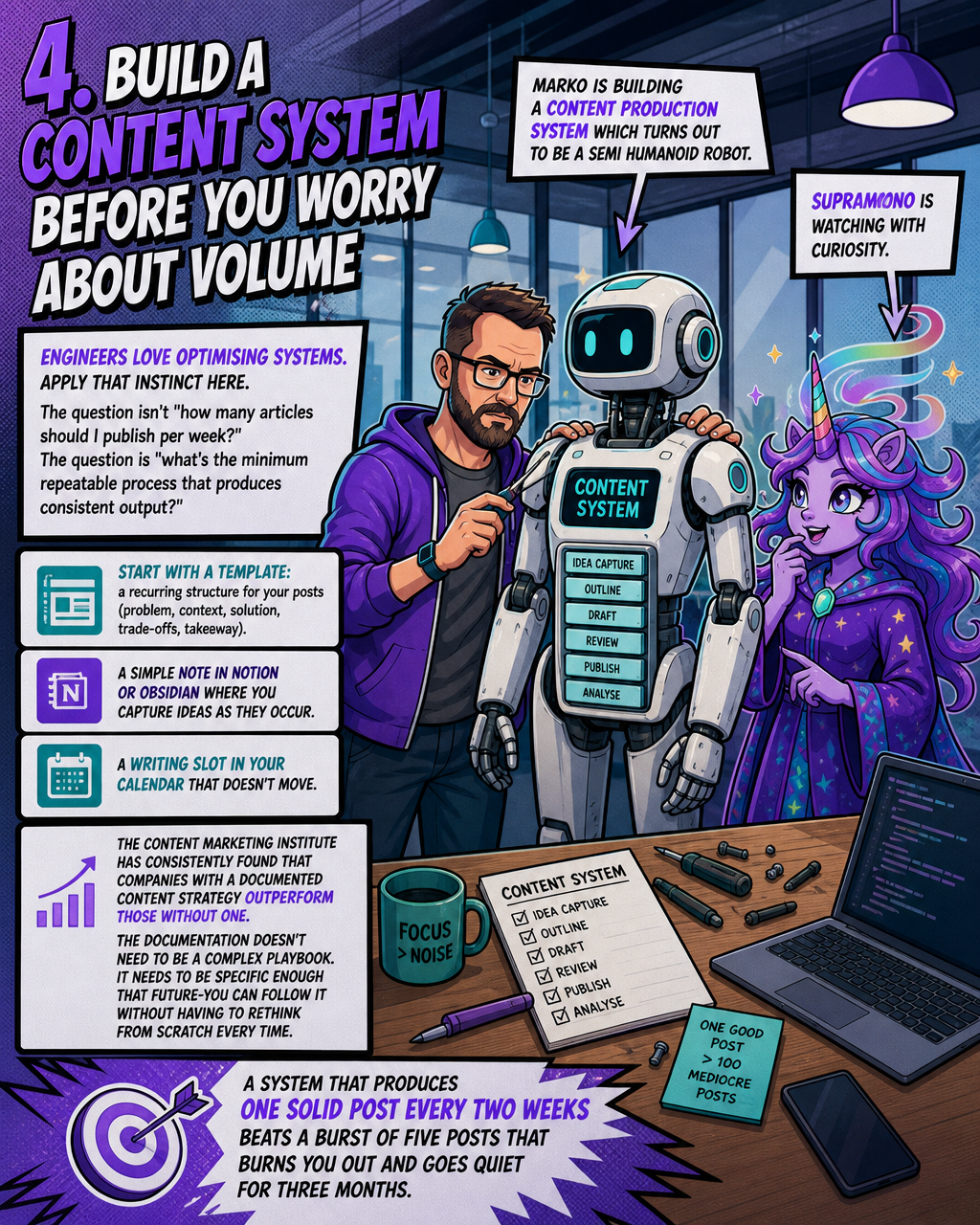
4. Build a content system before you worry about volume
Engineers love optimising systems. Apply that instinct here. The question isn't "how many articles should I publish per week?" The question is "what's the minimum repeatable process that produces consistent output?"
Start with a template: a recurring structure for your posts (problem, context, solution, trade-offs, takeaway). A simple note in Notion or Obsidian where you capture ideas as they occur. A writing slot in your calendar that doesn't move.
The Content Marketing Institute has consistently found that companies with a documented content strategy outperform those without one. The documentation doesn't need to be a complex playbook. It needs to be specific enough that future-you can follow it without having to rethink from scratch every time.
A system that produces one solid post every two weeks beats a burst of five posts that burns you out and goes quiet for three months.
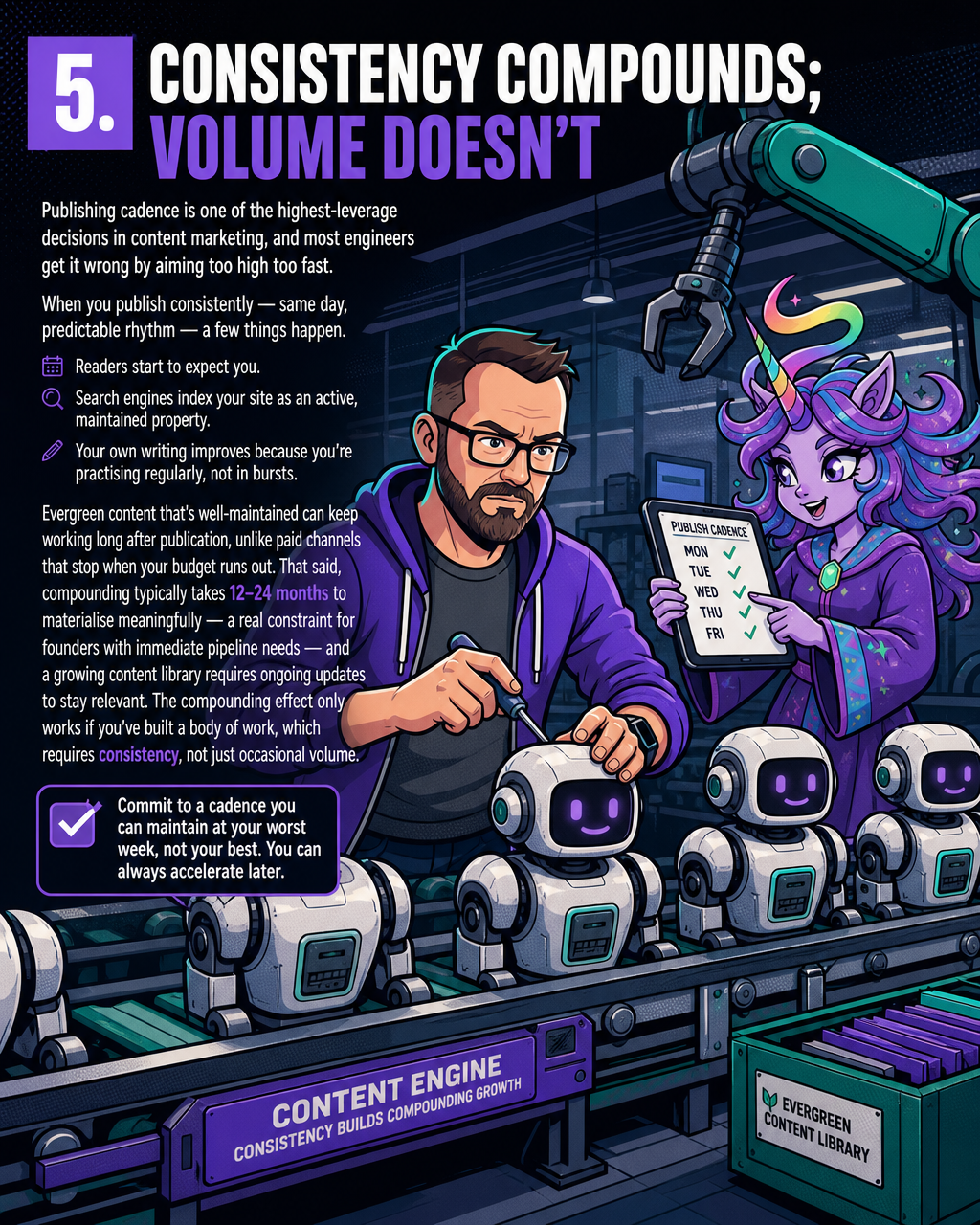
5. Consistency compounds; volume doesn't
Publishing cadence is one of the highest-leverage decisions in content marketing, and most engineers get it wrong by aiming too high too fast.
When you publish consistently — same day, predictable rhythm — a few things happen. Readers start to expect you. Search engines index your site as an active, maintained property. Your own writing improves because you're practising regularly, not in bursts.
Evergreen content that's well-maintained can keep working long after publication, unlike paid channels that stop when your budget runs out. That said, compounding typically takes 12–24 months to materialise meaningfully — a real constraint for founders with immediate pipeline needs — and a growing content library requires ongoing updates to stay relevant. The compounding effect only works if you've built a body of work, which requires consistency, not just occasional volume.
Commit to a cadence you can maintain at your worst week, not your best. You can always accelerate later.
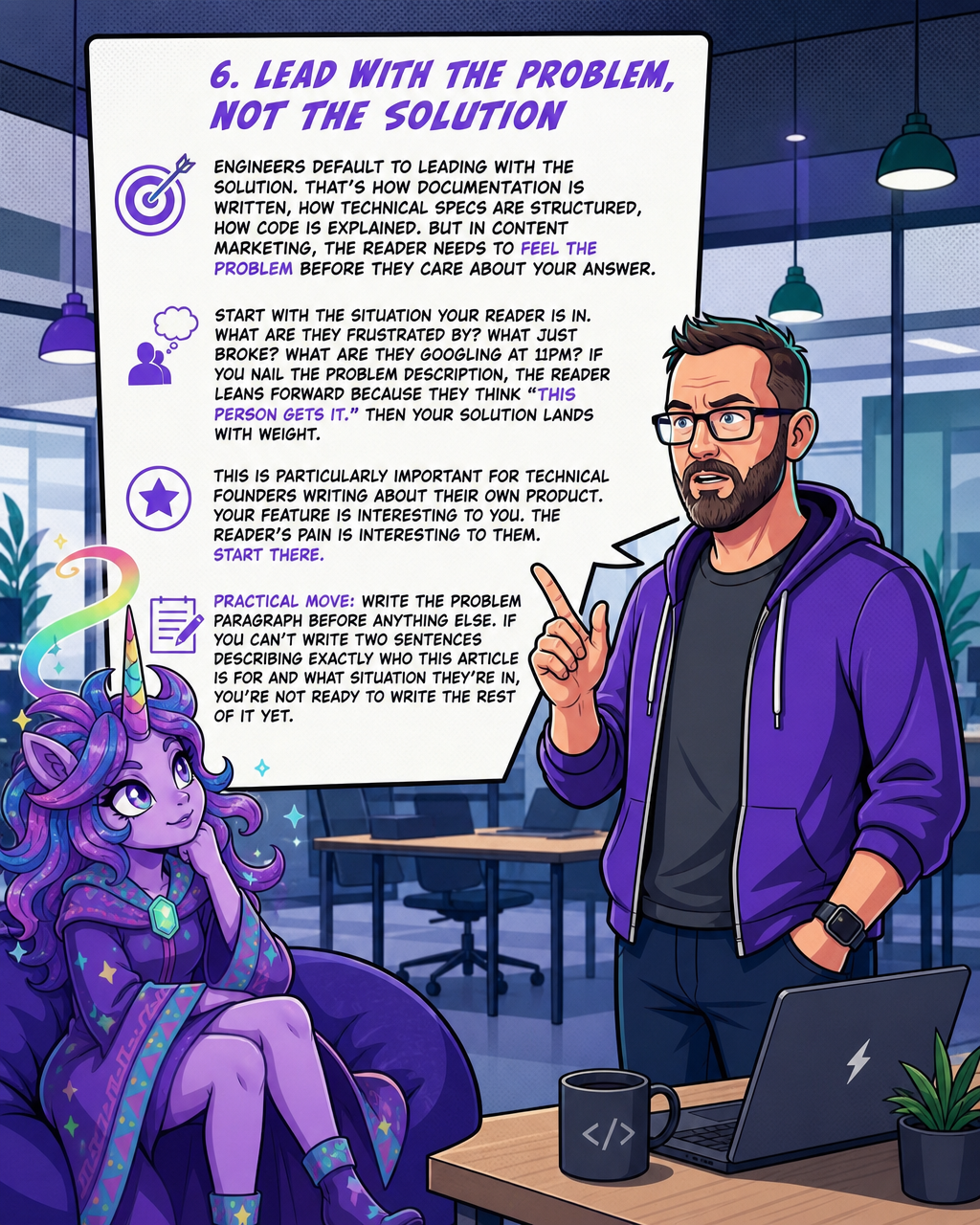
6. Lead with the problem, not the solution
Engineers default to leading with the solution. That's how documentation is written, how technical specs are structured, how code is explained. But in content marketing, the reader needs to feel the problem before they care about your answer.
Start with the situation your reader is in. What are they frustrated by? What just broke? What are they googling at 11pm? If you nail the problem description, the reader leans forward because they think "this person gets it." Then your solution lands with weight.
This is particularly important for technical founders writing about their own product. Your feature is interesting to you. The reader's pain is interesting to them. Start there.
Practical move: write the problem paragraph before anything else. If you can't write two sentences describing exactly who this article is for and what situation they're in, you're not ready to write the rest of it yet.
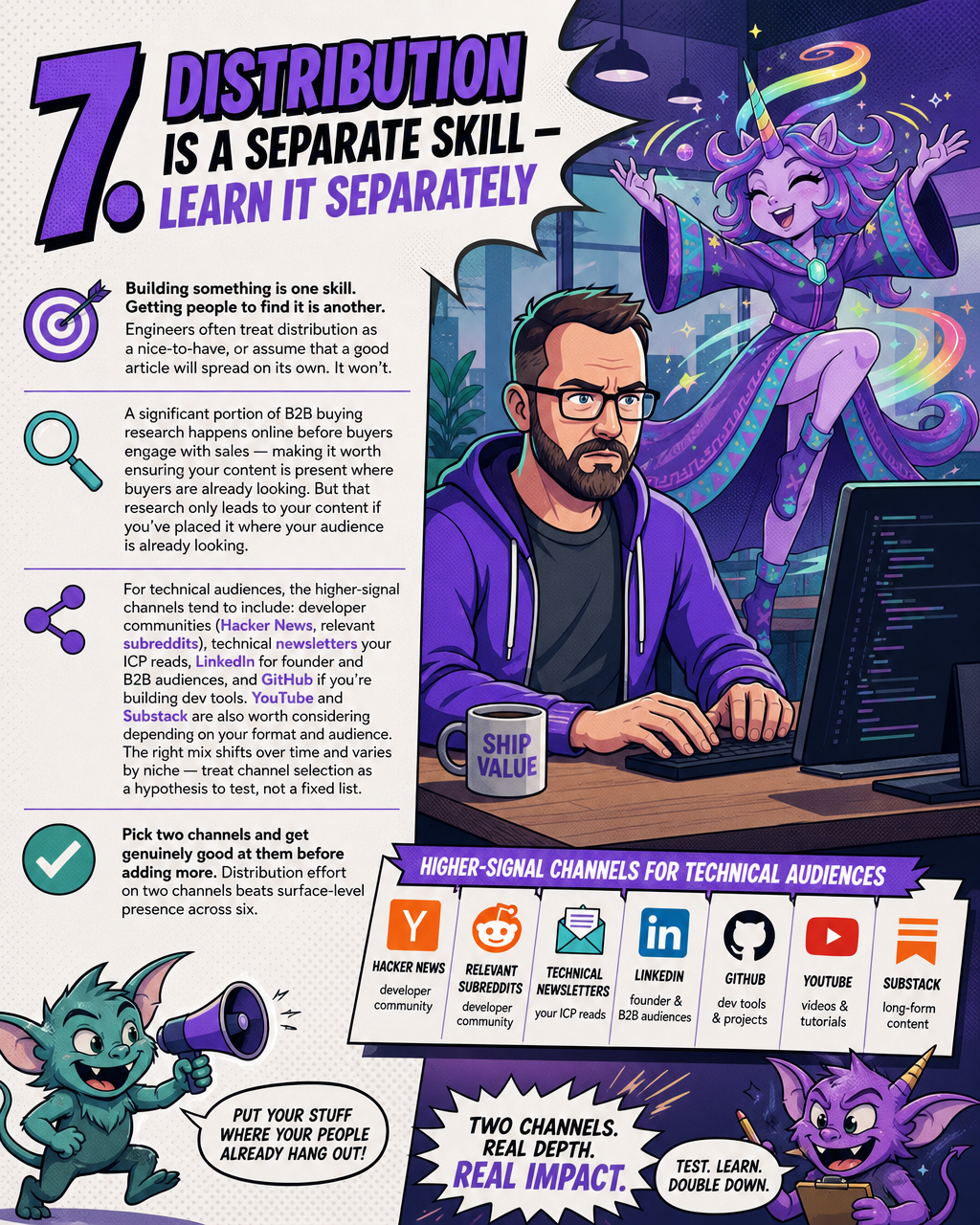
7. Distribution is a separate skill — learn it separately
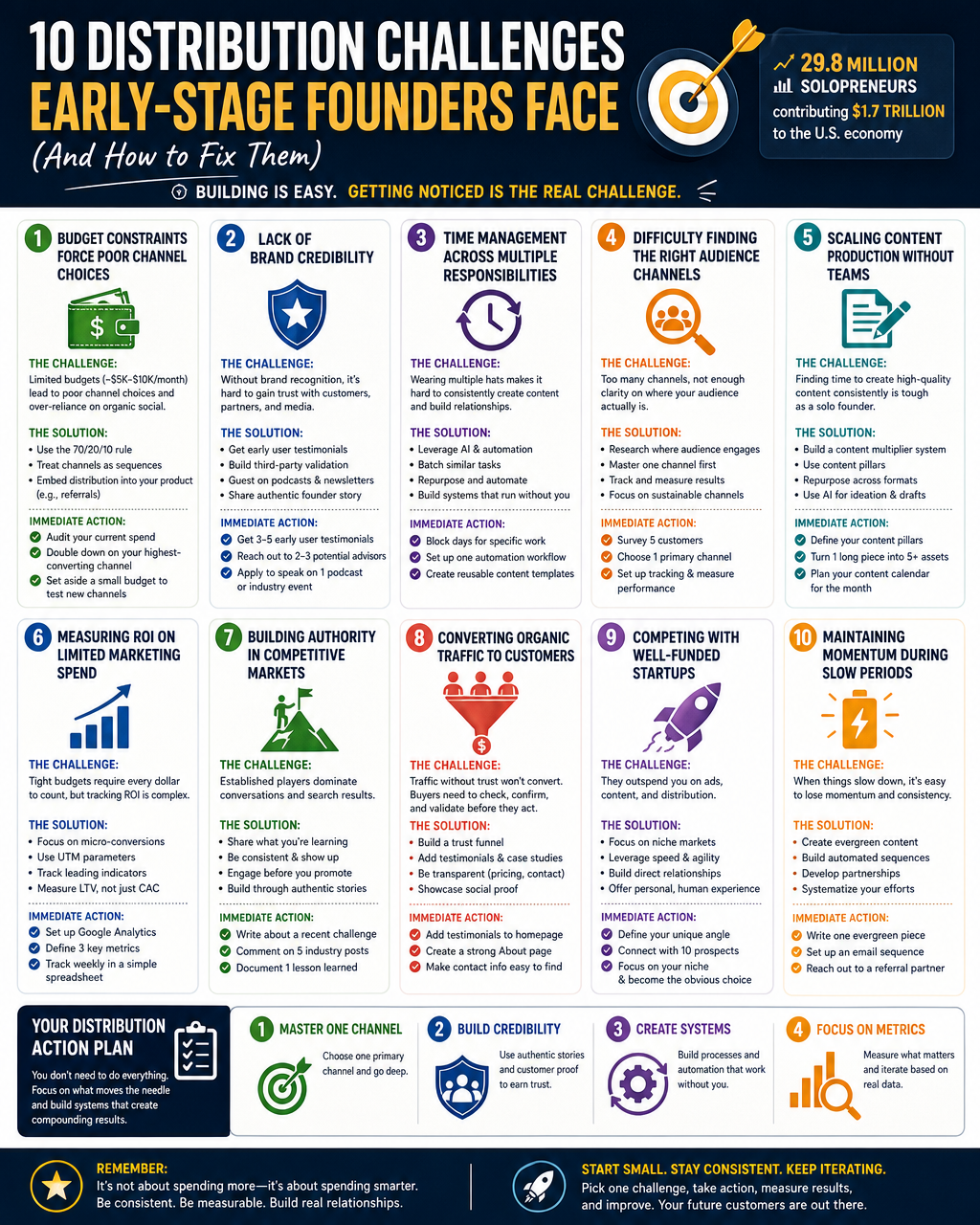
Building something is one skill. Getting people to find it is another. Engineers often treat distribution as a nice-to-have, or assume that a good article will spread on its own. It won't.
A significant portion of B2B buying research happens online before buyers engage with sales — making it worth ensuring your content is present where buyers are already looking. But that research only leads to your content if you've placed it where your audience is already looking.
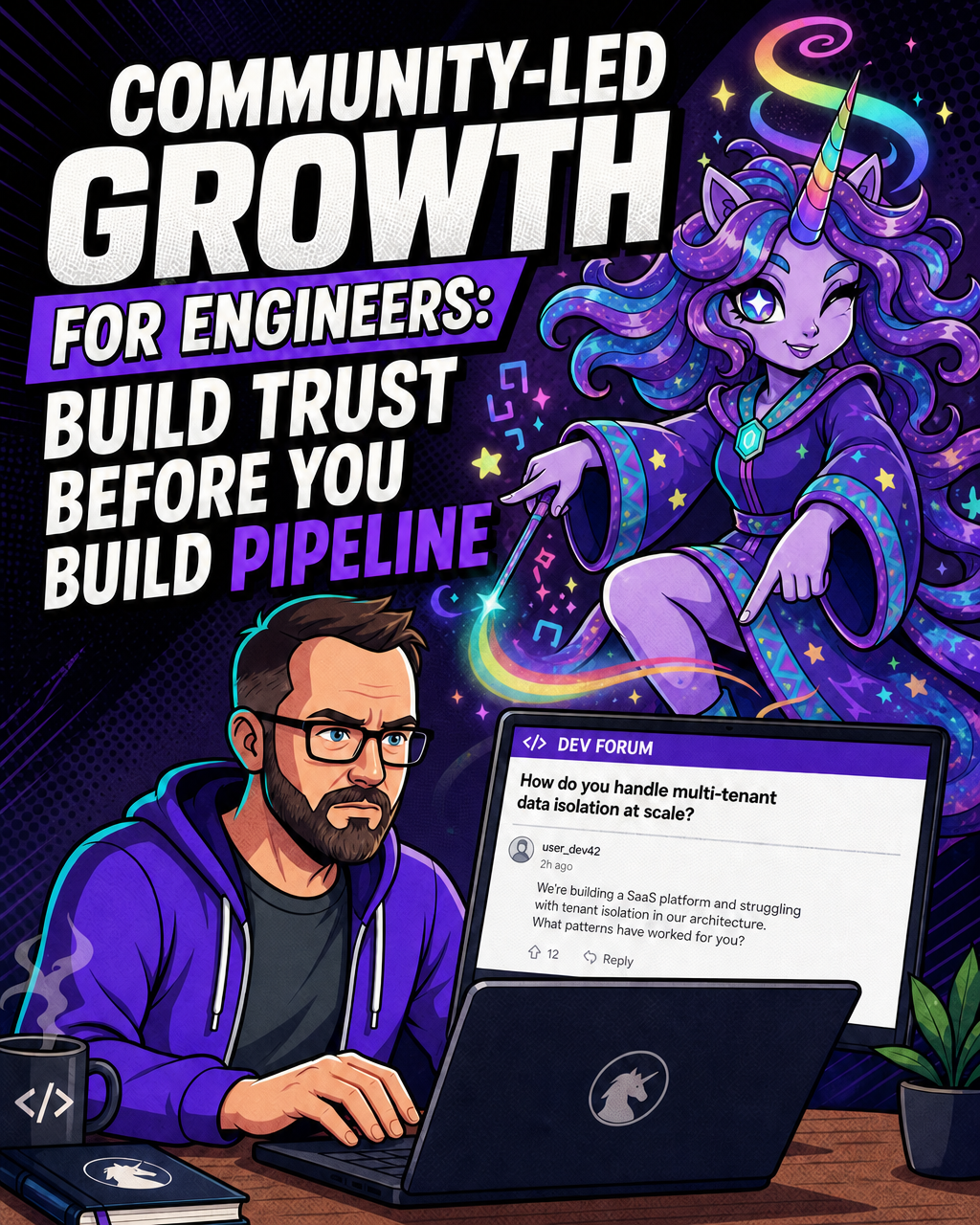
For technical audiences, the higher-signal channels tend to include: developer communities (Hacker News, relevant subreddits), technical newsletters your ICP reads, LinkedIn for founder and B2B audiences, and GitHub if you're building dev tools. YouTube and Substack are also worth considering depending on your format and audience. The right mix shifts over time and varies by niche — treat channel selection as a hypothesis to test, not a fixed list.
Pick two channels and get genuinely good at them before adding more. Distribution effort on two channels beats surface-level presence across six.
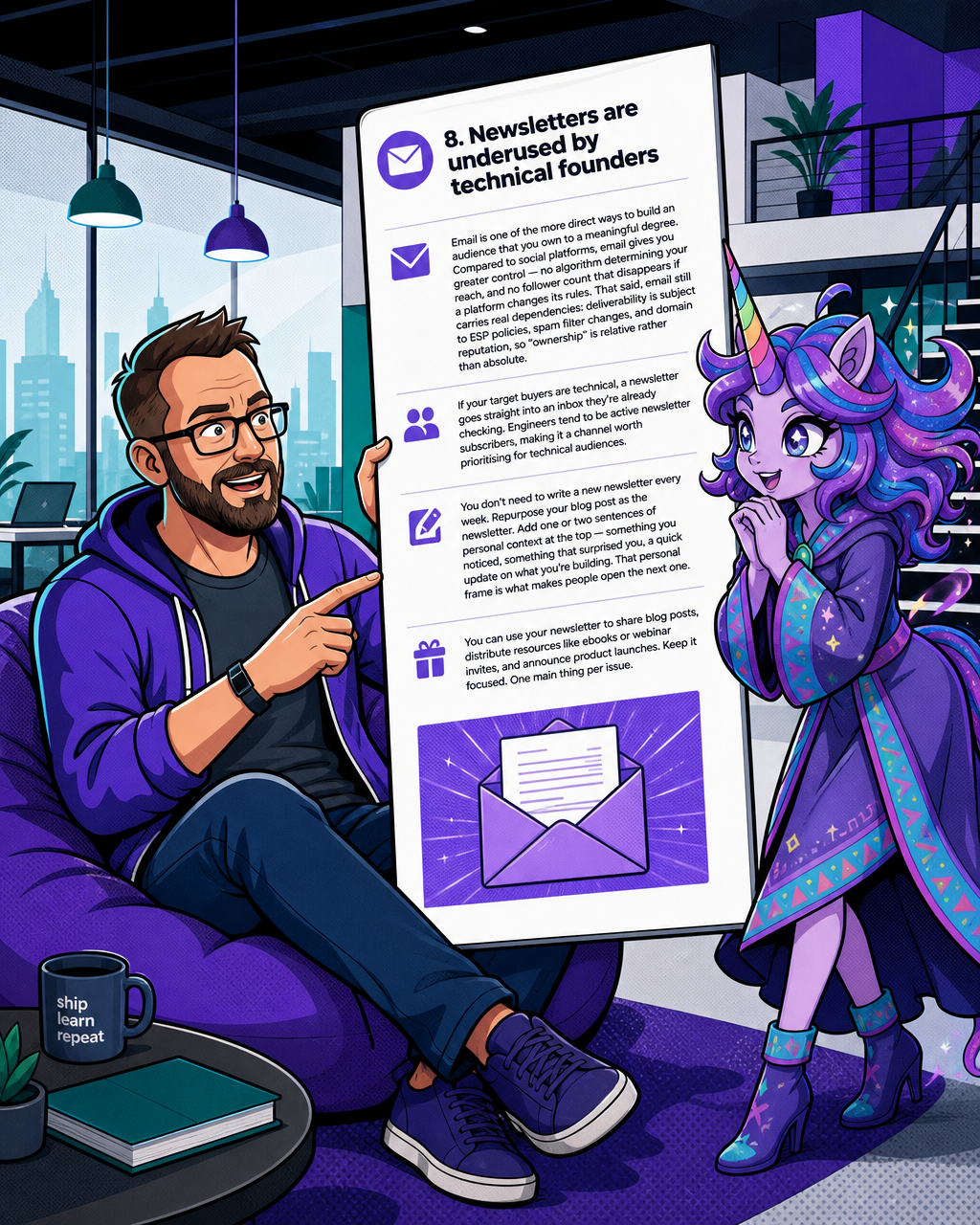
8. Newsletters are underused by technical founders
Email is one of the more direct ways to build an audience that you own to a meaningful degree. Compared to social platforms, email gives you greater control — no algorithm determining your reach, and no follower count that disappears if a platform changes its rules. That said, email still carries real dependencies: deliverability is subject to ESP policies, spam filter changes, and domain reputation, so "ownership" is relative rather than absolute.
If your target buyers are technical, a newsletter goes straight into an inbox they're already checking. Engineers tend to be active newsletter subscribers, making it a channel worth prioritising for technical audiences.
You don't need to write a new newsletter every week. Repurpose your blog post as the newsletter. Add one or two sentences of personal context at the top — something you noticed, something that surprised you, a quick update on what you're building. That personal frame is what makes people open the next one.
You can use your newsletter to share blog posts, distribute resources like ebooks or webinar invites, and announce product launches. Keep it focused. One main thing per issue.
9. One well-researched post is worth ten shallow ones
The biggest lever most founders haven't pulled is writing one genuinely thorough piece and then repurposing it aggressively.
Here's what a single well-researched post can become:
- A LinkedIn article or carousel summarising the key points
- Three to five individual LinkedIn posts, each covering one tip or insight
- A newsletter edition (with a personal intro)
- A slide deck or Loom walkthrough
- A diagram or flow chart (often the most shareable asset you'll create)
- A thread on X or Reddit, adapted to the platform's tone
Longer, in-depth content has historically attracted more traffic, shares, and backlinks than shorter pieces — and depth still tends to pay off, though the relationship between word count and performance has become more nuanced since Google's Helpful Content updates. Quality and genuine usefulness to the reader matter more than length alone. Once you've done the research, the derivative formats cost a fraction of the time.
Think of your research as the asset, not the post. The post is just the first derivative.
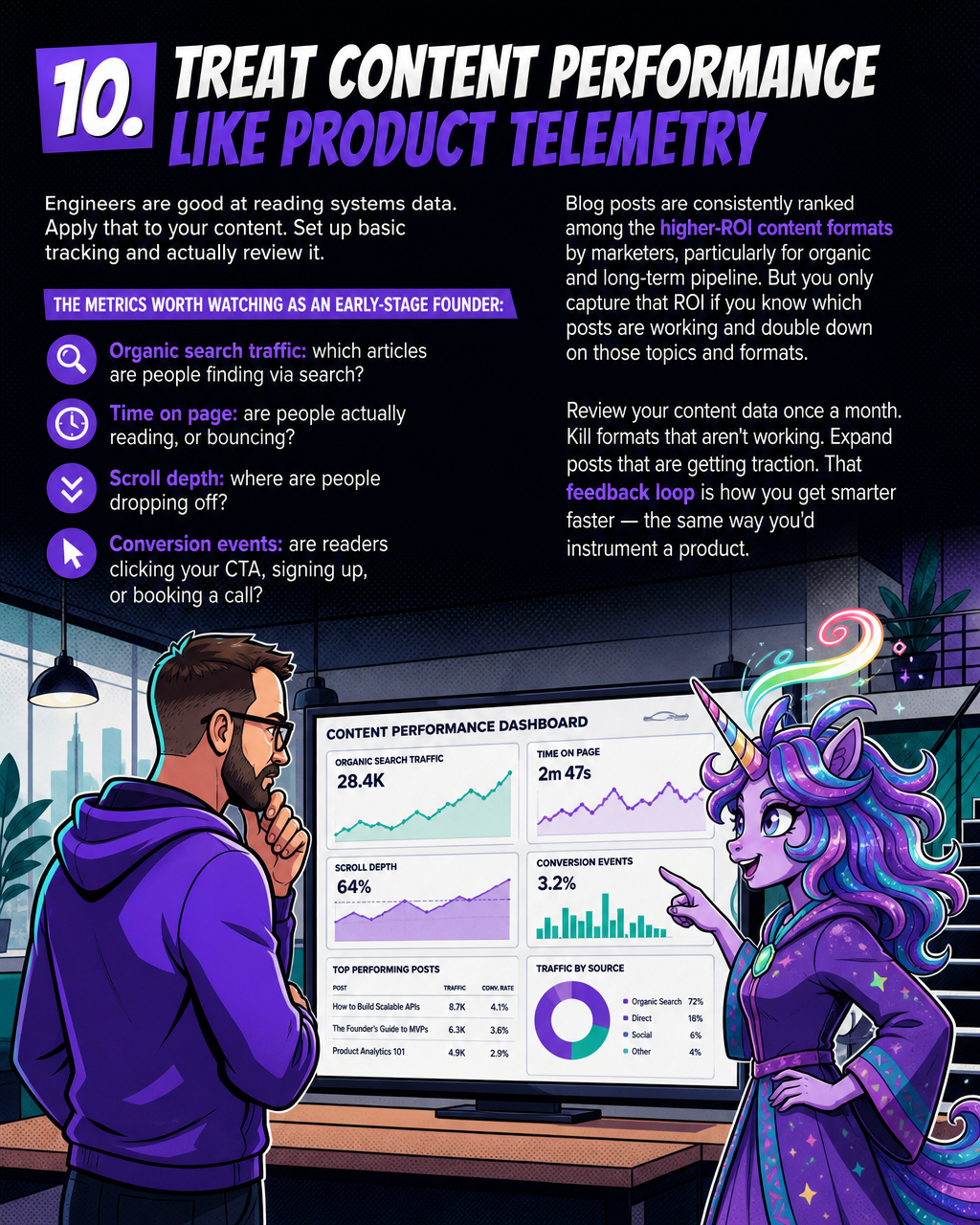
10. Treat content performance like product telemetry
Engineers are good at reading systems data. Apply that to your content. Set up basic tracking and actually review it.
The metrics worth watching as an early-stage founder:
- Organic search traffic: which articles are people finding via search?
- Time on page: are people actually reading, or bouncing?
- Scroll depth: where are people dropping off?
- Conversion events: are readers clicking your CTA, signing up, or booking a call?
Blog posts are consistently ranked among the higher-ROI content formats by marketers, particularly for organic and long-term pipeline. But you only capture that ROI if you know which posts are working and double down on those topics and formats.
Review your content data once a month. Kill formats that aren't working. Expand posts that are getting traction. That feedback loop is how you get smarter faster — the same way you'd instrument a product.
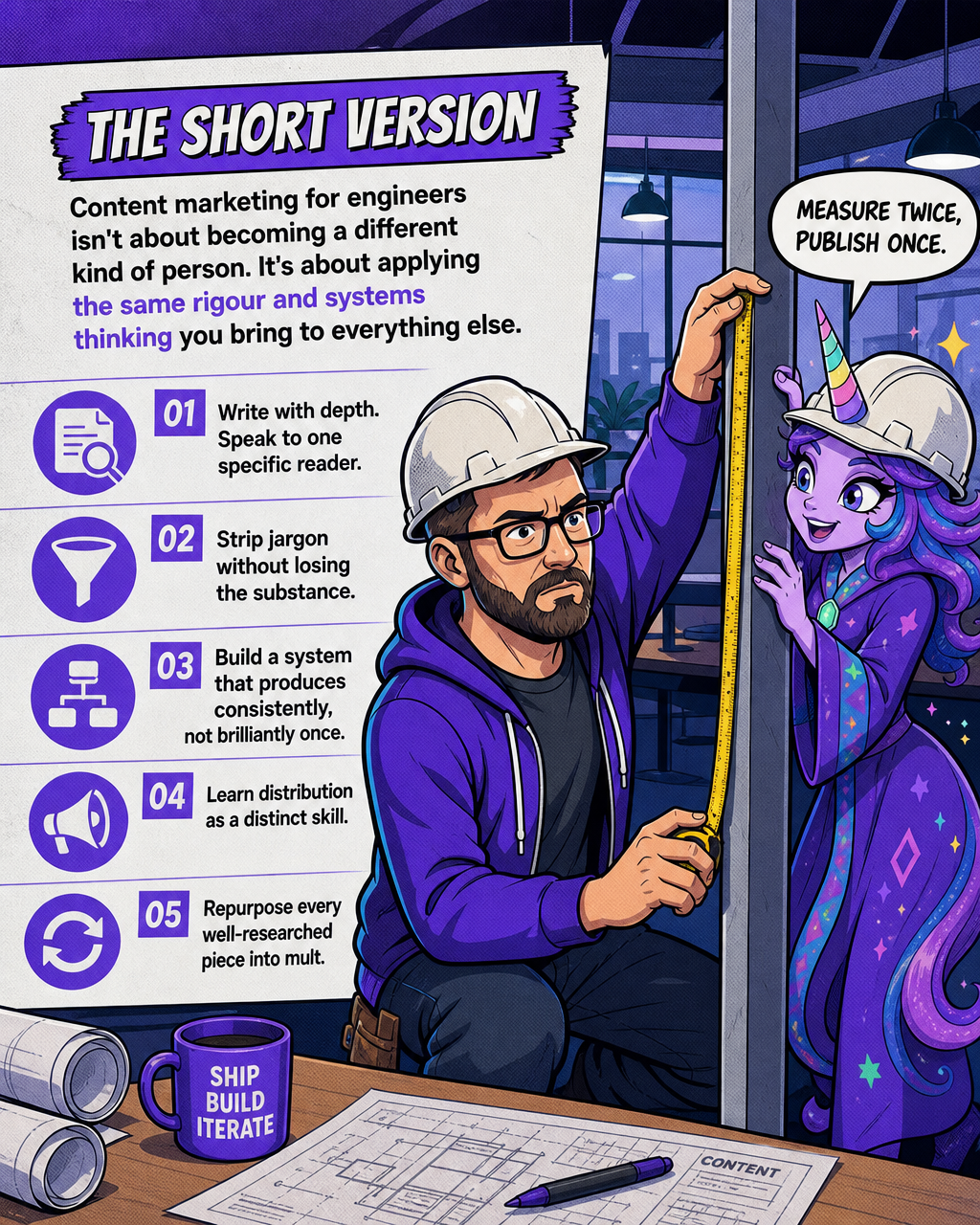
The short version
Content marketing for engineers isn't about becoming a different kind of person. It's about applying the same rigour and systems thinking you bring to everything else.
Write with depth. Speak to one specific reader. Strip jargon without losing the substance. Build a system that produces consistently, not brilliantly once. Learn distribution as a distinct skill. Repurpose every well-researched piece into mult

Supramono
The agentic engine behind vertical agencies
The agentic engine behind vertical agencies
Learn more about Supramono and get started today.
Visit Supramono